Beyond the Hype: Critical Leadership and Values-Driven Influence
Golden Hook & Introduction
SECTION
Nova: Atlas, quick, describe your ideal leader in three words. No overthinking.
Atlas: Oh, I like that! Inspirational, decisive, and… genuinely kind. Like a benevolent, strategic Jedi Master.
Nova: A benevolent, strategic Jedi Master. I love the image. But what if I told you that focusing solely on those admirable traits might actually be setting some leaders up for failure? What if the real world of leadership demands something far more pragmatic, and at times, uncomfortable?
Atlas: Whoa, hold on. Are you saying we should aspire to be kind, decisive, and inspiring? My entire LinkedIn feed would collapse into a paradox! I mean, isn't kindness and inspiration the whole point?
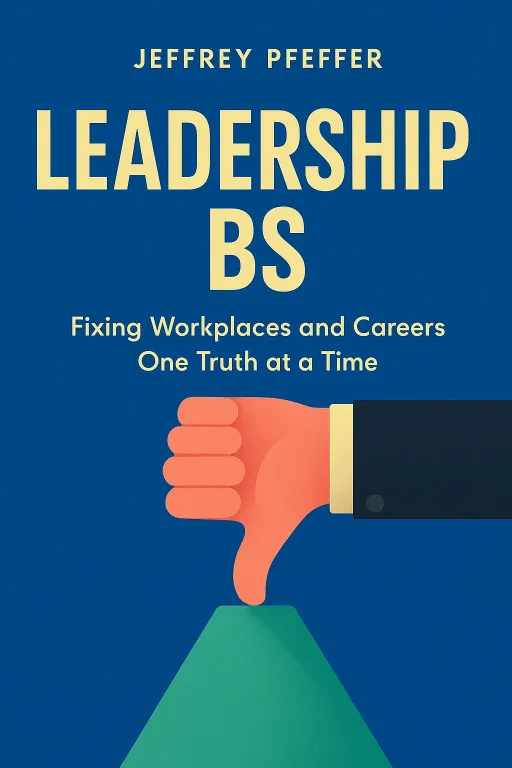
Nova: That’s exactly the tension we’re diving into today. We’re pulling back the curtain on leadership, exploring two profoundly different, yet ultimately complementary, perspectives. On one side, we have Jeffrey Pfeffer’s provocative book, "Leadership BS," which argues that much of what we're taught about leadership is not just ineffective, but potentially harmful.
Atlas: "Leadership BS"? That title alone is a breath of fresh air for anyone who’s ever sat through a corporate retreat full of platitudes.
Nova: Absolutely. Pfeffer, a Stanford professor, is known for his no-nonsense, evidence-based approach. He challenges leaders to be pragmatic, to understand organizational realities, and to focus on measurable outcomes, often emphasizing power dynamics and political skill over idealized traits. He’s basically saying, "Stop chasing unicorns and learn how the game is played."
Atlas: So, less 'follow your heart' and more 'follow the power structure'? That sounds a bit cynical, especially for those of us trying to cultivate our teams and foster growth. How does that square with, well, being a person?
Nova: And that’s where the counterpoint, or perhaps the essential balance, comes in. We’ll also be exploring Richard Stearns’ "Eight Sessions on Becoming a Values-Driven Leader." Stearns offers a practical guide to aligning leadership with core personal and organizational values, emphasizing that true leadership impact stems from integrity and a clear moral compass. He argues that this framework helps leaders cultivate a deep sense of purpose, inspiring trust and commitment.
Atlas: Okay, so we've got the blunt pragmatist telling us to get real about power, and the values champion telling us to lead with our hearts. It feels like these two books are talking about completely different planets. How can any leader possibly integrate a critical, evidence-based understanding of leadership with their deepest personal and organizational values?
Nova: That, my friend, is the deep question of the day. It's not about choosing one over the other, but understanding how they can, and perhaps, coexist for truly effective and impactful leadership.
The Raw Reality of Power (Pfeffer)
SECTION
Nova: So, let’s start with Pfeffer’s premise in "Leadership BS." He basically says that the leadership industry sells us a feel-good narrative – be authentic, be humble, be a servant leader – but that this advice often clashes with the cold, hard realities of organizational life. He argues that leaders who succeed often do so because they understand power dynamics, they're politically skilled, and they focus on measurable results, not just good intentions.
Atlas: That sounds rough, but I can definitely see how that would be true in many corporate environments. I’m curious, what does he mean by "political skill" without it just devolving into pure manipulation? Because for anyone trying to develop others, manipulation is definitely the goal.
Nova: Exactly. Pfeffer isn't necessarily advocating for unethical behavior, but for an awareness of how influence and power actually operate. He’s saying that if you ignore the political landscape, you’re essentially bringing a knife to a gunfight, regardless of how noble your intentions are. Let me give you a hypothetical, but very real, scenario that illustrates his point.
Atlas: Lay it on me.
Nova: Imagine a brilliant, authentic leader – let’s call her Sarah. Sarah genuinely cares about her team, she fosters collaboration, she’s transparent. She proposes an innovative project that could revolutionize a key product line, benefiting the entire company. But she spends all her energy on the project itself, assuming its merit will speak for itself. She doesn't build alliances with key stakeholders, she doesn't understand the hidden agendas of other department heads who might see her project as a threat, and she rarely spends time "managing up" to her senior VP.
Atlas: I can already tell where this is going. Her brilliant, authentic project probably gets sidelined.
Nova: Precisely. Despite its clear value, her project gets buried. Why? Because a more politically savvy peer, let’s call him Mark, who might have a less innovative idea but is excellent at building relationships, understanding the power structure, and effectively communicating his initiatives to the right people, gets his project approved instead. Mark might not be as "authentic" in the traditional sense, but he understands how to mobilize support, navigate opposition, and present his case in a way that resonates with the decision-makers’ priorities – which often boil down to power and perceived impact.
Atlas: That’s actually a pretty stark example. So, Sarah, with all her good intentions, fails to make an impact because she’s missing a crucial skill set. It’s like being a brilliant engineer who can’t explain their designs to a non-technical audience. The brilliance is there, but the communication – or in this case, the influence – is lacking.
Nova: That’s a perfect analogy. Pfeffer would argue that Sarah's authenticity isn't enough. She needed to understand the "organizational realities" and develop her "political skill." It's about being effective, about getting your good ideas implemented, which often requires understanding where the power truly lies and how to influence those who hold it. It's not about being fake; it's about being strategically aware.
Atlas: So basically you’re saying, for those of us who value self-growth and impact, ignoring the power dynamics is a form of naiveté that actively us from achieving our goals and developing others. It’s not just about what you to do, but how you do it within a given system.
Nova: Exactly. Pfeffer pushes us to look beyond the platitudes and ask: what actually to get things done, to influence others, and to achieve measurable outcomes in the real world? It's a critical, evidence-based approach that forces us to confront uncomfortable truths about how organizations function.
Values as True Influence (Stearns)
SECTION
Nova: Now, Atlas, that might leave some of our listeners feeling a bit… uneasy. If it’s all about power and politics, where do values fit in? Is leadership just a cynical game? This is where Richard Stearns' work becomes incredibly important. He argues that while understanding power is one thing, true, lasting leadership impact is rooted in integrity and a clear moral compass.
Atlas: Okay, so how does that work in practice? If Pfeffer says power is king, how do values? Because for someone focused on strategic planning and aligning vision with action, you need more than just good intentions; you need something that truly moves people and organizations forward.
Nova: Stearns would argue that values a source of power, just a different kind. They build trust, foster commitment, and create a deep sense of purpose that can be far more resilient than positional authority or political maneuvering alone. Let me give you another scenario.
Atlas: Please. I need to see how these two seemingly disparate ideas can even exist in the same universe.
Nova: Consider a company facing a major financial downturn. The pressure to cut costs is immense. The "pragmatic," purely power-driven approach might dictate laying off a significant portion of the workforce, even if it means breaking promises to long-term employees, because it's the fastest way to appease shareholders and hit quarterly targets. A purely Pfefferian leader might see this as a necessary political move to maintain their own power and the company's immediate viability.
Atlas: I’ve seen versions of that play out. It’s brutal, and it often leaves a trail of broken trust.
Nova: Now, imagine a values-driven leader, perhaps guided by Stearns' principles, in the same situation. This leader has a core value of "employee well-being" or "community responsibility." Instead of immediate, drastic layoffs, they might explore alternatives: temporary pay cuts across the board, voluntary sabbaticals, innovative ways to redeploy talent, or even a transparent appeal to employees to weather the storm together. This approach is harder, more complex, and might not yield the fastest short-term financial recovery.
Atlas: But it sounds like it would build incredible loyalty and resilience.
Nova: Exactly. The leader communicates openly about the challenges and the values guiding their decisions. They might take a personal pay cut themselves. This choice, while perhaps less "politically expedient" in the short term, fosters immense trust and commitment. Employees understand the sacrifice, feel respected, and are more likely to work harder and stay with the company through thick and thin. This values-driven approach cultivates a culture where people are invested not just in their jobs, but in the collective mission. That long-term trust and loyalty? That’s a powerful form of influence that can sustain an organization through far greater challenges than any purely political maneuver.
Atlas: That’s actually really inspiring. It’s like the difference between a transactional relationship and a truly relational one. The pragmatic leader might get short-term compliance, but the values-driven leader gets long-term commitment and genuine buy-in. I mean, for anyone focused on developing future leaders, you want them to be able to inspire that kind of deep loyalty.
Nova: Stearns helps us understand that integrity isn't a weakness; it's a strategic asset. A clear moral compass isn't a burden; it's the very thing that guides decisions, especially difficult ones, and ultimately inspires true purpose. It’s about leading in a way that aligns with who you are and what you believe, which then resonates with others on a much deeper level.
Synthesis & Takeaways
SECTION
Nova: So, we’ve explored Pfeffer’s call for pragmatic, power-aware leadership and Stearns’ emphasis on integrity and values as foundational. The deep question we started with was: how can you integrate a critical, evidence-based understanding of leadership with your deepest personal and organizational values to lead more authentically and effectively?
Atlas: Yeah, because it feels like you need both. You can’t be naive about power, but you also can’t abandon your values just to get ahead. For our listeners who are trying to cultivate their team's growth and align their vision with action, what's the practical takeaway? How do they avoid becoming cynical, but also not be ineffective?
Nova: It’s not an either/or, Atlas; it’s a both/and. Pfeffer teaches us to be eyes-wide-open about the mechanisms of influence and organizational realities. If you don't understand the landscape of power, your noble intentions might never take root. You need to know to get things done.
Atlas: So, understand the game, but don't necessarily play it dirty.
Nova: Exactly. And Stearns reminds us that you're playing, and the principles that guide your actions, are what ultimately define your leadership and build lasting impact. Power without values becomes destructive; values without an understanding of power can be naive and ineffective. The true visionary leader, the strategic navigator, the empathetic catalyst – they are the ones who can wield influence with integrity. They leverage political skill not for personal gain, but to advance their values-driven vision.
Atlas: So it’s about using your understanding of power to and your values, rather than compromise them. That’s a powerful reframing. It means strategic planning isn't just about the 'what' and the 'how,' but deeply rooted in the 'why.'
Nova: Precisely. The challenge, and the growth opportunity, lies in holding both truths simultaneously. Be clear on your values, let them be your non-negotiable compass, but also become keenly aware of the currents of power and influence around you. Use that awareness to navigate, to build alliances, and to strategically position your values-driven initiatives for success. It’s about leading with your head your heart, but understanding the intricate dance between them.
Atlas: That’s a fantastic way to put it. It’s not just about doing good, but doing good.
Nova: Indeed. What if the most effective leaders aren't just authentic, but strategically authentic? What if they're not just humble, but strategically humble? It forces us to re-evaluate our definitions.
Atlas: That’s definitely something to chew on. Thanks, Nova.
Nova: My pleasure, Atlas. This is Aibrary. Congratulations on your growth!