

Stoic Wisdom for Modern Resilience and Leadership
Golden Hook & Introduction
SECTION
Nova: What if the very thing standing in your way right now—that impossible deadline, that challenging client, that internal resistance—isn't a problem to be solved, but a secret weapon waiting to be wielded?
Atlas: A secret weapon? Oh, I like that. That sounds almost too good to be true, especially when you’re in the thick of it, feeling like you’re just constantly putting out fires.
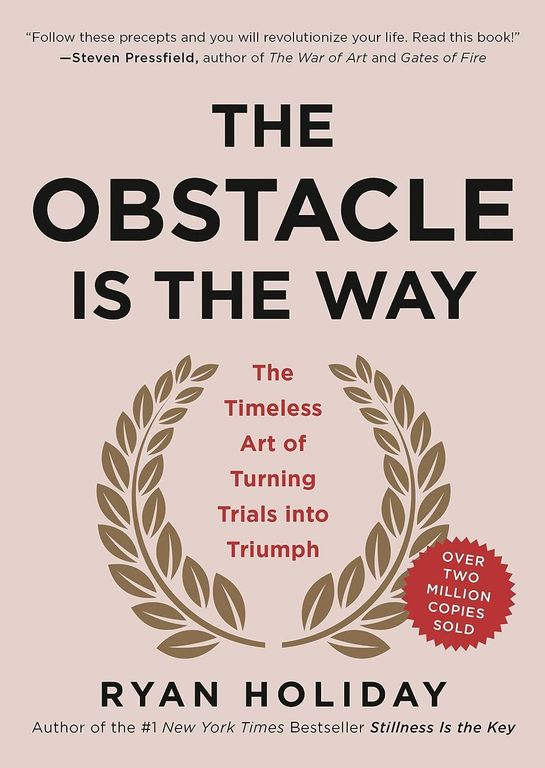
Nova: Exactly! Because what if those fires are actually forging something stronger within you? Today, we’re diving into the transformative power of Stoic philosophy, as brilliantly articulated by Ryan Holiday in two of his seminal works: "The Obstacle Is the Way" and "Ego Is the Enemy."
Atlas: So, he’s not just talking abstract theory, he’s giving us a playbook then? I’ve heard about Holiday’s knack for translating ancient wisdom into modern, actionable strategies. It’s pretty unique, taking something thousands of years old and making it relevant for, say, a leader navigating a tech startup or a complex corporate environment.
Nova: Absolutely. Holiday himself has a fascinating background; he dropped out of college, became a hugely successful media strategist, and then dedicated himself to making these profound philosophical concepts accessible. He’s essentially a bridge-builder, showing us how figures like Marcus Aurelius or Seneca can still guide our strategic thinking and emotional intelligence today. And that’s exactly what we’re exploring: how to turn perceived barriers into catalysts for growth, and how to conquer the often-hidden enemy within.
The Obstacle Is the Way - Reframing Adversity
SECTION
Nova: Let's start with "The Obstacle Is the Way." The core idea here, Atlas, is that adversity isn't just something to be endured. It's something to be actively embraced and utilized. It's about consciously reframing every challenge, every setback, not as a roadblock, but as an opportunity.
Atlas: Okay, “consciously reframing.” I imagine a lot of our listeners, especially those managing high-stakes projects or leading teams through turbulent times, might hear that and think, “Easier said than done.” When you’re facing a major project setback, a budget cut, or a sudden market shift, how do you actually that? It feels almost impossible to just 'decide' not to be stressed.
Nova: That’s where the Stoic framework comes in. It’s not about ignoring the stress, but about controlling your of the event, your in response to it, and your to persevere. Think about Marcus Aurelius, the Roman Emperor. He faced constant barbarian invasions, betrayals, and plagues. The Roman Empire was literally crumbling around him. Most people would see that as an insurmountable obstacle.
Atlas: Right, like the ultimate strategic nightmare. You're the leader, the empire's on your shoulders, and everything is going wrong.
Nova: Exactly. But Aurelius, instead of despairing, used these external threats to forge his internal discipline. He saw each challenge as a test of his virtue, an opportunity to practice justice, courage, and wisdom. He would write in his journal, which became "Meditations," reminding himself that the obstacle itself was the path. The more chaotic the external world became, the more he focused on controlling his internal state and his reasoned actions. He didn't just survive the invasions; he used the constant pressure to consolidate his leadership, refine his philosophical outlook, and ultimately, leave a legacy that echoes to this day.
Atlas: Wow. So it’s not about ignoring the threat, but about how you it and what action you to take. It’s like turning a defensive play into an offensive strategy, or using the weight of a heavy lift to build muscle, not just crush you.
Nova: Precisely! And it’s not just ancient history. Think about someone like Steve Jobs. When he was famously ousted from Apple, the company he co-founded, it was a humiliating, devastating setback. Most would see that as a career-ending failure.
Atlas: That must have felt like the ultimate personal and professional betrayal. The ego hit alone would be enough to sink most people.
Nova: But Jobs reframed it. He called it "awful tasting medicine." He saw it as an opportunity to be free, to start fresh without the corporate baggage, and to explore new ventures like NeXT and Pixar. Those "failures" were what allowed him to innovate, experiment, and ultimately, return to Apple with a renewed vision that saved the company. The obstacle—his firing—became the way to his greatest triumphs.
Atlas: That’s incredible. But what about the emotional toll? When you're in the middle of a crisis, it's hard to see the "opportunity." How do you cultivate that mindset proactively, so you're not just reacting when disaster strikes?
Nova: That’s where the daily practice comes in. It’s about anticipating challenges, mentally rehearsing how you’ll respond, and understanding that you can always choose your attitude. It’s about building that mental resilience muscle, so when the unexpected inevitably hits, you’re not caught off guard, but rather, you see it as another chance to practice your craft.
Ego Is the Enemy - Cultivating Humility for Sustained Leadership
SECTION
Nova: And often, what gets in the way of even the opportunity in an obstacle, is something much closer to home: our own ego. This brings us to Holiday's second book, "Ego Is the Enemy." He argues that this self-centered ambition, pride, and sense of superiority is often the greatest internal impediment to success and sustained leadership.
Atlas: Oh, ego. That's a big one. It’s so insidious, right? Like it promises greatness, but delivers blind spots. For leaders, especially those driven by a desire for meaningful impact and recognition, how does ego manifest in ways that are truly detrimental? Because sometimes, confidence is necessary.
Nova: Absolutely, confidence is vital. But ego is confidence’s toxic cousin. Holiday breaks down how ego can sabotage us at every stage: when we to something, when we, and when we. In aspiration, ego whispers that we’re special, that we deserve success without the grind. It makes us overestimate our abilities and underestimate the work required.
Atlas: So it's not just about being arrogant, it’s about that quiet, internal voice that tells you you’re somehow exempt from the rules, or that your talent alone will carry you. That sounds like a dangerous trap for any ambitious leader.
Nova: It is. Then, when success comes, ego inflates it. It tells us we’re infallible, that our last win means we can’t make a mistake now. It leads to complacency, to believing our own hype, and to shutting out critical feedback. Think of the downfall of many a brilliant entrepreneur or politician who, after a string of successes, made a catastrophic error born of hubris. They stopped being students and started believing they were masters of the universe.
Atlas: That’s a powerful cautionary tale. I imagine many of our listeners, who are striving for impact and recognition, might find this challenging. Isn’t there a fine line between healthy ambition and destructive ego? What does genuine humility look like in a competitive professional environment?
Nova: It’s not about self-deprecation or lacking confidence. True humility, as Holiday describes it, is about being a perpetual student. It’s about focusing on the work itself, not the personal recognition. It’s about being open to feedback, understanding you don’t have all the answers, and constantly seeking to improve. It’s the discipline to put the mission above your own need for validation.
Atlas: So it’s about being a student, always learning, always adapting, regardless of your title or past achievements. It ties back to that resilience we talked about earlier, doesn't it? Because if your ego is fragile, any setback becomes a personal affront, rather than a learning opportunity.
Nova: Exactly! They’re deeply intertwined. The ego makes obstacles personal, unbearable. Humility allows you to see them as challenges to be overcome, lessons to be learned. It’s about cultivating self-awareness, understanding your limitations, and grounding your decisions in reality rather than in a puffed-up self-image.
Synthesis & Takeaways
SECTION
Nova: So, when we bring these two powerful ideas together, we see a complete framework for modern resilience and leadership. The external challenges that "The Obstacle Is the Way" helps us navigate, and the internal impediments that "Ego Is the Enemy" warns us against, are two sides of the same Stoic coin.
Atlas: It’s a powerful combination. It’s not enough to just brave the storm; you also have to make sure your own ship isn’t sabotaging itself from within. It highlights that true leadership isn't just about strategy or vision, it's profoundly about character and self-mastery.
Nova: Precisely. To truly lead, to truly innovate, to truly grow, you must be able to see the opportunity in every external challenge, and you must consistently battle the internal whispers of ego that seek to undermine your best efforts. It's a continuous process of self-improvement and outward application.
Atlas: For our listeners, who are deep thinkers and growth architects, always looking for tangible impact, what’s one practical step they can take to start applying this wisdom?
Nova: I would say, consciously reframe one current professional challenge. Pick something that feels burdensome right now, something you've been seeing as a pure obstacle. Then, ask yourself: How could this setback actually be a strategic opportunity for learning or for demonstrating adaptive leadership? What hidden lesson is here? What part of my ego might be making this feel worse than it is?
Atlas: That’s an excellent challenge. It forces you to shift perspective from victim to architect. And it aligns perfectly with the idea of dedicating even 20 minutes a day to focused exploration of these mindsets. It’s about building those muscles, one intentional thought at a time.
Nova: Indeed. It’s a journey, not a destination, but one that promises profound growth and truly resilient leadership.
Atlas: That’s really inspiring, Nova. Thank you for illuminating these powerful concepts.
Nova: My pleasure, Atlas.
Nova: This is Aibrary. Congratulations on your growth!