

Mastering the Beat: Peak Performance & Mindset for Drummers
Golden Hook & Introduction
SECTION
Nova: Alright Atlas, we’re talking about mastering the beat today, but not just with your hands and feet. Five words to sum up the real challenge for drummers. Go.
Atlas: Internal noise, external flow. That’s five.
Nova: Ooh, I like that. Mine is: silence the mind, find the groove.
Atlas: Nice. You know, it’s funny how often the biggest obstacle isn't the complex rhythm on the page, but the one playing in your head.
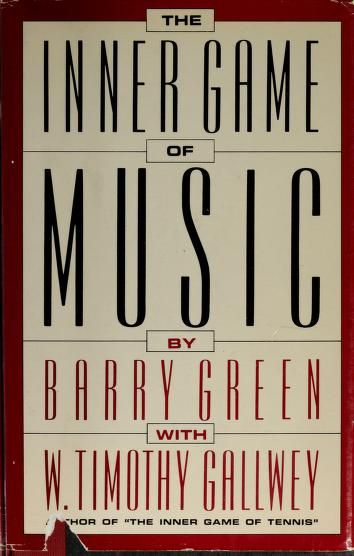
Nova: Exactly. And that’s precisely what we’re digging into with two seminal works that completely shifted the conversation around performance: Barry Green’s "The Inner Game of Music" and Kenny Werner’s "Effortless Mastery: Liberating the Master Musician Within."
Atlas: Those are heavy hitters. I know Green’s work, in particular, came from this fascinating background of applying sports psychology to music, a concept that really revolutionized how performers across disciplines started thinking about mental blocks. And Werner? He’s a Grammy-nominated jazz pianist, so his insights come from a deep, practical understanding of the jazz world, which is all about improvisational flow.
Nova: Absolutely. Green’s "Inner Game" principles were first developed for tennis by Timothy Gallwey, and Green brilliantly adapted them for musicians. It wasn't just another practice manual; it was a manual for the mind. Werner, on the other hand, takes it further, almost into a spiritual realm of music-making, advocating for a meditative state over sheer force of will.
Atlas: It’s almost like Green lays the groundwork by identifying the mental obstacles, and Werner then offers this advanced path to truly transcend them. So, for drummers out there who feel like their hands are tied by their own thoughts, where do we even begin to untangle that knot?
The Performer's Mental Edge & The Inner Critic
SECTION
Nova: We start with Barry Green and "The Inner Game of Music." His core premise is that every performance has two parts: the outer game and the inner game. The outer game is about technique, rhythm, dynamics – all the physical stuff. The inner game is about overcoming self-interference, the internal critic, the doubt, the anxiety that crops up.
Atlas: Oh, I know that feeling. You’re trying to nail a complex fill, and suddenly this voice in your head pipes up, "You're going to mess it up. You did last time." And then, of course, you mess it up.
Nova: Exactly! Green calls that "Self 1" interfering with "Self 2." Self 1 is the conscious, critical, judgmental self. Self 2 is your natural, intuitive, performing self. When Self 1 gets too involved, it chokes Self 2. Imagine a drummer, let's call him Mark, who's incredibly talented in the practice room. He can play the most intricate patterns, his timing is impeccable. But when he gets on stage, or even worse, when he's playing with other musicians and feels pressure, his muscles tighten, his mind races, and he starts overthinking every single beat.
Atlas: Like trying to consciously tell your foot to hit the kick drum at the exact right microsecond, instead of just the groove. It becomes a forced, mechanical action instead of an organic expression.
Nova: Precisely. Mark is so focused on making a mistake, or how good he is, that he loses touch with his innate musicality. Green would argue that Mark's inner critic, Self 1, is paralyzing Self 2. It's like trying to drive a car while constantly looking in the rearview mirror and critiquing your own steering in real-time. You're going to crash.
Atlas: That’s a great analogy. So, for drummers who are constantly battling this inner voice, especially when they're trying to master stage presence or overcome performance anxiety, what’s Green’s prescription? How do you quiet that inner critic without just telling it to "shut up," which rarely works?
Nova: It’s not about silencing it completely, but learning to observe it without judgment. Green suggests techniques to disengage Self 1 from interfering with Self 2. One powerful method is simply to without evaluating. Instead of "I messed up that fill," it becomes "My stick hit the rim instead of the center of the snare." Just factual observation. Or, focusing on a specific, non-judgmental task, like the sound of the stick hitting the drumhead, or the feel of the pedal under your foot.
Atlas: So, it’s about shifting your attention away from the "good" or "bad" judgment and towards the pure sensory experience of playing. That sounds really powerful for someone who’s constantly self-correcting in a negative way. It's almost like a form of mindfulness for musicians.
Nova: It absolutely is. And this isn't just about drummers. Green’s work is widely acclaimed because it touches on a universal human experience: the struggle with self-doubt and the desire for effortless flow. Critics have praised it for its practical applicability across any skill-based endeavor, from sports to business. It validates that the mental game is just as, if not more, important than the physical one for peak performance.
Atlas: That makes sense. Because if your mind is a knotted mess, your drumming will inevitably reflect that tension. But what happens after you've started to untangle that initial knot? What's the next step in really liberating that inner musician?
Cultivating Inner Rhythm & Effortless Mastery
SECTION
Nova: That’s where Kenny Werner steps in with "Effortless Mastery." While Green helps you get out of your own way, Werner guides you towards a state where you to get out of your own way. He challenges the traditional methods of practice and performance that often lead to anxiety and burnout.
Atlas: So, it’s not just about reducing the negative, but actively cultivating a positive, almost transcendent state? That sounds a bit out there for someone just trying to keep time. How does "effortless mastery" translate to the drum kit?
Nova: It’s about a deeply relaxed, meditative approach to music-making. Werner, as a renowned jazz pianist, saw so many musicians, including himself, struggling with performance anxiety and a feeling of inadequacy despite immense talent. His book is about freeing yourself from the pressure to be perfect, to be brilliant, to constantly improve. He argues that true mastery comes when you're completely present, accepting, and allowing the music to flow through you.
Atlas: I imagine a lot of our listeners, especially those driven by growth and mastering their craft, might find that counterintuitive. We're taught that mastery comes from relentless, often grueling, practice. Are you saying we should just... stop practicing?
Nova: Not at all! It’s about you practice and perform. Werner advocates for what he calls "the space." It’s a mental state where you are completely free from judgment, where there's no right or wrong, just pure expression. He encourages musicians to spend time playing without any goal other than pure enjoyment, almost like a child playing. This cultivates a deep connection to your inner rhythm and allows your innate musicality to surface without the usual mental filters.
Atlas: So, it's like when a drummer is just messing around on the kit, not trying to learn a new song or impress anyone, and suddenly they stumble upon their most creative ideas. That spontaneous, playful energy.
Nova: Exactly! He uses the analogy of a child learning to walk. They don't analyze every muscle contraction; they just try, fall, get up, and keep trying with joy. There's no inner critic judging their gait. Werner wants musicians to recapture that uninhibited approach. He suggests techniques like improvising freely without any preconceived notions, or simply listening to music with complete, non-judgmental attention.
Atlas: That makes me wonder, how does this "effortless" approach actually technical skill? If I'm just relaxing and playing, won't my chops get rusty?
Nova: The paradox is that by removing the pressure and the inner critic, you actually allow your body to learn and perform more efficiently. When you're relaxed, your muscles are fluid, your mind is clear, and your coordination improves naturally. Werner argues that much of our technical struggle comes from tension—both physical and mental. By releasing that tension, you unlock your true potential, making even complex techniques feel more natural and fluid. It’s about being in the moment, not chasing a future perfect performance.
Atlas: That’s a profound shift. It’s moving from "I must conquer this rhythm" to "I will allow this rhythm to flow through me." For mindful performers, that could be the key to maintaining consistent practice and building momentum without the emotional baggage.
Nova: It really is. Both Green and Werner offer pathways to a profound shift, moving drummers from merely practicing notes to mastering the psychological landscape of performance. It’s about cultivating that inner rhythm, not just finding the external one.
Synthesis & Takeaways
SECTION
Atlas: So, if Green helps us identify and manage the internal obstacles, Werner then shows us how to transcend them and reach a state of pure, joyful creation. It’s a journey from simply performing to truly expressing.
Nova: Absolutely. It’s about understanding that your instrument isn't just the drums; it's your entire being. Your mind, your body, your spirit – they all have to be in harmony for true mastery to emerge. For any drummer, whether you're battling stage fright or just trying to push your creative boundaries, these books are foundational.
Atlas: And it boils down to that "tiny step" you mentioned. Before your next practice, take five minutes to sit in silence, focusing only on your breath. Just notice what’s going on internally and gently guide your attention back to your breath. That prepares your mind for focused, and hopefully, more effortless playing.
Nova: Precisely. And that leads us to the deep question: How might a more relaxed, less self-critical approach to your drumming truly transform your practice and performance experience? Imagine the freedom, the creativity, the sheer joy you could unlock. It’s a powerful thought.
Atlas: That gives me chills. That’s such a hopeful way to look at it, especially for those who feel stuck in a rut of self-criticism. It really reframes what "practice" even means.
Nova: It does. And the beauty is, it doesn't require new gear or a different drum set. It just requires a different approach to yourself.
Atlas: This is Aibrary. Congratulations on your growth!