

The 'Leverage Loop': How to Maximize Impact with Minimal Effort.
Golden Hook & Introduction
SECTION
Nova: POV: You're staring at an endless to-do list, feeling like the only way to get ahead is to just… do more. What if I told you that doing less, strategically, is the actual path to exponential impact?
Atlas: That sounds almost too good to be true, Nova. I imagine a lot of our listeners, especially those managing high-stakes teams or building a legacy, are conditioned to believe more effort equals more reward. It's practically ingrained in our work ethic.
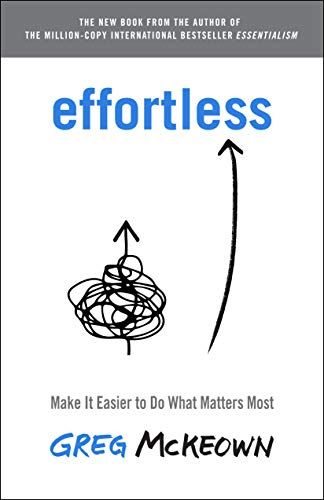
Nova: Absolutely. And that's exactly what we're challenging today with what we call the 'Leverage Loop.' It's this powerful idea that true impact comes not from adding more tasks, but from strategically identifying and amplifying those precise points where minimal effort creates maximum results. We're drawing heavily from two incredibly insightful books: 'Effortless' by Greg McKeown and 'The 80/20 Principle' by Richard Koch.
Atlas: Oh, I like that. McKeown is renowned for his work on essentialism, and Koch's 80/20 is a foundational text for anyone in strategic thinking. So, this isn't about laziness, but about a smarter form of strategic impact, right?
Nova: Exactly! It's about intelligence, not idleness. It's about working smarter so you have the energy and focus for what truly matters, both professionally and personally.
The Leverage Loop: Redefining Impact
SECTION
Nova: The cold fact is, you're already doing so much. The key to unlocking even greater impact isn't adding more to your plate; it's about finding those specific leverage points. Think of it like a fulcrum and a heavy weight. You don't need brute force to lift it if you place the fulcrum in just the right spot. A small effort at that precise point moves mountains.
Atlas: For someone building for the future, like a C-suite leader or someone focused on generational wealth, how do you even begin to these 'leverage points' amidst the daily grind? It feels like everything is important, everything carries weight.
Nova: That's a great question, and it's where the mindset shift begins. It moves from "how can I do more?" to "what can I simplify or amplify?" Let me give you a vivid example. I heard about a CEO who was constantly frustrated by the sheer volume of low-value administrative tasks bogging down his executive team. They spent hours each week compiling a specific, complex weekly report that, while necessary, ate into their strategic thinking time.
Atlas: I can totally relate. Those kinds of tasks can feel like a silent productivity killer.
Nova: Precisely. Instead of just accepting it as a cost of doing business, the CEO identified that specific report as a major drain. He didn't tell them to work faster; he challenged his team to automate one critical, repetitive data collection and formatting process within that report. They invested a small amount of time upfront to build a script.
Atlas: So, a minimal effort in building that script…
Nova: Led to a massive gain. That single automation freed up hundreds of collective hours across his leadership team each month. Not only did it save time, but it also reduced errors and allowed his top talent to focus on high-level strategy, directly impacting the company's growth trajectory. The cause was a small automation, the effect was a huge increase in strategic capacity.
Atlas: Wow, that's powerful. So it's about discerning where to place that strategic energy. It’s like, instead of trying to push the entire mountain, you find the right fault line to trigger a shift. That's going to resonate with anyone who struggles with feeling overwhelmed by operational demands.
Nova: Exactly. This shift allows you to sustain high performance without the typical burnout. It’s about ensuring your energy is directed where it matters most, not just where it's demanded most.
Tactical Pathways to Effortless Impact
SECTION
Nova: And this brings us directly to the tactical pathways, the 'how-to' of finding those fault lines and making that shift. Greg McKeown, in his book 'Effortless,' gives us a brilliant framework. He argues that instead of just doing essential things, which is his previous concept of essentialism, we should strive to make those essential things.
Atlas: I get the 'essentialism' part – cutting out the noise, saying no to the non-essential. But 'effortlessness'? For someone who's used to pushing through resistance, who believes in grit and perseverance, that feels almost counter-intuitive. Is it about avoiding discomfort, or something deeper?
Nova: That’s a sharp distinction, Atlas. It's not about avoiding necessary discomfort or challenges. It’s about removing. Think about it: if you want to exercise more, you could just try to force yourself. Or, you could make it effortless: lay out your gym clothes the night before, sign up for a class that's literally next door, or schedule it with a friend who holds you accountable. The essential act of exercising is still there, but the barriers to starting become negligible.
Atlas: I see. So it's designing your environment and processes so that the path of least resistance the path of most impact. That’s a subtle but profound difference. It's about optimizing the system, not just the willpower.
Nova: Precisely. And this pairs perfectly with Richard Koch's 'The 80/20 Principle,' a concept that has influenced generations of strategic thinkers. Koch reveals that roughly 80% of your results come from just 20% of your efforts. It's a universal law that applies everywhere, from business to personal well-being.
Atlas: That's a classic, and for good reason. But how do you that vital 20% when everything feels urgent? Especially when you're trying to build generational wealth, where every decision seems to have massive long-term implications. How do you separate the signal from the noise?
Nova: It requires deep reflection, and often, data analysis. It's about asking: 'What is the absolute highest-value thing I can do right now that will create a ripple effect?' For our strategic architect, it might be identifying that one key market trend that, if acted upon quickly, could secure a significant competitive advantage for years. Or it could be delegating 80% of routine tasks to free up time to focus on that one strategic hire who unlocks a new division, rather than overseeing a dozen minor projects.
Atlas: So it’s about protecting that space for deep work, that strategic thinking time, by ruthlessly cutting out or outsourcing the 80% that yields disproportionately less. That sounds like a powerful tool for someone navigating C-suite leadership.
Synthesis & Takeaways
SECTION
Nova: So the Leverage Loop isn't just a theory; it's a practice. McKeown shows us how to streamline the essential, making it truly effortless, and Koch helps us pinpoint is truly essential for maximum return. Together, they offer a blueprint for profound impact.
Atlas: It sounds like a fundamental shift in how we approach success, especially for those of us who aim to build enduring value and secure a future. It's about working smarter so you have the energy and focus for what truly matters, both professionally and personally. That clarity, that protected space for deep work, that's invaluable. It allows you to trust your intuition and build for the future, rather than constantly reacting.
Nova: Exactly. It's about creating a sustainable engine for impact, freeing up not just time, but mental bandwidth. Imagine the clarity you gain when you know you're focusing on the vital few. That’s how you build for legacy without burning out.
Atlas: That’s such a hopeful way to look at it. Instead of an endless uphill battle, it's about finding the right path.
Nova: For anyone listening who feels that familiar pressure, here's a tiny step: identify one task you do regularly this week. Then, brainstorm three ways to make it 20% easier or more efficient. Just one task, one tiny step towards unlocking your own Leverage Loop.
Atlas: And watch the ripple effect begin. That's a powerful invitation.
Nova: This is Aibrary. Congratulations on your growth!