

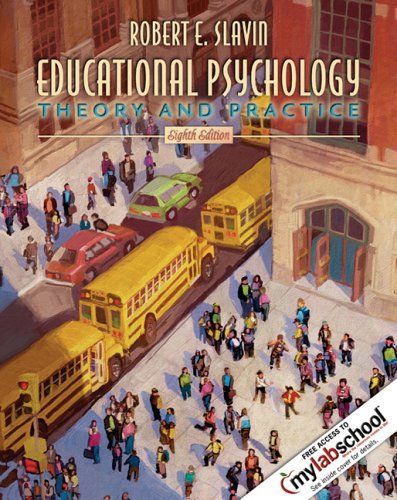
Educational Psychology
Theory and Practice
Introduction
Nova: Picture this: you're standing in front of a classroom of thirty students. Some are doodling, some are staring out the window, and a few are genuinely hanging on your every word. What's going on inside each of those minds? And more importantly, what can you actually do about it? That's the question at the heart of one of the most widely used educational psychology textbooks in the world: Robert E. Slavin's Educational Psychology: Theory and Practice.
Nova: : And I have to admit, Nova, when I first heard the phrase educational psychology, I pictured dusty theories from a hundred years ago. But Slavin's book has been through thirteen editions and is used in teacher preparation programs across the globe. So clearly, something about it is resonating.
Nova: Absolutely. Slavin, who was a distinguished professor at Johns Hopkins University until his passing in 2021, didn't just write a textbook. He spent decades in real schools, testing what actually works. His book is the bridge between the ivory tower of research and the messy, wonderful reality of a Tuesday morning in third period.
Nova: : So what makes this book different from every other educational psychology textbook out there?
Nova: Two words: intentional teaching. Slavin's entire framework revolves around the idea that great teachers aren't born, they're made through deliberate, evidence-based decision-making. Every chapter asks: knowing what we know about how students learn, what should a teacher actually do at 9:15 on a Monday morning?
Nova: : I love that. So today we're going to unpack the big ideas from Slavin's Educational Psychology, from cognitive development to cooperative learning, and explore why this book has shaped how thousands of teachers think about their craft. I'm.
Nova: And I'm Nova. This is Aibrary. Let's dive in.
Key Insight 1
The Intentional Teacher Framework
Nova: Let's start with the foundation. Slavin organizes his entire textbook around a concept he calls the intentional teacher. And this isn't just a catchy phrase. It's a philosophy.
Nova: : Okay, break that down for me. What does intentional teaching actually mean in practice?
Nova: An intentional teacher is someone who constantly reflects on their instructional decisions and asks: what am I trying to accomplish? What strategies are most likely to get me there, based on research? And how will I know if it worked? It's the opposite of teaching on autopilot.
Nova: : So it's almost like the scientific method applied to the classroom.
Nova: Exactly. Slavin argues that teaching is both an art and a science. The art is in the relationships, the creativity, the improvisation. But the science is in knowing which practices have been shown, through rigorous research, to actually produce learning. And Slavin was relentless about evidence. He founded the Best Evidence Encyclopedia, which reviews and rates educational programs based on the quality of their research support.
Nova: : That's fascinating. So the book isn't just Slavin's opinions. It's a curated tour of what the research actually says.
Nova: Right. And he's transparent about it. When the evidence is strong, he says so. When it's mixed, he tells you that too. For example, he covers the long-standing debate about ability grouping, tracking students by perceived skill level. And he walks through the research showing that between-class ability grouping generally doesn't improve achievement and can widen equity gaps. But within-class flexible grouping for specific skills? That has better evidence.
Nova: : So he's not just giving you answers. He's teaching you how to think about the evidence yourself.
Nova: That's the intentional teacher mindset. And it runs through every chapter, whether he's discussing Piaget's stages of cognitive development or the latest research on motivation. The question is always: what does this mean for my classroom tomorrow?
Key Insight 2
How Children Think: Piaget, Vygotsky, and Beyond
Nova: Now, you can't talk about educational psychology without talking about the giants: Jean Piaget and Lev Vygotsky. Slavin devotes significant attention to both, but he doesn't treat them as museum pieces. He makes them practical.
Nova: : Alright, give me the Slavin take on Piaget. Most people know the basics: kids go through stages, concrete to abstract thinking, and so on.
Nova: Yes, but Slavin emphasizes what Piaget means for instruction. If a seven-year-old is in the concrete operational stage, they can reason logically about things they can see and touch, but they'll struggle with purely abstract hypotheticals. So a teacher shouldn't just lecture about fractions in the abstract. They need manipulatives, visual models, hands-on experiences.
Nova: : That makes sense. But Slavin also spends a lot of time on Vygotsky, right? And Vygotsky had a very different emphasis.
Nova: Completely different. Piaget focused on the child as a little scientist, discovering the world independently. Vygotsky argued that learning is fundamentally social. Children learn through interaction with more skilled partners, whether that's a teacher, a parent, or a peer. Slavin leans heavily into Vygotsky's concept of the zone of proximal development, or ZPD.
Nova: : The ZPD. That's the sweet spot between what a child can do alone and what they can do with help.
Nova: Exactly. And Slavin uses it to make a powerful argument: the most effective instruction happens in that zone. If the task is too easy, there's no learning. If it's too hard, the child gets frustrated. The teacher's job is to scaffold, to provide just enough support to help the child succeed at something they couldn't do independently, and then gradually fade that support.
Nova: : So it's like training wheels on a bike. You don't leave them on forever, but you also don't just throw a kid on a two-wheeler and say good luck.
Nova: Perfect analogy. And Slavin extends this to peer learning. He argues that students can be incredible scaffolds for each other, which leads us directly to one of his most famous contributions: cooperative learning.
Nova: : Which we have to talk about, because Slavin didn't just write about cooperative learning. He basically invented some of the most widely used models.
Key Insight 3
Cooperative Learning: Slavin's Signature Contribution
Nova: This is where Slavin's personal research legacy really shines. He didn't just summarize other people's work on cooperative learning. He created several of the most researched and implemented models in the world.
Nova: : And I think a lot of people hear cooperative learning and think, oh, group work. Kids sitting together, one kid does all the work, the others copy. What makes Slavin's approach different?
Nova: That's exactly the problem Slavin set out to solve. He identified two critical ingredients that turn group work into genuine cooperative learning. The first is group goals. The group has to be working toward something together, not just sitting near each other. The second, and this is the key insight, is individual accountability.
Nova: : So every student has to demonstrate their own learning.
Nova: Yes. In Slavin's Student Teams-Achievement Divisions model, or STAD, students work in heterogeneous teams to master material, but then every student takes an individual quiz. The team's success depends on how much each member improves relative to their own past performance. So the high achiever can't just carry the team. Everyone has to grow.
Nova: : That's brilliant. It changes the incentive structure completely. The smart kid now has a reason to help the struggling kid, because the team score depends on everyone improving.
Nova: Exactly. And Slavin developed several variations. There's Teams-Games-Tournament, where students compete in academic games against peers of similar skill levels from other teams. There's Jigsaw II, where each team member becomes an expert on one piece of the content and teaches it to their teammates. And there's Team Accelerated Instruction, which blends cooperative learning with individualized instruction in math.
Nova: : What does the research say about these models? Do they actually work?
Nova: The evidence is remarkably strong. Slavin conducted and synthesized hundreds of studies. Cooperative learning consistently produces higher achievement than traditional instruction, across grade levels and subjects. But the benefits go beyond test scores. Students in well-implemented cooperative learning classrooms show improved intergroup relations, better self-esteem, and more positive attitudes toward school.
Nova: : So it's not just academic. It's social and emotional too.
Nova: And Slavin was particularly passionate about this for diverse classrooms. He saw cooperative learning as a tool for breaking down barriers between students of different backgrounds. When you're working together toward a common goal, differences that once divided you can become assets.
Nova: : That feels especially relevant today. But I'm curious, does Slavin address the challenges? Because I imagine cooperative learning isn't always easy to implement.
Nova: He's very honest about that. It requires careful planning, clear structures, and consistent routines. You can't just put kids in groups and hope for the best. Slavin provides detailed guidance on team formation, role assignment, and how to handle the student who refuses to participate. He acknowledges that it takes practice, but he makes the case that the payoff is worth it.
Key Insight 4
Motivation, Management, and the Learning Environment
Nova: Let's shift to another major theme in the book: motivation and classroom management. Slavin treats these as deeply connected. You can't manage a classroom effectively if you don't understand what motivates students, and you can't motivate students in a chaotic environment.
Nova: : This feels like the part of teaching that keeps new teachers up at night. What does Slavin actually recommend?
Nova: He starts with the research on behavioral learning theories, particularly B. F. Skinner's operant conditioning. But Slavin doesn't advocate for a rigid, reward-and-punishment approach. Instead, he emphasizes the power of reinforcement, especially positive reinforcement, and the importance of immediacy and consistency.
Nova: : So catch them being good, essentially.
Nova: Yes, but with nuance. Slavin distinguishes between intrinsic and extrinsic motivation. Extrinsic motivation comes from external rewards: grades, praise, stickers. Intrinsic motivation comes from within: curiosity, interest, the satisfaction of mastering something challenging. And here's the critical point: over-reliance on extrinsic rewards can actually undermine intrinsic motivation.
Nova: : That's the overjustification effect, right? If you pay a kid to read, they start to think reading is something you only do for money.
Nova: Exactly. So Slavin advocates for using extrinsic rewards strategically and sparingly, while building a classroom culture that nurtures intrinsic motivation. How? By giving students autonomy and choice, by designing tasks that are challenging but achievable, and by helping students see the relevance and value of what they're learning.
Nova: : And where does classroom management fit into this?
Nova: Slavin's approach to management is preventive rather than reactive. He argues that most behavior problems can be avoided through effective instruction in the first place. When students are engaged in meaningful, appropriately challenging work, they're far less likely to act out. But he also provides practical strategies: establishing clear rules and routines from day one, using nonverbal cues to redirect off-task behavior, and applying consequences calmly and consistently.
Nova: : One thing I appreciate about Slavin is that he doesn't pretend there's a one-size-fits-all solution. Different grade levels, different subjects, different student populations all require different approaches.
Nova: And that's where the intentional teacher framework comes full circle. You're constantly observing, reflecting, and adjusting. What worked with last period's class might not work with this one. Slavin gives you the principles and the evidence base, but you have to apply them thoughtfully to your unique context.
Key Insight 5
Assessment, Diversity, and the Whole Child
Nova: Two more areas where Slavin's book really stands out: assessment and diversity. And he treats these as deeply interconnected.
Nova: : How so?
Nova: Slavin argues that assessment isn't just about measuring what students have learned. It's about informing instruction. He distinguishes between formative assessment, which happens during learning and guides teaching decisions, and summative assessment, which evaluates learning after instruction is complete. And he makes the case that formative assessment is vastly underused relative to its power.
Nova: : So instead of just giving a test at the end of the unit and moving on, you're constantly checking for understanding along the way.
Nova: Right. And Slavin provides concrete techniques: exit tickets, think-pair-share, quick writes, student response systems. The idea is to get real-time data on what students understand and what they don't, so you can adjust your teaching immediately, not after the test when it's too late.
Nova: : And how does diversity factor in?
Nova: Slavin devotes entire chapters to student diversity, including socioeconomic status, ethnicity, language background, and gender. He's careful to avoid stereotypes while acknowledging that different groups of students face different challenges and bring different strengths to the classroom. For example, he discusses the research on stereotype threat, the phenomenon where students perform worse when they're reminded of negative stereotypes about their group.
Nova: : That's such an important concept. And it's not about blaming the student. It's about understanding the psychological dynamics so teachers can create environments where all students can thrive.
Nova: Exactly. Slavin also addresses English language learners, students with exceptionalities, and the research on inclusive education. His position, grounded in evidence, is that most students with disabilities benefit from being educated in general education classrooms alongside their peers, provided appropriate supports are in place.
Nova: : And he connects this back to cooperative learning, doesn't he?
Nova: He does. Cooperative learning, when done well, is inherently inclusive. Students with diverse abilities and backgrounds work together, learn from each other, and develop mutual respect. It's not a separate program for diverse classrooms. It's good teaching for all classrooms.
Nova: : That's a powerful vision. But I want to ask about standardized testing, because Slavin's book covers that too, and it's such a contentious topic.
Nova: Slavin takes a balanced view. He acknowledges the value of standardized tests for accountability and for identifying achievement gaps that need attention. But he also warns against the dangers of teaching to the test, narrowing the curriculum, and using test scores as the sole measure of school or teacher quality. He advocates for multiple measures of student learning and for assessments that actually require the kind of thinking we want students to develop.
Nova: : So it's not anti-testing or pro-testing. It's thoughtful testing.
Nova: That's the Slavin approach in a nutshell: thoughtful, evidence-based, and always focused on what actually benefits students.
Conclusion
Nova: So we've covered a lot of ground: the intentional teacher framework, cognitive development from Piaget and Vygotsky, Slavin's groundbreaking cooperative learning models, the science of motivation and classroom management, and the critical role of assessment and attention to diversity.
Nova: : What strikes me most, Nova, is how coherent the whole vision is. Slavin didn't just collect a bunch of disconnected theories. He built a unified approach where everything connects: cooperative learning supports motivation, formative assessment guides intentional teaching, understanding cognitive development shapes how you design instruction, and attention to diversity runs through it all.
Nova: That's exactly right. And I think that's why Educational Psychology has endured through thirteen editions and continues to be a cornerstone of teacher education. It's not just a textbook you read for a class and then forget. It's a framework you can return to throughout your teaching career.
Nova: : If someone listening wants to take one thing away from Slavin's work, what should it be?
Nova: I'd say this: great teaching is neither pure instinct nor rigid formula. It's intentional, evidence-informed decision-making, grounded in a deep understanding of how children develop, learn, and thrive. Slavin spent his career building the bridge between research and practice, and his book is an invitation to every teacher to walk across it.
Nova: : And Slavin himself was a model of what he taught. He didn't just theorize about evidence-based practice. He went into schools, tested his ideas, refined them based on data, and shared what he learned with honesty and humility.
Nova: His legacy lives on in the Success for All program, in the thousands of teachers who use cooperative learning every day, and in the millions of students who have benefited from more intentional, more effective instruction.
Nova: : Beautifully said. This is Aibrary. Congratulations on your growth!