Mastering the Language of Markets: Understanding Economic Principles
Golden Hook & Introduction
SECTION
Nova: Atlas, if I asked you to describe the market in one word, what would it be? And you can’t say "volatile."
Atlas: Oh, man, that’s tough. Okay, not volatile… I'd say… "misunderstood." Definitely misunderstood. Like a teenager everyone thinks they know, but they really don't.
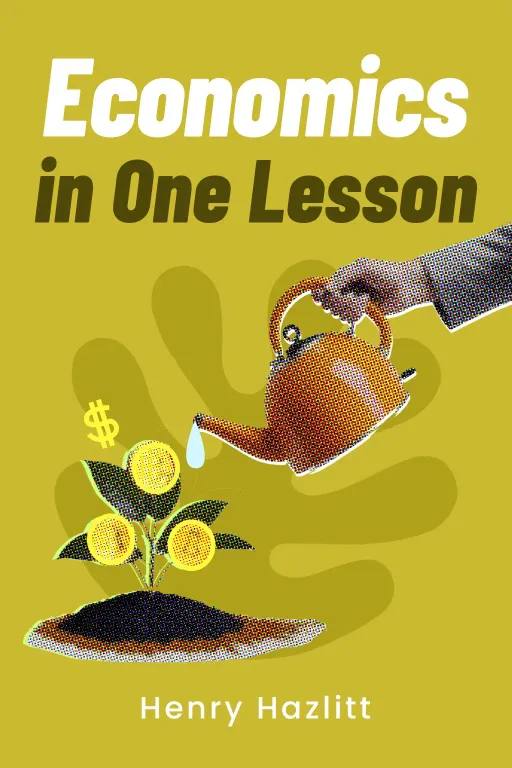
Nova: Misunderstood. I like that. Because today, we're diving deep into two foundational texts that aim to peel back those layers of misunderstanding: Henry Hazlitt's classic, "Economics in One Lesson," and Thomas Sowell's incredibly insightful "Basic Economics."
Atlas: Ah, Hazlitt and Sowell. Two titans who absolutely demystify the often-intimidating world of economic principles. It's not just about numbers and charts, is it? It's about how the world works, and how our decisions ripple through it.
Nova: Exactly. And what's fascinating about Hazlitt's "Economics in One Lesson" is its enduring power. It was written decades ago, in the mid-20th century, during a time of significant economic upheaval and government intervention debates, yet its core message feels as urgent today as it did then. Hazlitt, a journalist and economic thinker, distilled complex ideas into a single, profound lesson that has resonated with generations of readers seeking clarity amidst economic confusion.
Atlas: That’s amazing. So, it's not some dusty academic tome; it’s a practical guide that's stood the test of time. I’m curious, what’s that central "lesson" he wants us to grasp?
The Unseen Hand: Deconstructing Market Dynamics
SECTION
Nova: Well, Hazlitt’s core lesson, his "unseen hand," if you will, is this: good economics considers the long-run effects of any economic policy or action on groups, not just the immediate impacts on special interests.
Atlas: Wait, so he’s saying we often get swayed by the shiny, immediate benefits for a small group, and completely miss the hidden costs or consequences for everyone else further down the line?
Nova: Precisely. He argues that most economic fallacies stem from focusing only on the direct effect of a policy upon a particular group, while ignoring the indirect, often unseen, consequences for the broader community. Think of it like looking at just one piece of a complex machine and assuming you understand its entire function.
Atlas: That makes so much sense. I imagine a lot of our listeners, especially those driven by financial security for their families, are constantly trying to cut through market noise. They’re looking at a stock, or a new economic report, and trying to figure out if it’s a good move. How does this "second and third-order effects" thinking apply there?
Nova: It's absolutely critical. Let’s take a classic example Hazlitt often uses: the broken window fallacy. Imagine a vandal breaks a pane of glass in a baker's shop. A crowd gathers, and some might say, "Well, it's an ill wind that blows nobody any good. At least the glazier will get work, and that stimulates the economy!"
Atlas: Right, I’ve heard that before. The glazier gets paid, maybe he buys new tools, and that money circulates. Sounds good on the surface.
Nova: Exactly. But Hazlitt asks us to consider the unseen. If the baker hadn't had to spend money replacing the window, what would he have done with that money? Perhaps he would have bought a new suit, stimulating the tailor's business. Or upgraded his machinery, making his bakery more efficient.
Atlas: Oh, I see. So the glazier's gain is the tailor's or the machinist's loss. It’s not new wealth being created; it’s just wealth being diverted from one place to another. And the community is actually poorer because it has a window less of something else, whereas before it had a window something else.
Nova: That's the powerful insight. It forces you to look beyond the obvious. When you're analyzing a stock, or even a broader market trend, you have to ask: "What are the second and third-order effects of this company's actions or market conditions?" What seemingly beneficial policy might be creating unintended negative consequences elsewhere?
Atlas: That’s a powerful lens. It’s about intellectual curiosity, isn’t it? Not just accepting the first explanation, but digging deeper. And that really speaks to our listeners who seek a deep understanding. So, if Hazlitt is giving us the "one lesson," where does Thomas Sowell come in with "Basic Economics"?
Nova: Sowell, in "Basic Economics," really builds on that foundation by demystifying economic decision-making, scarcity, and the profound role of prices in coordinating complex societies. He’s like a master cartographer, mapping out the entire economic landscape so you can navigate it. What's compelling about Sowell is his ability to take incredibly complex, often abstract, economic theories and ground them in concrete, real-world examples. He’s not just explaining economics is, but it plays out in our daily lives, from the prices we pay to the choices we make.
Atlas: I love that. Because for someone who wants actionable concepts for their investment strategy, understanding how prices truly reflect scarcity and demand is gold. It helps you see beyond the daily headlines and understand the fundamental forces at play.
Your Economic Compass: Navigating Investment Decisions
SECTION
Nova: Absolutely. Sowell’s brilliance lies in showing how prices aren't just arbitrary numbers; they are incredibly efficient messengers of information. They tell producers what to make and consumers what to conserve. Think about the options market for a moment.
Atlas: Okay, the options market. That’s where things can get really complex, really fast. But I’m curious, how do the principles of supply and demand manifest there, and where can someone find arbitrage opportunities based on this understanding?
Nova: Excellent question. In the options market, the price of an option – its premium – is essentially a reflection of expected future supply and demand for the underlying asset, combined with factors like volatility and time until expiration. If there's high demand for a call option, implying many believe the stock price will rise, the premium goes up. Conversely, if there's high demand for put options, indicating fear of a price drop, those premiums increase.
Atlas: So, the premiums themselves are the market communicating its collective expectations and fears about the future. It's a real-time negotiation of risk and reward.
Nova: Precisely. And understanding this allows you to spot potential arbitrage. Arbitrage, for our listeners, is essentially exploiting small, temporary price differences in identical or very similar assets across different markets. In options, it often involves complex strategies, but the underlying principle is simple: if the market is mispricing the relationship between, say, a stock, its call option, and its put option, there's a potential opportunity.
Atlas: So, if Hazlitt teaches us to look for the unseen, Sowell gives us the tools to actually the signals the market is sending, even in something as intricate as options. It’s about seeing the economic principles at play in real-time. This is so important for our listeners who are building a strong base in option contracts and risk management strategies.
Nova: Exactly. It’s about moving beyond superficial market reactions. For example, if a new technology is announced that could revolutionize an industry, a superficial reaction might be to just buy stock in that company. But applying Hazlitt and Sowell's thinking, you'd ask: What are the second-order effects on competing industries? How will this impact the supply and demand for related products or services? Will this technology truly create new value, or simply divert existing value?
Atlas: And how does the market that future potential? Are the options premiums accurately reflecting the known risks and opportunities, or is there an overreaction, creating an arbitrage opportunity for someone who truly understands the underlying economic principles? That’s where the "deep understanding" truly pays off.
Nova: It’s the difference between gambling and informed investing. And this intellectual curiosity and clarity, this desire to understand the deeper drivers, is what separates the resilient achievers from those just chasing headlines.
Atlas: That’s a powerful point. It’s all about protecting capital and ensuring a family’s future, which is a huge driver for many of our listeners. You can't do that effectively if you're just reacting to the surface. You have to understand the unseen forces.
Synthesis & Takeaways
SECTION
Nova: So, what we've really been exploring today is the profound idea that economics isn't just about abstract theories; it’s the language of the market. And mastering that language, through the lenses of Hazlitt and Sowell, allows us to see beyond the immediate, the obvious, and the self-serving narratives.
Atlas: Yeah, it's about seeing the whole picture. It’s that intellectual honesty to ask what else is happening, who else is affected, and what the long-term ripple effects truly are. It’s not just about understanding the market; it’s about understanding human behavior within the market.
Nova: It truly is. These principles are timeless because human nature and the fundamental laws of scarcity don’t change. It's about developing an economic compass that allows you to navigate not just today's market, but tomorrow's challenges, with foresight and wisdom.
Atlas: That gives me chills. It’s not just about making money; it’s about making decisions that secure your future and the future of your loved ones. It really reinforces the idea that understanding these basic principles is foundational to navigating a complex world.
Nova: Absolutely. And that deep understanding is a gift you give yourself and your family. This is Aibrary. Congratulations on your growth!