** The Bio-Hacker's Kitchen: Disrupting Disease with Food as Medicine
Golden Hook & Introduction
SECTION
Nova: What if the most disruptive biotechnology of the next decade isn't a synthetic molecule developed in a two-billion-dollar pharmaceutical lab, but the food sitting on your dinner plate right now? Welcome to the show, everyone. I'm Nova, and today we have a truly special guest in the studio. He is a healthcare entrepreneur, a PhD, and a visionary thinker with over fifteen years of experience disrupting the medical space. Dr. Eric, welcome.
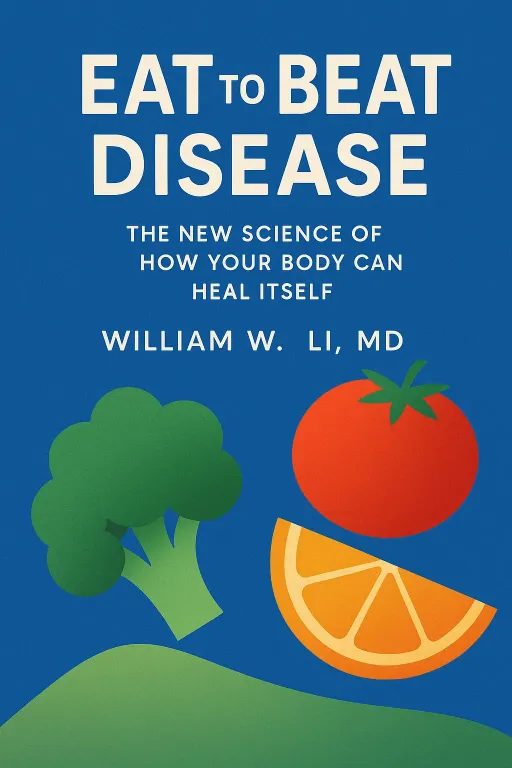
Eric: Thanks, Nova. It is great to be here. You know, that opening hook of yours is spot on. As someone who has spent years looking at the economics of healthcare, I can tell you that our current model of waiting for chronic diseases to develop and then throwing incredibly expensive, late-stage drugs at them is completely unsustainable. We are talking about biotechnology drugs that cost upwards of nine hundred thousand dollars per year per patient. We need a paradigm shift, and that is exactly why Dr. William Li's work in Eat to Beat Disease is so revolutionary.
Nova: It really is. And today, we are going to tackle this groundbreaking science from three distinct, fascinating angles. First, we are going to explore angioprevention, which is a fancy way of saying how we can literally starve microscopic diseases before they ever take root in our bodies. Second, we will look at dietary stem cell mobilization, showing how everyday foods can trigger our internal cellular repair crew. And finally, we will dive into the holobiont frontier, looking at how our gut microbiome actually dictates the success of cutting-edge cancer immunotherapies. Eric, where should we start?
Eric: Let's start with the infrastructure of disease, Nova. Let's talk about angiogenesis.
Deep Dive into Core Topic 1
SECTION
Nova: Perfect. Angiogenesis is the process our bodies use to grow blood vessels. And Dr. Li introduces this beautiful concept of the Goldilocks zone. Not too many blood vessels, not too few, but just the right amount to keep every cell nourished. But here is the mind-blower from the book: autopsy studies show that most of us actually have microscopic cancers living inside us right now. Almost forty percent of women between forty and fifty have microscopic breast tumors, fifty percent of men in their fifties have microscopic prostate cancer, and virtually one hundred percent of us over seventy have microscopic thyroid cancers. But we are not sick. Why is that, Eric?
Eric: This is one of the most profound insights in modern oncology, Nova. These microscopic tumors are completely harmless as long as they do not have a blood supply. Without blood vessels to bring them oxygen and nutrients, a tumor cannot grow larger than the tip of a ballpoint pen. It remains dormant. But if the tumor successfully signals the body to grow new blood vessels toward it, a process called tumor angiogenesis, it can grow exponentially and become a deadly disease. So, the goal of angioprevention is to support our body's natural defense systems to prune away those excess blood vessels, keeping those microscopic cancers dormant and harmless forever.
Nova: And the science behind how food can do this is just wild. Dr. Li shares this incredible story from 1993. There was a Greek scientist named Theodore Fotsis working at the University of Heidelberg in Germany. He was trying to figure out why Asian populations, who eat a lot of soy, have significantly lower rates of lethal cancers. So, what did he do? He actually collected urine samples from healthy Japanese villagers who lived on a traditional, soy-rich diet. And when he analyzed it, he discovered this natural bioactive compound called genistein. In his lab, Fotsis found that genistein potently suppressed the blood vessels sparked by tumors and directly stopped the growth of four different types of pediatric cancer cells. It was the first time anyone had proven that a dietary factor, absorbed from food and excreted by the body, could actively inhibit angiogenesis.
Eric: That Fotsis study is a classic, Nova. And what makes it so fascinating from a clinical perspective is how it debunks one of the most persistent myths in nutrition. For years, well-meaning doctors told breast cancer survivors to avoid soy because it contains phytoestrogens. They assumed plant estrogens would fuel estrogen-receptor-positive breast cancers. But the data tells the exact opposite story. Look at the Shanghai Breast Cancer Survival Study led by Vanderbilt University. They followed over five thousand breast cancer survivors over four years. The women with the highest soy intake had a thirty-two percent reduction in cancer recurrence and a twenty-nine percent reduction in mortality.
Nova: Wow. That is not a small difference. That is massive.
Eric: It is huge. And the molecular reason is that soy phytoestrogens actually act as anti-estrogens in humans. They bind to the estrogen receptors, but they do it weakly, effectively blocking the body's own stronger estrogens from fueling the cancer. Plus, they are antiangiogenic. So, by eating soy, you are essentially putting a physical barrier on the cancer's fuel source and cutting off its supply lines. From an entrepreneurial and public health standpoint, this is incredibly exciting. We are talking about a highly scalable, zero-toxicity, low-cost intervention that anyone can access at the grocery store.
Nova: It is like a natural, targeted strike. And it is not just soy, right? Dr. Li talks about cooked tomatoes containing lycopene, which potently inhibits angiogenesis. The Harvard Health Professionals Follow-Up Study of over forty-six thousand men found that eating two to three cups of tomato sauce per week was associated with a thirty percent decreased risk of prostate cancer. And even in the men who did get cancer, those who ate more tomato sauce had less aggressive, less angiogenic tumors.
Eric: Exactly. And notice the detail there: cooked tomatoes. Cooking the tomatoes actually changes the chemical structure of the lycopene from a trans-isomer to a cis-isomer, which makes it much more bioavailable, meaning our bodies can absorb it far more easily. This is what I love about Dr. Li's approach. It is not just eat your veggies. It is the specific preparation, the specific dose, and the specific molecular pathway. It is clinical-grade nutrition.
Deep Dive into Core Topic 2
SECTION
Nova: Speaking of clinical-grade, let's move to our second pillar: regeneration and stem cells. I think most people hear the words stem cells and they think of controversial, high-tech therapies in Swiss clinics. But Dr. Li reframes stem cells as our body's internal, hardwired repair crew. He says they are like special forces soldiers. They gather intelligence, conduct reconnaissance, and execute missions to keep our organs in optimal shape. And if they stopped working, we would be dead in a week.
Eric: That is a literal fact, Nova. Our tissues are constantly wearing out. Our skin, our gut lining, our blood vessels, they all need constant replacement. And that replacement is driven by adult stem cells, particularly endothelial progenitor cells, or EPCs, which live in our bone marrow. When an organ is damaged, say after a heart attack or a stroke, it releases distress signals. The bone marrow hears the signal and deploys these EPCs into the bloodstream. They home in on the damaged area, grow new blood vessels, and regenerate the tissue. The Malmo Diet and Cancer Study in Sweden followed over four thousand people for nineteen years and found that those with the highest levels of stem cell factors in their blood had a fifty percent lower risk of heart failure and a thirty-two percent lower risk of death from any cause.
Nova: That is incredible. So, the question is, how do we get more of these special forces soldiers into our bloodstream? And the answer, once again, is in our kitchen. Dr. Li highlights this mind-blowing study from the University of California, San Francisco. Researchers took sixteen patients with documented, severe coronary artery disease. They split them into two groups. One group drank hot cocoa with a very low flavanol content, only nine milligrams per serving. The other group drank hot cocoa made with CocoaPro powder, which contained a whopping three hundred and seventy-five milligrams of flavanols per serving. They drank this twice a day for thirty days. Eric, what happened to their stem cells?
Eric: The results were stunning, Nova. At the end of the thirty days, the patients who drank the high-flavanol cocoa had twice as many circulating stem cells in their blood compared to the low-flavanol group. Twice as many. And when they ran a flow-mediated dilation test, which measures how well blood vessels dilate and allow blood to flow, they saw a two-fold improvement. The blood vessels were literally younger and more elastic. To put this in perspective for our listeners, a two-fold increase in circulating stem cells is comparable to the effect you see from taking prescription statins or engaging in hyperbaric oxygen therapy. But instead of a drug with potential side effects, these patients were just drinking delicious, high-quality dark chocolate.
Nova: I mean, sign me up for that prescription, right? A cup of hot cocoa twice a day to rebuild my blood vessels. It sounds too good to be true, but the data is right there in the New England Journal of Medicine and other top-tier journals.
Eric: It is. And as a healthcare entrepreneur, this is where I see massive potential for disruption. We are currently investing billions of dollars into developing engineered stem cell therapies, which are incredibly complex, highly regulated, and wildly expensive. But Mother Nature has already beaten us to the punch. We can mobilize our own endogenous stem cell reservoirs naturally. Another great example from the book is fish oil. Scientists at the University of Montreal took mice with ischemic limbs, which is a condition where blood flow is cut off to the legs, similar to peripheral artery disease in humans. They fed one group a diet with twenty percent fish oil, rich in omega-three fatty acids, and the other group a diet with twenty percent corn oil, which is high in pro-inflammatory omega-sixes. After twenty-one days, the fish oil group had a thirty percent increase in the production of those vital endothelial progenitor stem cells, and those stem cells had a fifty percent better ability to migrate and repair the oxygen-deprived muscles.
Nova: That is just beautiful. It shows that we can actively direct our cellular repair mechanisms through what we choose to put in our bodies. But we also have to talk about what damages these stem cells, right? Dr. Li points out that high blood sugar from poorly managed diabetes, smoking, and high cholesterol act like toxins that stun our stem cells, making them sluggish and unable to answer the distress calls.
Eric: Exactly. It is a double-edged sword. You can eat all the dark chocolate and fish oil you want, but if you are constantly bathing your stem cells in high glucose or exposing them to cigarette smoke, you are essentially grounding your own air force. You have to protect the defense systems while you are trying to boost them.
Deep Dive into Core Topic 3
SECTION
Nova: That leads us perfectly into our third pillar, which might be the most exciting frontier in modern medicine: the gut microbiome and our immune system. Dr. Li says we are not just human; we are holobionts. We are complex ecosystems made of thirty trillion human cells and thirty-nine trillion bacterial cells. Our bacteria eat what we eat. And they are the ultimate gatekeepers of our immune system.
Eric: This is a massive paradigm shift, Nova. For over a century, medicine was obsessed with sterilizing everything, killing all bacteria because we associated them with infectious diseases. But now we know that a diverse, healthy microbiome is absolutely essential for training and modulating our immune system. In fact, about seventy percent of our immune cells live in our gut, directly interacting with our microbiome. And this interaction is so powerful that it actually dictates the success of some of the most advanced, expensive cancer treatments on earth.
Nova: Yes, this study from 2018 published in the journal Science is absolutely jaw-dropping. Researchers looked at cancer patients undergoing PD-1-based immunotherapy. These are drugs like Keytruda, which former President Jimmy Carter used to completely wipe out metastatic melanoma that had spread to his brain. These drugs work by unmasking cancer cells so the patient's own immune system can find and destroy them. But the researchers found that the success of this incredibly advanced immunotherapy depended almost entirely on the presence of a single, specific gut bacterium called Akkermansia muciniphila.
Eric: It is mind-blowing, Nova. If patients had high levels of Akkermansia in their gut, their immune systems responded to the drug, and their tumors melted away. But if they lacked this bacterium, or if they had taken a course of antibiotics right before starting the treatment, which wiped out their microbiome, the immunotherapy often failed completely. Think about the clinical and economic implications of that. We are administering a drug that costs over a hundred thousand dollars a year, and its efficacy is being decided by a microscopic bacterium in the patient's colon.
Nova: It is just wild. And the best part? We can actually cultivate Akkermansia through our diet. Dr. Li explains that Akkermansia loves to feed on the natural mucus layer of our gut lining. And we can stimulate our gut to produce more of this mucus by consuming specific foods, like pomegranate, cranberry, and black cherry extracts. The polyphenols in these fruits act like a gourmet meal for Akkermansia, causing its population to surge.
Eric: This is the ultimate convergence of oncology, immunology, and nutrition. And it doesn't stop there. Let's look at another bioactive compound: ellagic acid, which is found in high levels in pomegranates, walnuts, chestnuts, and blackberries. Researchers at the University of Rome found that ellagic acid can actually block the production of the exact same immune-cloaking proteins in bladder cancer cells that drugs like Keytruda target. It is a natural checkpoint inhibitor. Now, I am not saying you should replace immunotherapy with walnuts, but imagine the synergistic potential of combining these cutting-edge treatments with a targeted, supportive diet that primes the immune system for success.
Nova: Absolutely. It is about enhancing the treatment, reducing the toxicity, and giving the body every possible advantage. And it is so empowering to know that we don't have to wait for a doctor's prescription to start nurturing these defenses. We can start at our next meal.
Synthesis & Takeaways
SECTION
Eric: That is the real beauty of Dr. Li's work. It is highly actionable. He doesn't advocate for extreme, restrictive diets. Instead, he introduces the 5x5x5 Framework.
Nova: Yes, let's break that down for our listeners. The 5x5x5 Framework is incredibly simple and flexible. The first five stands for the five health defense systems we talked about: angiogenesis, regeneration, microbiome, DNA protection, and immunity. The second five means you choose five foods from Dr. Li's list of exceptional, evidence-based foods. And the third five means you incorporate those five foods into five daily doses or meals. It is not about cutting things out; it is about adding the good stuff in.
Eric: It is a brilliant design because it respects human behavior. Restrictive diets fail because they are unsustainable. But the 5x5x5 Framework is additive. You can choose foods you already love, whether that is extra virgin olive oil, green tea, blueberries, dark chocolate, or broccoli, and just make sure you are getting them into your daily routine. From a systems perspective, this is how we scale preventative health. We make it easy, delicious, and scientifically precise.
Nova: I love that. It is about loving your food to fear your disease, as Dr. Li says. Well, Eric, we are coming to the end of our time, but I want to leave our audience with a powerful, thought-provoking question. As a healthcare entrepreneur and a visionary in this space, what is your ultimate takeaway from Eat to Beat Disease?
Eric: My takeaway is that we need to stop viewing health as simply the absence of disease. Health is an active state, maintained by a series of remarkable, hardwired defense systems that are constantly working to keep us alive. And we have an enormous, unprecedented opportunity to take charge of our own lives and direct our genetic fate using the power of food. The next time you sit down to eat, don't just think about calories or macros. Ask yourself: how am I feeding my defense systems today? Am I starving a disease, or am I feeding my health?
Nova: What a perfect note to end on. Dr. Eric, thank you so much for joining us and bringing your incredible analytical depth to this conversation.
Eric: It was my absolute pleasure, Nova. Keep spreading the word.
Nova: And thank you to all our listeners. Remember, your kitchen is your first line of defense. Eat to beat disease, and we will see you next time!