

The R&D Prescription: Swallowing the Frog for Peak Performance
Golden Hook & Introduction
SECTION
Nova: We’ve all been there. You’re staring at a huge, important project. Maybe it’s a blank page for a critical report, or in the science world, a clean lab bench before a complex, multi-day experiment. You know it’s the most important thing you have to do. And that is exactly why you suddenly find a million other, smaller, easier things to do instead. That big, ugly, intimidating task? That’s your "frog." And today, we’re going to learn how to eat it.
Arfa Rizwan: That’s such a vivid and, honestly, very accurate metaphor for life in research and development. That "frog" is a daily reality.
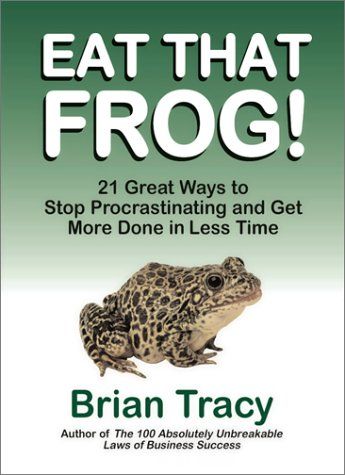
Nova: I can only imagine! And that’s why I’m so thrilled to have you here, Arfa. As a pharmacist working in R&D, you live in a world of high-stakes projects where procrastination can have huge consequences. We’re diving into Brian Tracy’s classic book, "Eat That Frog!," to see how its principles can help build the discipline needed for leadership and innovation.
Arfa Rizwan: I'm excited. I think moving from just being busy to being effective is the core challenge for any ambitious professional, especially in a detail-oriented field like mine.
Nova: Exactly. And we believe the solution is a two-part process. Today we'll dive deep into this from two perspectives. First, we'll explore the diagnostic phase: how to pinpoint your most vital task, your 'frog.' Then, we'll discuss the execution system: the practical, daily methods you can use to tackle that frog without fail. Ready to get started?
Arfa Rizwan: Absolutely. Let's find that frog.
Deep Dive into Core Topic 1: The Diagnostic Phase
SECTION
Nova: So, Arfa, that feeling I described—staring down a massive task and feeling paralyzed. Does that resonate with your experience in the pharmaceutical industry?
Arfa Rizwan: Oh, completely. A new drug development project is a perfect example. It can span years and involve hundreds of steps. The 'frog' might be designing the initial screening protocol. It’s complex, it requires immense focus, and if you get it wrong, months of work down the line could be based on a flawed premise. The pressure is immense, so the temptation to work on smaller, more defined tasks—like inventory management or calibrating a secondary instrument—is huge.
Nova: That is the perfect setup for Tracy's core idea. He says your "frog" is the one task that can have the greatest positive impact on your life and results at the moment. It’s almost always the hardest and most complex one, but getting it done gives you this incredible surge of energy and accomplishment. The first step, he argues, is getting crystal clear on what that frog actually is.
Arfa Rizwan: Clarity is everything. In R&D, you can be busy for 12 hours a day and achieve very little of consequence if you’re not working on the critical path. But how do you find that clarity when everything feels urgent?
Nova: That’s where he brings in a powerful tool: the 80/20 rule, also known as the Pareto Principle. The story goes that an economist named Vilfredo Pareto noticed that 80% of the land in Italy was owned by 20% of the population. This principle shows up everywhere. 20% of customers generate 80% of revenue. 20% of your clothes you wear 80% of the time. Tracy applies this to productivity: 20% of your activities will account for 80% of your results.
Arfa Rizwan: Hmm, that’s a powerful mental model. So, the goal isn't to work through a long to-do list, but to identify that vital 20%—the one or two tasks that are the real frogs—and focus all your energy there.
Nova: Precisely! It’s about effectiveness, not efficiency. You could efficiently clear 10 small, unimportant emails, or you could effectively spend that same time outlining that one difficult research proposal. One of those is a tadpole, the other is a frog.
Arfa Rizwan: I can see this so clearly in a lab setting. Out of a hundred compounds you might screen, maybe twenty will show initial promise, and out of those, maybe four will be viable candidates. That's the 80/20 rule in action. The 'frog' isn't just running the tests; it's the deep analytical work of interpreting the results from that first batch to decide which of the hundred to discard. That’s the task everyone dreads because it carries so much weight.
Nova: And it requires real thinking, which is hard. Tracy says that your ability to think, plan, and decide what to work on is your most powerful tool for overcoming procrastination. He urges us to literally write down our goals and then, for each goal, write down every single step needed to achieve it. Just the act of writing it down forces clarity.
Arfa Rizwan: That resonates with my detail-oriented side. It turns a big, scary, amorphous 'frog' like "Develop New Compound X" into a series of concrete steps. The first step on that list, the most crucial one, that's your frog for the day. It’s a diagnostic process. You're not just making a list; you're identifying the rate-limiting step in your own progress.
Nova: You just said it perfectly. It's a diagnostic process. You have to identify the illness—the bottleneck—before you can prescribe the treatment. Which, of course, leads us to our next point.
Deep Dive into Core Topic 2: The Execution System
SECTION
Nova: Okay, so once we've diagnosed the frog, we can't just sit there and admire how ugly it is. We need a treatment plan. This is where Tracy's genius for simple, repeatable systems comes in. It’s all about building an execution system.
Arfa Rizwan: This is what I’m most interested in. As an ESFP, I love starting new things, but the day-to-day consistency on the hard stuff can be a challenge. A system feels more reliable than just willpower.
Nova: Exactly. Willpower is a finite resource. A system is not. Tracy’s first system is incredibly simple: "Prepare your table thoroughly before you begin." He uses the analogy of cooking a meal. A great chef gets out all the ingredients, the pots, the pans, the knives—everything is laid out they turn on the stove.
Arfa Rizwan: That is literally the first rule of good laboratory practice. It’s called 'Mise en place'—everything in its place. Before you start a complex synthesis or a cell culture experiment, you spend maybe an hour just gathering your reagents, labeling your tubes, calibrating your instruments, and laying everything out in the order you’ll use it.
Nova: See? You’re already doing it! Why is that so important in the lab?
Arfa Rizwan: Because once you start, you can't stop. Some reactions are time-sensitive. If you have to stop mid-process to find a specific chemical or realize a machine isn't calibrated, you can ruin hours, or even days, of work. The preparation isn't part of the work; it's what the work to happen smoothly. It removes all the friction.
Nova: That’s the key! It removes friction. If your frog is to write a report, preparing the table means opening the document, finding all the data files you need and opening them in tabs, getting your coffee, and closing your email and chat programs. You make it so the easiest next thing to do is to start writing. You’re engineering your environment for success.
Arfa Rizwan: So, for a leader, this isn't just about personal tasks. It's about preparing the table for your team. Do they have the data they need? Is the project brief clear? Have you removed the organizational friction so they can tackle their 'frog'? That's a shift in thinking.
Nova: A huge one. It’s proactive leadership. And once the table is set, you need a way to prioritize the meal. This is Tracy's second system: the ABCDE Method. It’s a way to organize your daily to-do list.
Arfa Rizwan: Okay, break it down for me.
Nova: It's simple. You list everything you have to do for the day. Then you go through and label each item: 'A' is for tasks you do. These are your frogs. There are serious negative consequences if you don’t do them. 'B' is for tasks you do. These are your tadpoles. There are mild consequences if they’re left undone. 'C' is for tasks that are to do, like having lunch with a colleague. No consequences if you don't. 'D' is for tasks you can. And 'E' is for tasks you can.
Arfa Rizwan: 'A' is for tasks you do. These are your frogs. There are serious negative consequences if you don’t do them.
Arfa Rizwan: 'B' is for tasks you do. These are your tadpoles. There are mild consequences if they’re left undone.
Arfa Rizwan: 'C' is for tasks that are to do, like having lunch with a colleague. No consequences if you don't.
Arfa Rizwan: 'D' is for tasks you can.
Arfa Rizwan: And 'E' is for tasks you can.
Arfa Rizwan: I see. And the rule is you never do a 'B' task if an 'A' task is left undone.
Nova: You got it. And if you have multiple 'A' tasks, you number them: A-1, A-2, A-3. Your A-1 is your biggest, ugliest frog. The entire system is designed to force you to confront that A-1 task first thing in the morning, when your energy is highest.
Arfa Rizwan: This feels like a direct antidote to the ESFP's "ooh, shiny object" tendency. My natural inclination might be to jump on a new, exciting 'C' task because it feels creative and fun. But this system provides a logical framework that says, "No. The A-1 task is the only thing that matters right now." It's a structure for discipline.
Nova: It is! It’s not about feeling motivated. It’s about having a system that you trust, a system that directs your focus to what is truly important, not just what is easy or interesting.
Synthesis & Takeaways
SECTION
Nova: So, when we put it all together, it’s a really elegant, two-step dance. First, the diagnostic phase: use the 80/20 rule and goal clarity to identify your single most important task—your A-1 frog.
Arfa Rizwan: And second, the execution system: you prepare your table the night before to remove all friction, and you use the ABCDE method to ensure that when you start your day, you pour all your energy into that A-1 task until it's done.
Nova: That’s it. It’s the formula for transforming from being busy to being effective. It’s how you build the consistency and discipline you were talking about, the kind that underpins real leadership. You’re not just managing tasks anymore; you’re managing impact.
Arfa Rizwan: It makes so much sense. It’s not about a personality transplant or suddenly becoming a productivity guru. It’s about implementing a simple, logical process. It’s very much like the scientific method: you have a hypothesis about what's most important, and then you run the experiment in a controlled, prepared environment.
Nova: I love that analogy. So, to make this real for everyone listening, let’s end with a call to action. What is the one "frog" in your work or life right now that you've been avoiding?
Arfa Rizwan: For me, it’s analyzing a particularly complex and ambiguous dataset from a recent experiment. It’s my A-1 task for tomorrow. So, following this, my plan for tonight is to 'prepare the table.' I’m going to open the software, load all the data files, pull up the two reference papers I need, and have my coffee maker prepped and ready to go.
Nova: That is the perfect application. By the time you sit down tomorrow morning, the path of least resistance will be to simply begin the analysis. So, for everyone listening, we leave you with that same challenge: Identify your A-1 frog for tomorrow. And then, tonight, just take ten minutes to prepare your table. Make it inevitable that you will finally eat that frog. Arfa, thank you so much for bringing your insight to this.
Arfa Rizwan: This was fantastic. Thank you, Nova. I feel ready for breakfast tomorrow.