

Unveiling the Layers of Human Motivation
Golden Hook & Introduction
SECTION
Nova: Atlas, imagine you’re at a crossroads, pondering a big decision. Maybe it's a career move, or a family challenge. What if the forces truly guiding your choice, and everyone else's, aren't what you think they are at all?
Atlas: Oh, that’s a fantastic premise, Nova! I’m already picturing it. So, you’re telling me there’s a secret puppet master, but it’s not some shadowy organization, it’s… our own brains? That's definitely going to resonate with anyone trying to navigate personal growth or even just figure out why their kids do what they do.
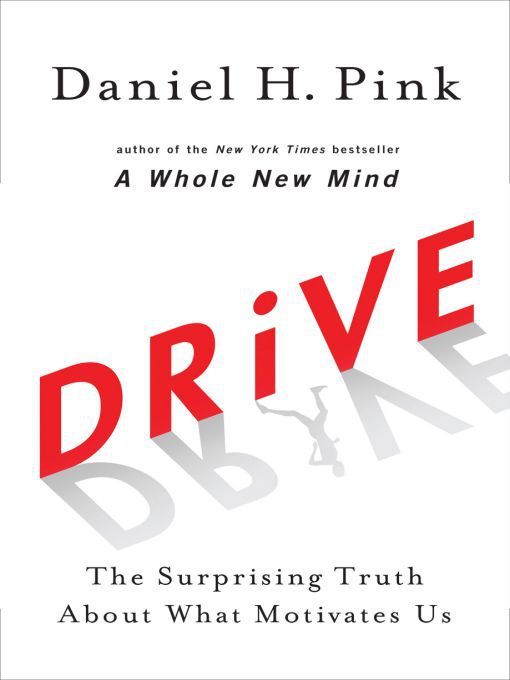
Nova: Exactly! And that's precisely what we're unwrapping today with two incredibly insightful books: Daniel H. Pink's "Drive: The Surprising Truth About What Motivates Us" and Robert Cialdini's seminal work, "Influence: The Psychology of Persuasion." Pink's book, for example, gained immense traction because it completely upended conventional wisdom about workplace motivation. It essentially told managers, "Everything you thought you knew about incentives? Probably wrong." It was a huge wake-up call for so many businesses.
Atlas: That’s a powerful statement, and I’m already intrigued. It reminds me of how often we assume we know what drives us, or others, but the reality is far more subtle. So, Pink is challenging the carrot-and-stick approach, and Cialdini is giving us the playbook on how we're subtly nudged? I’m ready.
The Intrinsic Engine: Autonomy, Mastery, Purpose
SECTION
Nova: Let's dive right into Pink with "Drive." For decades, the prevailing wisdom was that people are motivated by external rewards—money, promotions, bonuses. Pink argues that for complex, creative tasks, these "if-then" rewards are not just ineffective, but they can actually performance and intrinsic motivation.
Atlas: Wait, really? That sounds almost counter-intuitive to everything we've been taught. I mean, my first thought is always, "How much will this pay?" or "What's the bonus?" So you're saying that big bonus might actually make me at my job if it's a creative one? That's a bold claim.
Nova: It absolutely is, and it's backed by fascinating research. Pink introduces what he calls Motivation 2.0, the idea that for 21st-century tasks, we need Motivation 3.0, which is built on three pillars: autonomy, mastery, and purpose. Think about a programmer contributing to open-source software. They're not getting paid, but they're deeply engaged. Why? Because they have autonomy over their work, they're pursuing mastery in their craft, and they feel a sense of purpose in contributing to a larger community.
Atlas: Oh, I get it. So, autonomy is about having control over your tasks, time, team, and technique. Mastery is the urge to get better and better at something that matters. And purpose is the yearning to do what we do in the service of something larger than ourselves. It makes sense when you put it like that. I imagine a lot of our listeners, especially those juggling demanding careers and family life, might feel that tug for more autonomy, right? Like, "Can I just choose how I get this done?" or "Can I work my own hours?"
Nova: Exactly! And it's not just about grand gestures. It can be as simple as a team given the freedom to decide they approach a project, rather than being micromanaged. Or a company that allows employees to dedicate a percentage of their work week to projects of their own choosing, as Google famously did with its "20% time." That led to innovations like Gmail and AdSense. It wasn't about the bonus; it was about the freedom to explore and grow.
Atlas: That’s incredible. So, the lesson here isn't just for big corporations, it's for individuals too. If I'm feeling unmotivated, maybe the answer isn't to look for a bigger paycheck, but to find ways to inject more autonomy, mastery, or purpose into what I'm already doing. It’s like, instead of just cleaning the house, I can approach it as mastering the art of efficient decluttering, or creating a purposeful, serene space for my family. That’s a subtle but significant shift in perspective.
Nova: Precisely. Pink's work really challenges us to look inward and understand our deeper, more human needs, especially in an increasingly complex and creative world. It's about moving beyond the transactional and into the transformational.
The Subtle Nudges: Cialdini's Principles of Influence
SECTION
Nova: Now, moving from our internal drives to the external forces that subtly shape our decisions, we turn to Robert Cialdini's "Influence: The Psychology of Persuasion." This book is a classic because it meticulously breaks down the six universal principles that guide human behavior and decision-making. These aren't about brute force; they're about subtle, almost invisible nudges.
Atlas: Oh, I know this one! It’s the book that makes you realize you've been "influenced" more times than you can count, often without even knowing it. It’s a bit like learning the magic tricks behind the illusion, isn't it? What's the first principle you want to tackle?
Nova: Let's start with Reciprocity. It's the powerful urge to repay in kind what another person has provided us. Think about that free sample at the grocery store. You take a piece of cheese, and suddenly, you feel a subtle obligation to buy the whole block. Or the friend who covers your tab, and you instinctively feel the need to treat them next time.
Atlas: Yes! That’s so true. I’ve definitely felt that. It’s like an unwritten social contract. And it's not always about big favors. Sometimes it's just a kind word or a small gesture that makes you feel indebted, in a good way. It goes back to our primal need for social cohesion, doesn't it?
Nova: Absolutely. Then there's Commitment and Consistency. Once we make a choice or take a stand, we feel a strong pressure to behave consistently with that commitment. This is why salespeople often start with a small request – like asking you to sign a petition. Once you've committed to that small action, you're more likely to agree to a larger request later, like making a donation. Your internal desire to be seen as consistent kicks in.
Atlas: That’s fascinating. So, if I publicly declare I’m going to run a marathon, I’m far more likely to actually train for it because I’ve made that commitment. It’s not just about willpower, but also about maintaining my self-image and reputation. This is something people building their careers or even just trying to stick to a new habit could really leverage. Make the commitment visible, and the consistency might just follow.
Nova: Exactly. And then we have Social Proof. We're more likely to do something if we see others doing it, especially people we perceive as similar to ourselves. Think about the "crowd goes wild" effect at a concert, or how often we check online reviews before buying something. If everyone else is doing it, it must be the right thing to do.
Atlas: Oh, that’s huge in our modern world, isn’t it? With social media, it’s amplified so much. Likes, shares, testimonials—they all tap into that primal need for validation and belonging. It’s why certain trends become so massive, even when they seem a bit silly. Everyone else is doing it, so why shouldn't I?
Nova: And Authority. We tend to obey authority figures, even when their requests are questionable. This isn't just about police officers or doctors; it can be someone dressed in a uniform, or even someone who just knowledgeable. The classic Milgram experiment, while controversial, chillingly demonstrated this power.
Atlas: That's a heavy one, Nova. It highlights how easily we can be swayed, sometimes against our better judgment, by perceived expertise. It's a reminder to always question, always think critically, rather than blindly following. This is a big one for new parents, or anyone in a leadership position, who might feel the pressure to always have the answers.
Nova: Then there's Liking. We are more likely to be persuaded by people we like. This is why salespeople are often trained to find common ground with you, compliment you, or even just smile a lot. We trust people who are similar to us, who give us compliments, or who cooperate with us.
Atlas: That’s just human nature, isn’t it? We gravitate towards people who make us feel good. It’s a powerful tool, whether you’re trying to build a team, negotiate a deal, or just get your kids to eat their vegetables. A little charm goes a long way.
Nova: And finally, Scarcity. Opportunities seem more valuable to us when their availability is limited. "Limited time offer!" "Only 3 left in stock!" These phrases trigger an urgency bias, making us feel like we need to act now before we miss out.
Atlas: Ah, the fear of missing out! FOMO is real, and it’s a master persuader. I’ve definitely fallen for that one, buying something I didn’t truly need just because it was "a limited edition" or "this price for today only." It’s a powerful psychological trigger.
Synthesis & Takeaways
SECTION
Nova: So, when you put Pink and Cialdini together, a really profound picture emerges. On one hand, Pink shows us the deep, intrinsic motivators that truly fulfill us – autonomy, mastery, and purpose. These are the engines of our personal growth and long-term satisfaction.
Atlas: And on the other, Cialdini reveals the subtle, often subconscious external forces that influence our daily choices, from what we buy to how we respond to requests. It’s like Pink gives us the blueprint for our internal operating system, and Cialdini shows us the external code that constantly tries to reprogram us.
Nova: Exactly. Understanding this nuanced interplay is incredibly powerful. For instance, if you're trying to motivate your team, simply offering a bonus might backfire if it stifles their autonomy or sense of purpose. Instead, fostering a sense of ownership and challenging them to master new skills can be far more effective and lead to deeper engagement.
Atlas: That’s a huge insight, especially for our listeners who are often in nurturing roles, whether at work or home. It’s about understanding that genuine engagement comes from within, but that doesn’t mean we’re immune to external influences. It means we need to be aware of both. It's about empowering ourselves to make choices that align with our deepest drives, while also being savvy about how others might be trying to nudge us.
Nova: It’s about building a robust internal compass, while also understanding the currents and winds of the external world. It allows us to not just react, but to consciously choose how we want to be motivated and how we want to influence others ethically. It's a powerful lens for both personal growth and navigating complex social dynamics, whether in your career or family life.
Atlas: That’s an incredibly valuable takeaway. It’s not just about decoding our inner drives, but about understanding the subtle dance between what moves us from within and what influences us from without. It empowers us to be more intentional, more aware, and ultimately, more effective in our lives.
Nova: And that's what we hope you take from today's discussion. This is Aibrary. Congratulations on your growth!