

Unlocking Team Potential: Strategies for Engagement & Drive
Golden Hook & Introduction
SECTION
Nova: Okay, Atlas, quick game. I’ll say a common workplace phrase, and you give me the most cynical, yet probably accurate, one-liner response. Ready?
Atlas: Oh, I like this! Hit me. My cynicism is finely tuned today.
Nova: "Employee of the Month."
Atlas: A cheap plaque and a target on your back for everyone else’s resentment. Next.
Nova: "Performance review."
Atlas: The annual ritual where everyone pretends to care about your development while secretly trying to justify your salary.
Nova: Wow, you're good! Last one: "Team building exercise."
Atlas: Forced fun designed to highlight everyone’s social awkwardness and make them long for their desks.
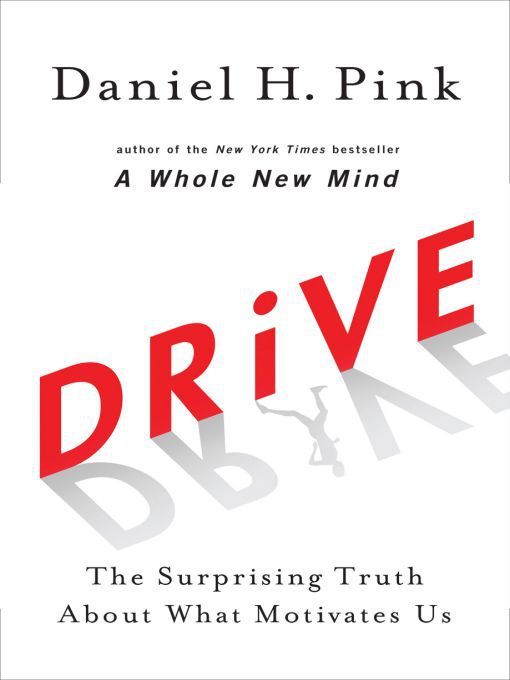
Nova: That's a perfect example of why so many traditional corporate approaches to motivation and engagement just… miss the mark, isn't it? Today, we are diving deep into that very idea, exploring the groundbreaking work of Daniel H. Pink in his highly acclaimed book, Drive: The Surprising Truth About What Motivates Us, and also touching on Simon Sinek’s foundational 'Start with Why.' Pink's book, in particular, really shifted the conversation in the business world after its release, challenging decades of management theory. It's interesting how he leverages a vast amount of behavioral science and psychology to dismantle the very systems many companies are built upon.
Atlas: Oh, I’ve heard of Pink's work. It’s one of those books that everyone cites, but I sometimes wonder if people truly internalize its implications. It sounds like a direct challenge to the "carrot and stick" approach that’s still so prevalent. But wait, if those traditional rewards are ineffective, what exactly is he proposing?
Nova: Exactly! That’s the core of our first deep dive.
The Science of Motivation: Beyond Carrots and Sticks
SECTION
Nova: Pink argues that the traditional reward system—the extrinsic motivators like bonuses, promotions, or even those 'Employee of the Month' plaques—they're not just ineffective, for many tasks, they actually performance and stifle creativity. He illustrates this with a fascinating experiment called the 'candle problem.'
Atlas: The candle problem? That sounds intriguing. Tell me more.
Nova: So, picture this: participants are given a candle, a box of thumbtacks, and some matches. Their task is to fix the candle to a wall so it doesn't drip wax onto the table below. Most people try to tack the candle directly to the wall or melt its side to stick it. It’s a trick, right? The solution is to empty the box of thumbtacks, tack the to the wall, and then place the candle in the box.
Atlas: Oh, I see! You have to think outside the box, literally. That’s clever.
Nova: Now, here’s where it gets interesting. Researchers offered two groups of people money for solving this problem quickly. One group was offered a small reward, the other a larger one. You’d expect the group offered more money to perform better, right?
Atlas: Absolutely. That’s just human nature, isn't it? More incentive, more speed.
Nova: Wrong! The groups offered rewards actually took to solve the problem than a control group offered no reward at all. And the group with the reward performed even worse!
Atlas: Whoa. That’s counterintuitive. So, if money makes you slower at solving a problem that requires creative thinking, what’s going on there?
Nova: Pink explains that for tasks requiring even rudimentary cognitive skill, extrinsic rewards narrow our focus. They make us hyper-fixate on the reward itself, rather than exploring creative solutions. It’s like putting blinders on. The moment you introduce a financial incentive for a task that isn't purely mechanical, you risk extinguishing the very creativity and problem-solving abilities you need.
Atlas: That’s actually really inspiring. So, if the external motivators we've been relying on for decades are actually counterproductive, what work? What’s the 'surprising truth' Pink talks about?
Nova: The surprising truth, and what Pink calls Motivation 3.0, is that true engagement and high performance for knowledge work comes from intrinsic motivators: autonomy, mastery, and purpose. Autonomy is our desire to direct our own lives. Mastery is our urge to get better at something that matters. And purpose is the yearning to do what we do in the service of something larger than ourselves.
Atlas: So basically, give people control, help them get good at what they do, and show them their work matters. That sounds almost… too simple for the complexities of modern business. I mean, for our listeners who are managing high-pressure teams, this concept might feel impossible to implement in a rigid corporate structure. How do you give employees 'autonomy' when there are deadlines and hierarchies?
Nova: That’s a fantastic question, and it’s where Simon Sinek's 'Start with Why' beautifully complements Pink's ideas. Sinek argues that truly inspiring leaders and organizations communicate from the inside out, starting with their 'why'—their purpose, cause, or belief—before moving to the 'how' and the 'what.' When people connect with the 'why,' their work isn't just a job; it becomes a contribution to something meaningful.
Atlas: So, you're saying if a company can clearly articulate its 'why,' it automatically taps into that 'purpose' motivator Pink talks about? It’s not just about selling a product, it's about selling a belief?
Nova: Exactly. Think about Apple. Their 'why' isn't just to sell computers. It's to challenge the status quo, to think differently. People buy into that 'why,' and employees are motivated by contributing to that vision. Nova's Take, as we put it, is that people aren't just motivated by paychecks; they're driven by meaning and a sense of contribution. Connect their work to a larger purpose, and watch them thrive.
Atlas: That makes sense. It’s like you’re not just building a product, you’re building a legacy, or solving a significant problem. It shifts the entire perspective from transactional to transformational. But how do you actually that? How do you move from understanding these principles to actually implementing them in a real-world, often messy, team environment?
Building a Culture of Impact: From Theory to Action
SECTION
Nova: That's the million-dollar question, isn't it? And it leads us directly into our second core topic: Building a Culture of Impact. It's one thing to understand autonomy, mastery, and purpose, but another entirely to weave them into the fabric of a team. Pink gives us some incredible examples. For autonomy, he talks about ROWE – Results-Only Work Environment.
Atlas: ROWE? That sounds like a dream for some, and a nightmare for micromanagers. What is it?
Nova: It’s a management strategy where employees don't have set schedules or even offices. They can work whenever and wherever they want, as long as the work gets done. Meeting attendance is optional. The focus is entirely on results. Best Buy, for example, implemented ROWE in some of its corporate departments, and saw productivity jump, turnover fall, and employee satisfaction skyrocket.
Atlas: So basically, trust your people to manage their own time and process, and they’ll deliver. That’s a huge leap of faith for many managers, especially those who equate 'presence' with 'productivity.' But I imagine a lot of our listeners struggle with feeling like they need to be constantly visible, or constantly checking in on their teams. How can a leader take a tiny step towards this, without completely overhauling their entire structure?
Nova: That's where our Tiny Step comes in. For autonomy, it could be as simple as letting a team member choose they approach a task, rather than dictating every step. Give them the goal, and let them figure out the best path. For mastery, it could be dedicating a small percentage of work time—say, 10%—to projects of their own choosing, purely for skill development, much like Google's famous '20% time.'
Atlas: Oh, I’ve heard of that! So, it’s not about revolutionary change overnight, but about creating small pockets of freedom and growth. And for purpose? How do you articulate that 'why' effectively, especially if your company's product isn't saving the world?
Nova: Even if your product isn’t curing cancer, every organization has a 'why.' It might be to simplify a complex process, to connect people, to bring joy, or to provide reliable service. The Tiny Step here is to reflect on your team's current 'why.' Can you articulate it more clearly and consistently? Not just to your clients, but internally, to your team? Nova’s Take suggests that even incremental changes can create a ripple effect. It’s about connecting the daily grind to that larger narrative.
Atlas: I guess I always thought 'purpose' was this grand, overarching thing, but it sounds like it can be found in the details, too. It's about drawing a straight line from the code a developer writes, or the customer service call someone takes, to the ultimate positive impact that has. That’s a powerful reframing.
Nova: Absolutely. And that leads us to our Deep Question for this segment: What small change can I implement to increase my team's sense of autonomy or mastery? It’s about being intentional. Maybe it’s delegating a decision you usually make, or sponsoring a training course someone has been wanting to take.
Atlas: That makes me wonder, how much of this is about the leader’s mindset? It seems like these strategies require a fundamental trust in your team, and a willingness to let go of some control. It's less about managing tasks and more about cultivating an environment.
Nova: You've hit on such an important point. It’s a shift from a command-and-control paradigm to one of empowerment and enablement. Leaders become facilitators, removing obstacles so their team can thrive. It takes courage to step back, but the payoff in terms of engagement, innovation, and drive is immense. It's about recognizing that control can be antithetical to true motivation. The book, and Sinek's work too, really push us to rethink our fundamental assumptions about human behavior in the workplace.
Synthesis & Takeaways
SECTION
Nova: So, as we wrap up, what we've really been exploring today is how the most powerful drivers of human potential aren't external rewards, but deeply internal needs: the need for self-direction, the desire to improve, and the yearning to contribute to something meaningful.
Atlas: It’s a complete paradigm shift, isn't it? Moving from a transactional view of employees as cogs in a machine, to recognizing them as inherently motivated, creative individuals who just need the right environment to flourish. It really challenges leaders to look inward, to articulate their 'why,' and to trust their teams with greater autonomy and opportunities for mastery.
Nova: Precisely. The core insight is that outdated management practices, while seemingly logical, often crush the very spirit they aim to ignite. By understanding the science behind motivation, leaders can unlock incredible levels of engagement and drive, transforming their teams into powerhouses of innovation and passion. It's about creating a workplace where people don't just show up, but where they genuinely want to contribute because their work truly matters.
Atlas: That’s such a hopeful way to look at it. It puts the power back into the hands of both leaders and team members to create something truly impactful. For anyone listening who feels stuck in a traditional, demotivating work environment, understanding these principles is the first step towards building something better, something that genuinely resonates with the human spirit.
Nova: Absolutely. And remember, sometimes the biggest changes come from the smallest, most intentional shifts in how we lead and how we empower.
Atlas: This is Aibrary. Congratulations on your growth!