

The 'Why' Behind the Wheel: Mastering Your Inner Drive
Golden Hook & Introduction
SECTION
Nova: Stop chasing the carrot! Because what if everything you've been taught about motivation—the rewards, the bonuses, the gold stars—is actually killing your drive?
Atlas: Whoa, that's a bold claim, Nova. I mean, for so many of us, especially those of us pushing for excellence in every area of life, the idea of external rewards is deeply ingrained. It feels like the engine of progress. How can that possibly be true?
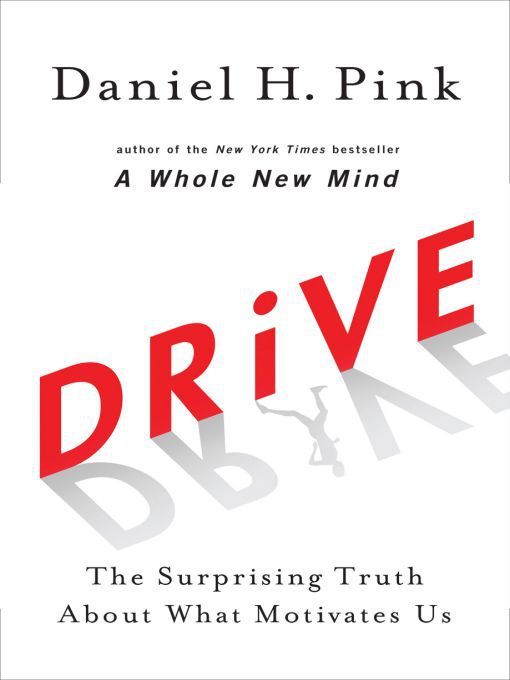
Nova: Well, Atlas, that’s exactly the counter-intuitive, profound insight we’re diving into today. We're exploring a world where true, lasting motivation isn't about what you get from the outside, but what ignites within. And our guides for this journey are two incredible thinkers: Daniel H. Pink, with his revolutionary book "Drive," and Angela Duckworth, the brilliant mind behind "Grit."
Atlas: Pink and Duckworth. Okay, I know those names. Pink, if I recall correctly, was a former speechwriter who completely pivoted his career to become this powerhouse in behavioral science, challenging how we think about work. And Duckworth, a MacArthur 'Genius' Fellow, brought this incredibly rigorous scientific lens to understanding success. Both of them really represent a powerful shift in understanding human potential.
Nova: Absolutely. And their work fundamentally shifts how we approach our goals, whether that's in school, in sport, or in life itself. They're telling us to move away from purely external validation and towards a deeply felt personal purpose. For anyone who strives for depth and wants to understand human behavior, this is essential.
Atlas: Right. For those of us who are always looking to apply theory to life, to build those bridges between understanding and doing, this is exactly the kind of conversation we need to have. So, where do we start with this idea that external rewards are… bad?
The Intrinsic Motivation Manifesto: Autonomy, Mastery, Purpose
SECTION
Nova: We start with Daniel Pink’s radical idea of intrinsic motivation. He argues that the traditional "carrot and stick" approach, designed for routine, 20th-century tasks, actually backfires when applied to complex, creative, 21st-century work. It doesn't motivate; it demotivates. The real drivers for high performance and deep engagement, he says, are autonomy, mastery, and purpose.
Atlas: Okay, but how? I mean, for our listeners who are managing high-pressure teams, or even just trying to get themselves to hit the gym every day, the idea that a bonus or a personal best isn't a powerful motivator feels… impossible to implement. What exactly do you mean by autonomy, mastery, and purpose?
Nova: Let’s break it down with a vivid example. Think about some of the most innovative companies in the tech world. Companies like Atlassian, and even Google in its early days, experimented with something called "20% time." The cause: they allowed their software engineers to spend 20% of their work week—a full day—working on project they wanted, with they wanted. No external incentives, no direct management oversight, just pure freedom to explore.
Atlas: Hold on. So, a major company just let their highly paid engineers effectively do whatever they felt like for a fifth of their week, without a direct payout for those specific projects? That sounds like a recipe for chaos, or at least a lot of napping.
Nova: It sounds that way, doesn't it? But the process was driven entirely by intrinsic motivation. The engineers chose projects based on their curiosity, their desire to master a new skill, or a personal belief that a certain problem needed solving. The outcome? Some of Google's most successful innovations, like Gmail and AdSense, were born out of this "20% time." At Atlassian, it led to significant product improvements and new features. It wasn't the bonus that drove them; it was the autonomy to choose, the mastery they gained from tackling new challenges, and the purpose they felt in creating something meaningful.
Atlas: Wow. That's incredible. It completely flips the script on what we assume works. But wait, for someone who's a dedicated athlete, or a student in a rigorous academic program, where the coach or professor dictates a very specific path, how do you cultivate autonomy in that kind of structured, high-pressure environment? It seems like choice is often removed.
Nova: That's a brilliant question, Atlas, and it gets to the nuance. Autonomy isn't necessarily about total freedom from all rules. It's about having choice within boundaries. For an athlete, it might be autonomy over they train a specific skill, or they recover, or even their input on game strategy. For a student, it could be autonomy over they research a topic, or they present their findings. Mastery is the desire to get better and better at something that matters. And purpose is connecting your effort—whether it's on the field or in the library—to a larger cause, a deeper 'why.' It’s about understanding that every drill, every late night of studying, isn't just to win a game or get a grade, but to become the best version of yourself, to contribute to something bigger.
Grit: The Unseen Engine of Lasting Success
SECTION
Nova: And that naturally leads us to the second key idea we need to talk about, which often acts as the engine for sustaining that inner drive: Angela Duckworth’s concept of "Grit." Pink's work gives us the 'what' to motivate us, and Duckworth gives us the 'how' to sustain it when things get tough.
Atlas: Okay, so we're talking about perseverance, right? The ability to just keep going. But I imagine there’s more to it than just stubbornness. What makes grit so special, especially for those who are always striving for excellence?
Nova: It’s far more than stubbornness. Duckworth reveals that passion and perseverance, not just talent, are the hallmarks of success. Her work connects directly to Pink's, illustrating how internal purpose fuels long-term grit. She argues that talent is how quickly your skills improve when you invest effort, but achievement is what happens when you those skills over time. And grit is what keeps you applying them.
Atlas: So, you're telling me raw talent almost doesn't matter? That feels incredibly counterintuitive for someone who's always pushed for excellence in their physical and mental game, believing that innate ability plays a huge role.
Nova: It’s not that talent doesn’t matter at all, Atlas. It’s that grit talent. Talent is how quickly you learn a new skill, but grit is how often you that skill, how often you show up, how much you commit to improving over the long haul. Duckworth’s research with West Point cadets is a perfect, illuminating case study. The cause: West Point is notoriously rigorous, and they wanted to understand what predicted success in their intensive "Beast Barracks" training. They looked at objective measures like SAT scores, physical fitness, and leadership potential. But they also developed a "grit scale" to measure passion and perseverance.
Atlas: So, they had all these incredibly talented, physically capable young people, and they were trying to figure out which ones would actually make it through. What happened?
Nova: The process involved tracking these cadets through the grueling Beast Barracks—a seven-week initiation that tests every ounce of mental and physical fortitude. The outcome? Duckworth found that grit was a far better predictor of who would successfully complete the training than raw talent, physical ability, or even SAT scores. The cadets who had a deep, enduring passion and the perseverance to stick with their long-term goals, despite setbacks and incredible difficulty, were the ones who made it. It wasn't the most naturally gifted; it was the most gritty.
Atlas: That’s a powerful redefinition of what success truly requires. It’s not just about being naturally good at something, it’s about having that deep, internal commitment to keep pushing. I can see how that applies directly to a dedicated athlete, where the daily grind, the setbacks, the injuries—those are the moments where grit truly shows up, not just in the highlights. And for an aspiring sage, the long, often unrewarded path of deep learning and reflection requires immense perseverance.
Synthesis & Takeaways
SECTION
Nova: Exactly. Pink gives us the framework for we should be motivated—autonomy, mastery, purpose. And Duckworth gives us the framework for we sustain that motivation—through passion and perseverance. When you combine them, you see that connecting your efforts to a deeply felt personal 'why' is what fuels the long-term grit needed to overcome obstacles and achieve true excellence. It's about building a foundation of internal drive that external circumstances can't easily shake.
Atlas: So, if someone is listening right now, maybe they’re a dedicated athlete facing a challenging training block, or an aspiring sage with a huge research project they’ve been putting off, what’s one tiny step they can take to start tapping into this inner drive and cultivate more grit?
Nova: That’s where the practical application comes in, directly from the insights of these books. Identify one task you've been procrastinating on. Just one. And then, reframe it. Instead of focusing on the external reward or the unpleasantness of the task, focus on its intrinsic purpose or the skill you'll master by completing it.
Atlas: So, for that research paper, it's not just about the grade, but about the intellectual mastery I'll gain, or the purpose it serves in contributing to my understanding of the world. And for that tough workout, it's not just about hitting a number, but about the resilience I'm building, or the deeper connection to my physical potential.
Nova: Precisely. That simple reframing can be a powerful catalyst. It shifts your mindset from external obligation to internal opportunity. It’s about connecting with your 'why' for more than just the end goal, but for the inherent value of the journey itself. That’s where the profound satisfaction and sustainable drive truly come from.
Atlas: That’s such a hopeful way to look at it. It gives us agency, a sense of control over our own motivation, that goes far beyond any external incentive. It’s about becoming a better human, not just a more rewarded one.
Nova: Indeed. The cold fact is, many of us chase external rewards. But true, lasting motivation comes from within. Understanding this inner drive is key to sustained effort and a life of deep purpose.
Nova: This is Aibrary. Congratulations on your growth!