

The Staffing Trap: Why You Need a Culture of Ownership
Golden Hook & Introduction
SECTION
Nova: Atlas, quick game for you. Five words. Describe "ownership culture." Go!
Atlas: Oh man, "Sounds great, but how, though?" Is that five?
Nova: That's exactly five, and perfectly encapsulates the skepticism we often face. Because today, we're diving headfirst into what we're calling "The Staffing Trap." It's this subtle, often invisible pitfall that many leaders, especially those focused on tangible operations and clear results – like many of our listeners – fall into.
Atlas: Right? Because from a pragmatic standpoint, control feels safe. It feels efficient. You staff up, you define roles, you manage. Where's the trap in that?
Nova: Well, the trap is precisely in that belief that control is the key to efficiency. The truth is, true operational strength, the kind that builds something lasting and effective, comes from empowering your team, not just managing them. We're talking about transitioning from simply staffing solutions to cultivating a culture where every single team member feels genuine ownership.
Atlas: That makes me wonder, how do you even begin to shift that mindset, especially if you're used to a very top-down, results-driven environment?
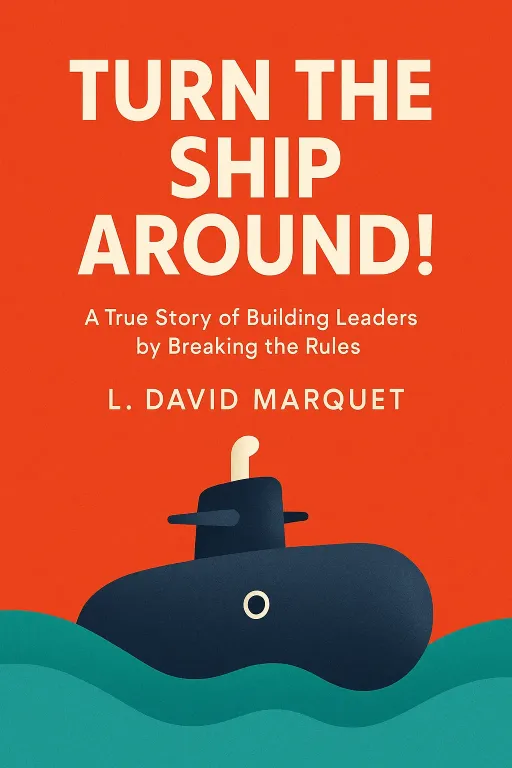
Nova: That's where two incredible books come in, offering some seriously counter-intuitive but profoundly effective insights. First up, we've got L. David Marquet's "Turn the Ship Around!", which comes from the most unlikely of places: a nuclear submarine. Marquet, a former captain, completely revolutionized leadership on the USS Santa Fe, taking it from the absolute worst performing submarine in the fleet to the best, not by tightening control, but by radical empowerment.
Atlas: A nuclear submarine! Talk about high stakes. No room for error there. That’s fascinating.
Nova: Exactly! And then, we'll layer on insights from Daniel H. Pink’s "Drive," where he masterfully synthesizes decades of behavioral science to show us Marquet’s approach works. Pink argues that traditional motivators, those 'carrot and stick' methods we all grew up with, are actually less effective than intrinsic motivators like autonomy, mastery, and purpose.
Atlas: So, we're talking about deep, research-backed shifts in how we think about leadership and motivation, not just some feel-good management theory. This is about real, measurable impact on performance.
Nova: Absolutely. Today we're going to explore this from two perspectives. First, we'll unpack "The Staffing Trap" and why our focus on control can be counterproductive. Then, we'll discuss how to shift from a 'leader-follower' to a 'leader-leader' model, drawing insights from unexpected places like that nuclear submarine and the science of human motivation.
The Staffing Trap & The Leader-Leader Model
SECTION
Nova: So, let's start with this "blind spot" that many leaders have. It's the belief that if you want things done right, efficiently, and predictably, you need to be in control. You need to staff the right people, tell them what to do, and monitor their progress closely. On the surface, that sounds like good management, right?
Atlas: It sounds like every operational manual I've ever seen. You optimize for efficiency, you minimize errors, you hit your targets. What's the alternative, anarchy? For a strategist trying to refine processes, letting go of control feels like the opposite of optimization.
Nova: That's the trap! Because while that approach might give you short-term compliance, it completely stifles innovation, initiative, and, crucially, ownership. You end up with a team of order-takers, not problem-solvers. And that's where Marquet's story on the USS Santa Fe is so powerful.
Atlas: Tell me more about that. How do you turn around a nuclear submarine, of all things, by giving up control? That just sounds incredibly risky.
Nova: It is, and it was. Marquet arrived on the Santa Fe, which was notorious for low morale, poor performance, and high turnover. He realized the traditional "leader-follower" model, where the captain gives all the orders and everyone else just executes, was creating a crew that was disengaged and lacked critical thinking.
Atlas: So, they were just waiting to be told what to do, even in a crisis? That's terrifying on a submarine.
Nova: Exactly. So, Marquet implemented what he called "leader-leader" model. Instead of giving direct orders, he started pushing decision-making authority down to the lowest possible level. He’d say things like, "Don't ask me what to do, tell me what you intend to do."
Atlas: Wait, hold on. So, a junior officer or even an enlisted sailor would come to him, not for permission, but to state their plan? How does that not devolve into chaos, especially when you're talking about millions of dollars of equipment and lives at stake?
Nova: That’s the genius of it. It wasn't just about handing over the keys. Marquet ensured two critical things were in place. First, technical competence. He made sure his crew members were incredibly well-trained and understood their roles deeply. Second, clarity of purpose. Everyone knew the mission, the strategic objectives. So, when a junior officer said, "Captain, I intend to take the submarine to periscope depth," Marquet wouldn't just say yes or no. He'd ask, "Why are you doing that? What do you anticipate? What are the risks?"
Atlas: So, it's not blind delegation; it's empowered decision-making within a framework of competence and clear intent. That makes more sense. It forces people to think like leaders, to own the thought process, not just the execution.
Nova: Precisely. The cause of the change was Marquet’s radical shift in philosophy. The process involved rigorous training, clear communication of intent, and a deliberate push of authority downwards. The outcome? The Santa Fe went from being the Navy’s worst performer to its best. They had higher retention, significantly fewer errors, and a crew that was not only competent but deeply engaged and proactive. They owned their results.
Atlas: That's incredible. For someone who's constantly optimizing operational processes, the idea of pushing authority to those closest to the information makes perfect sense. They have the most granular data. But what’s one tiny way a seasoned leader, who's used to calling all the shots, can start implementing this without feeling like they're losing control entirely?
Nova: A great first step is to identify one small, recurring decision that your team currently brings to you, and instead of giving the answer, ask them, "What would do if you were me, and why?" Just that simple shift in questioning can begin to foster a sense of ownership. You're not delegating the outcome yet, you're delegating the.
Intrinsic Motivation & Building Ownership
SECTION
Nova: And that leads us perfectly to the leader-leader model works so well, which Daniel Pink masterfully unpacks in "Drive." Because when you ask people what intend to do, you're tapping into something far more powerful than external rewards.
Atlas: Okay, so no more bonus structures or strict KPIs? That sounds a bit utopian for someone trying to hit quarterly targets. How do you measure 'purpose' on a spreadsheet?
Nova: It’s not about eliminating incentives; it's about understanding their limitations. Pink argues that for routine, algorithmic tasks, traditional motivators like bonuses or threats of punishment can work. But for anything requiring creativity, problem-solving, or deep engagement – which is most knowledge work today – those 'carrots and sticks' actually performance.
Atlas: Really? That’s counterintuitive. Our whole system is built on that.
Nova: Exactly. Pink identified three intrinsic motivators that are far more effective: autonomy, mastery, and purpose. Autonomy is the desire to direct our own lives. Mastery is the urge to get better and better at something that matters. And purpose is the yearning to do what we do in the service of something larger than ourselves.
Atlas: So, when Marquet had his crew state their intentions, he wasn't just giving them a task; he was giving them autonomy over they approached it, even if he still had the final say. And the constant training was building mastery. It's like, they weren't just sailors; they were mini-captains in their own right.
Nova: You got it! And the purpose was crystal clear: successfully operating a nuclear submarine, protecting their country. When those three elements are present, people don't just their jobs; they them. They become self-managing, high-performing individuals who are truly invested. The staffing trap, in this context, is believing that people need to be constantly managed and incentivized externally, when in fact, they often just need the space and opportunity to be intrinsically motivated.
Atlas: That makes me wonder, for a leader constantly optimizing processes and looking for staffing solutions, how do you inject 'mastery' or 'purpose' into what might seem like routine operational tasks? What's a practical first step beyond just asking for intent?
Nova: Excellent question. For mastery, it's about providing continuous learning opportunities, challenging assignments that stretch skills, and clear, constructive feedback. It’s also about linking those routine tasks to the larger organizational purpose. For example, a data entry clerk isn't just typing numbers; they're ensuring the accuracy that allows the sales team to close deals, which contributes to market expansion. Connecting their daily work to that bigger picture, to what they’re, makes a huge difference.
Atlas: So, it's about reframing, but also about genuine investment in their growth and showing them how their piece fits into the grand strategy. That’s a powerful shift.
Synthesis & Takeaways
SECTION
Nova: This whole conversation really re-frames the idea of "staffing solutions," doesn't it? It's not just about filling roles; it's about cultivating an environment where people to fill those roles with a sense of personal investment. We're moving from a mindset of simply managing staff to inspiring a collective sense of purpose and accountability.
Atlas: Exactly. It's about building a team that's not just efficient, but resilient, innovative, and deeply committed because they have skin in the game. They're owners, not just employees. And that, for anyone driven by growth and building something lasting, is the ultimate goal.
Nova: Absolutely. The deep question from our content today really hits home: "Consider your current staffing. Where can you delegate decision-making authority to foster greater ownership, even in small ways?" It's not about a grand overhaul overnight. It's about those small, consistent acts of trust and empowerment.
Atlas: I imagine a lot of our listeners, especially those who are pragmatists and strategists, might be thinking about that one team member, or that one process, where they could loosen the reins just a little. So, my challenge to our listeners is this: this week, identify one small decision you usually make, and instead, ask a team member for their intent. See what happens. You might be surprised by the ingenuity that emerges.
Nova: You might just find that letting go of a little control gives you back a whole lot more. It’s not just about improving morale; it's about unlocking a level of operational efficiency and strategic agility you didn't even know was possible.
Atlas: That’s a truly insightful way to look at it.
Nova: That’s it for this episode of Aibrary. Congratulations on your growth!