

The Human Element: Building Teams and Products That Connect.
Golden Hook & Introduction
SECTION
Nova: Atlas, tell me, if you had to review 'The Human Element' in exactly five words, what would they be?
Atlas: Ooh, five words. Let's see… "Build connection, not just machines."
Nova: Oh, I love that! Short, punchy, and hits right at the core. For me, it would be: "Purpose-driven tech, deeply human impact." Because really, that’s what we’re diving into today with 'The Human Element: Building Teams and Products That Connect.'
Atlas: Absolutely. It’s a powerful read that completely reframes how we think about innovation. And what’s fascinating about this book is how it distills complex ideas from psychology and leadership into such an accessible framework for anyone who’s building something, anything really. It’s not some academic tome; it feels like a practical guide for the modern innovator.
Nova: Exactly. It’s all about understanding that even the most brilliant technology, like our hypothetical tractor, won't succeed if it doesn't resonate with people. It’s about building a movement, not just a machine. And that brings us to our first big idea.
The 'Why' Behind the Build: Beyond Mechanics to Movement
SECTION
Nova: So, let's talk about the 'why.' When you're building, especially if you're an aspiring innovator or a practical engineer, it's easy to get lost in the 'how.' The mechanics, the code, the materials. But 'The Human Element' argues that you absolutely have to start with the 'why.' It’s about impact, inspiring others, and understanding user needs deeply.
Atlas: That makes perfect sense. I mean, for anyone who’s ever tried to get a project off the ground, whether it’s a new app or a physical product, the technical challenges can be all-consuming. But wait, why is the 'why' so much more critical than the 'what' or the 'how' in the initial stages? Isn’t solving the technical problem the first step?
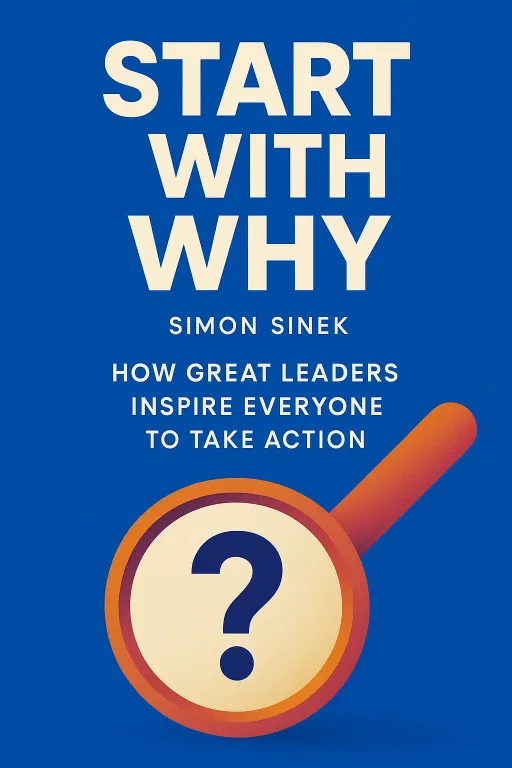
Nova: That’s a classic engineer’s question, and a good one! The book points us to Simon Sinek’s 'Start with Why.' Sinek argues that great leaders and organizations inspire action by communicating their purpose first. It’s not just about what you make; it’s you make it. Think about it: if you’re building a revolutionary tractor, the 'what' is the tractor itself. The 'how' is the engineering. But the 'why' could be empowering small farmers, improving food security, or creating sustainable agriculture.
Atlas: Oh, I see. So, if I’m trying to rally an R&D team around this new tractor, just showing them blueprints and specs might get them working, but telling them we’re building a tool that will radically change lives for the better... that’s what gets them truly. That’s the difference between clocking in and genuinely contributing.
Nova: Exactly! It's the difference between compliance and commitment. And it extends beyond your team to your users. When potential customers see your tractor, they're not just buying metal and plastic. They're buying into the promise of a better harvest, less toil, a more sustainable future. They're buying the 'why.' And that connection, that belief, is what forms a movement.
Atlas: That’s actually really inspiring. I imagine a lot of our listeners, especially those with a pioneering spirit, are driven by a bigger vision. But how do you articulate that 'why' effectively? It sounds a bit abstract. How do you make it tangible for a team that needs concrete tasks?
Nova: That's where the healing moment comes in, right from the book. It suggests reflecting on the 'why' behind your project. Write down three reasons that genuinely excite and motivate you, beyond just the technical challenge. For our tractor example, it might be: "I'm excited to empower farmers with groundbreaking efficiency," or "I'm motivated by creating a sustainable future through smart agriculture," or "I want to build something that makes a tangible difference in people's daily lives."
Atlas: So, it’s about internalizing that purpose, making it personal, before you try to articulate it externally. Because if you don’t feel it, you can’t genuinely convey it. That makes sense. It’s like, your personal 'why' fuels your team's collective 'why,' which then resonates with the users' 'why.' It's a chain reaction.
Nova: Precisely. And this isn't just fluffy philosophy. It’s a strategic imperative. When your 'why' is clear, it guides every decision, every design choice, every marketing message. It creates a cohesive vision that pulls everyone forward. And that naturally leads us to the second key idea, which often acts as the engine for bringing that 'why' to life.
Motivating Mastery: Igniting Internal Drive for External Impact
SECTION
Nova: Our second core idea dives into motivation itself, drawing heavily from Daniel H. Pink’s 'Drive.' Pink explores the science of motivation, revealing that autonomy, mastery, and purpose are the key drivers. Understanding these helps you build a highly engaged R&D team and design a product that truly resonates with users' intrinsic needs.
Atlas: Autonomy, mastery, and purpose. I’ve heard those terms before, but how do they specifically apply to building something like a tractor? I mean, a tractor is a tool. How does it tap into someone’s intrinsic needs?
Nova: Great question! Let's break it down. Autonomy is the desire to direct our own lives. For your R&D team, that means giving them ownership over their work, allowing them to innovate and solve problems their way, rather than micromanaging. For the user, a well-designed tractor might offer autonomy by giving them greater control over their farming schedule, or the ability to tackle tasks they couldn’t before.
Atlas: So, it’s not just about the machine doing the work, but about the machine the user to feel more in control of their own work and output. That’s a subtle but significant shift.
Nova: Exactly. Then there's mastery—the urge to get better and better at something that matters. Your engineers want to master complex systems, optimize performance, and push the boundaries of what’s possible. They’re driven by the challenge of perfecting their craft. For the user, a tractor that’s intuitive, precise, and allows them to achieve better results—higher yields, more efficient farming—taps into their desire for mastery over their land and their livelihood.
Atlas: I can definitely relate to that. The satisfaction of improving at something, of seeing tangible results from your efforts, is incredibly powerful. So, a product that facilitates that feeling, rather than just performing a function, is going to create a much deeper connection.
Nova: And finally, purpose—the yearning to do what we do in the service of something larger than ourselves. This ties directly back to our first point, the 'why.' When your team understands that their work on the tractor is contributing to sustainable agriculture or empowering communities, their motivation skyrockets. And when users see that your product aligns with their values and helps them contribute to a better world—even if it's just their own small corner of it—that’s incredibly powerful.
Atlas: Oh, I get it now. So, a tractor isn’t just about mechanics; it's about enabling autonomy for the farmer, helping them achieve mastery over their craft, and connecting them to a larger purpose, whether it's feeding their family or contributing to their community. That’s how you build a movement, not just a machine. It's about designing for the human experience, not just the function.
Nova: Precisely. Nova’s take here is that the most powerful innovations come from a deep understanding of human motivation, purpose, and connection, both internally within your team and externally with your audience. It's about seeing your product not just as an object but as a catalyst for human flourishing. And for our aspiring innovators, practical engineers, and visionary builders, that's the secret sauce.
Synthesis & Takeaways
SECTION
Nova: So, Atlas, as we wrap up, it feels like 'The Human Element' is really urging us to elevate our perspective. It’s not enough to build something technically brilliant; we have to build something profoundly human.
Atlas: Absolutely. It’s a call to action for anyone who’s driven by creation. The book gives you the framework to understand that your vision for a tractor, or any product, isn't just about the gears and the code. It's about the impact, the inspiration, and the deep connection you forge.
Nova: And it’s about recognizing that the learning curve isn't just about mastering new tech; it's about mastering the art of human connection. Every step in building that tractor, from ideation to prototyping, is an opportunity to ask: how does this serve a deeper 'why'? How does this foster autonomy, mastery, and purpose?
Atlas: That’s actually really inspiring. It means that even starting with a small, manageable project, that initial spark of creation, can be infused with this profound human element. It’s not just about building; it’s about building.
Nova: Indeed. And for our listeners, whether you're sketching out your initial tractor vision or deep in prototyping, reflect on those three reasons that truly excite you. Let that 'why' be the engine of your innovation. Because ultimately, the greatest impact comes from building products that connect, not just operate.
Atlas: That gives me chills. It’s a powerful reminder that our drive to create is inherently linked to our desire for connection. What a journey.
Nova: This is Aibrary. Congratulations on your growth!