

The Collaboration Code: Unlocking Collective Genius Without the Drama.
Golden Hook & Introduction
SECTION
Nova: Everyone talks about collaboration being the key to success. But let's be honest, for many, it often feels more like a slow, painful march to mediocrity. What if the very structures we think foster teamwork are actually killing it?
Atlas: Oh man, that resonates with anyone who’s ever sat through a meeting thinking, "This could have been an email... or better yet, never existed." It’s like we’re programmed to believe more collaboration equals better, but the reality is often the opposite.
Nova: Exactly! And that’s precisely what we’re dissecting today with insights from a fascinating framework we're calling "The Collaboration Code: Unlocking Collective Genius Without the Drama." This isn't your typical 'how to play nice in the sandbox' guide. It challenges everything we think we know about effective teamwork, arguing that true collective genius emerges when you dismantle rigid hierarchies and foster adaptive, interconnected teams.
Atlas: Okay, so we're not just tweaking the traditional model; we're talking about tearing down the walls? That sounds a bit radical, especially for those of us who value integrity and ethical decisions. How do you ensure things don't devolve into chaos without clear oversight?
Nova: That's the beauty of it, Atlas. It's about designing systems that inherently encourage ethical, rapid, and innovative decision-making by empowering the right people with the right context. Today we’ll dive deep into this from two perspectives. First, we'll explore how dismantling rigid hierarchies can unlock collective genius. Then, we'll discuss the surprising truth about what truly motivates teams to engage deeply and ethically.
Dismantling Hierarchies for Collective Genius
SECTION
Nova: The core of the problem, as this framework suggests, is that traditional structures can actually stifle the very innovation you seek. We’re often building walls when we should be building bridges.
Atlas: I can see that. For our listeners in high-stakes environments, where processes and approvals are king, the idea of 'dismantling hierarchies' might sound like a recipe for disaster. What does that actually look like in practice?
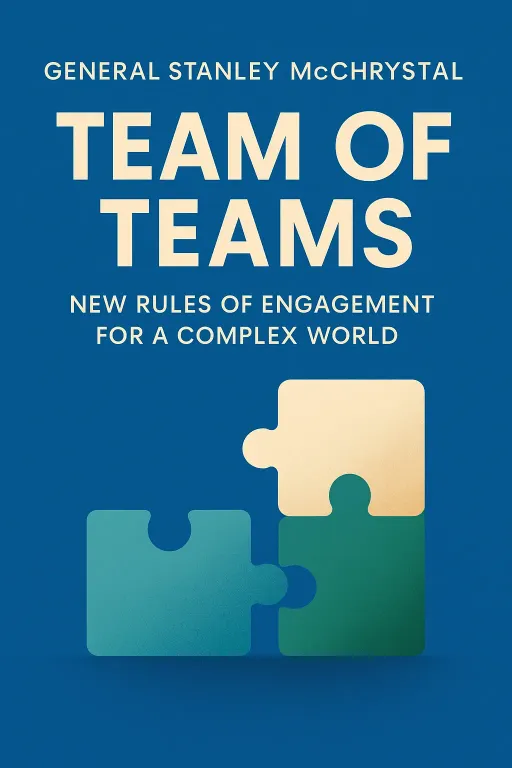
Nova: Well, one of the most compelling examples comes from General Stanley McChrystal’s work, detailed in his book, "Team of Teams: New Rules of Engagement for a Complex World." He led the US Joint Special Operations Command, or JSOC, during a period when they were fighting a highly decentralized, adaptive terrorist network. Their traditional, top-down military structure, designed for conventional warfare, was failing. They were too slow, too siloed, always a step behind.
Atlas: So, the enemy was moving faster than their own internal communication. That's a classic problem.
Nova: Precisely. McChrystal realized their structure was the bottleneck. He wasn't just fighting an enemy; he was fighting his own organization's rigidity. So, he spearheaded a radical transformation. First, he fostered what he called "shared consciousness." He instituted daily, hour-long video conferences involving thousands of people across the globe, from analysts to frontline operatives. Everyone was privy to the same, real-time intelligence.
Atlas: Wow. Thousands of people on one call? That sounds like a logistical nightmare, but I get the intent: break down the information silos. But how does that translate into action? Information is one thing; empowered execution is another.
Nova: That's the second crucial piece: "empowered execution." Once everyone had a shared understanding of the battlefield—the context, the threats, the opportunities—McChrystal pushed decision-making authority down to the lowest possible levels. Instead of waiting for approval from the top, frontline teams were trusted to make rapid, ethical decisions based on their immediate situation and the collective intelligence.
Atlas: That’s a massive leap of faith. How do you ensure those decentralized decisions are still aligned with the overall mission and, critically, remain ethical, especially in high-pressure situations? It sounds like it could easily go off the rails.
Nova: That’s where the shared consciousness is key, Atlas. It wasn't about anarchy; it was about ensuring every team member deeply understood the overall purpose and the ethical guardrails. They knew the "why" behind their actions, not just the "what." This deep understanding, combined with trust, allowed them to adapt and respond with unprecedented speed and effectiveness, leading to more rapid, ethical decision-making in dynamic environments. It's like a jazz ensemble, where each musician improvises brilliantly, not because they're ignoring the score, but because they deeply understand the melody and the shared goal of the piece.
Atlas: That’s a great analogy. So, it’s not about removing leadership, but redefining it—moving from a commander to a gardener, cultivating the right conditions for high-performing teams to flourish. It really resonates with the idea of building self-sufficiency within a team, rather than being the sole problem-solver.
Intrinsic Motivation: The Engine of Ethical Innovation
SECTION
Nova: And that naturally leads us to the second key idea we need to talk about, which often acts as the fuel for this empowered execution: intrinsic motivation. Because if you're going to empower people, you need to understand what truly makes them want to be empowered.
Atlas: I'm curious about this, because we often default to external motivators – bonuses, promotions, the carrot and stick. But for those of us driven by impact and seeking stronger relationships, that often feels... insufficient.
Nova: It is, especially for complex, creative work, which is where innovation truly happens. Daniel H. Pink, in his incredible book "Drive: The Surprising Truth About What Motivates Us," argues that for most knowledge work, traditional external rewards are actually counterproductive. Instead, he highlights three core drivers of intrinsic motivation: autonomy, mastery, and purpose.
Atlas: Autonomy, mastery, and purpose. Okay, so autonomy is about having control over your work, mastery is getting better at something that matters, and purpose is contributing to something larger than yourself. I can see how those would be powerful, but how do you foster that in a practical sense? How do you give people autonomy without losing control, especially in a structured organizational environment?
Nova: A classic example, though perhaps a bit dated now, was Google's "20% Time." They allowed engineers to spend 20% of their work week—one full day—on any project they chose, outside of their official duties. This wasn't a free pass; it was a deliberate strategy to foster intrinsic motivation.
Atlas: So, the cause was highly skilled, creative employees often felt stifled by strict project assignments, leading to burnout. And the process was this 20% rule. What was the outcome? How did that actually work out for Google?
Nova: The outcome was groundbreaking. Innovations like Gmail and AdSense, which were massive successes for Google, actually originated during this 20% time. Engineers, given the autonomy to pursue what truly interested them, achieved mastery in areas they were passionate about, and often found a deeper purpose in solving problems they personally identified with. This demonstrates how intrinsic motivation drives creativity and solves problems in unexpected ways, far beyond what top-down directives could ever achieve. It’s about trust, Atlas, and understanding that people are inherently wired to be curious and to contribute.
Atlas: That’s amazing. It makes me wonder, how does this link back to ethical innovation? Does giving people autonomy automatically lead to ethical choices, or does the 'purpose' aspect need to be deeply aligned with a strong moral compass? For the ethical innovator, this is a crucial point.
Nova: That's a brilliant question, and it's where the two concepts beautifully intersect. The "purpose" in Pink's framework isn't just purpose; it needs to be a meaningful, often ethically aligned, purpose. When you combine the shared consciousness from McChrystal's "Team of Teams"—where everyone understands the broader mission and its ethical implications—with Pink's intrinsic motivators, you create a powerful synergy. Empowered individuals, driven by a clear, ethical purpose, are far more likely to make responsible and innovative decisions. They’re not just compliant; they’re deeply engaged and self-directed in their contributions. That’s where the collective genius truly shines, without the drama.
Synthesis & Takeaways
SECTION
Nova: So, bringing it all together, "The Collaboration Code" really shows us that true collective genius isn't about more process or tighter controls. It's about dismantling those rigid hierarchies to create space for adaptive teams, and then fueling those teams with the intrinsic motivators of autonomy, mastery, and a shared, ethical purpose.
Atlas: It sounds like it’s less about managing tasks and more about cultivating an environment of trust and shared understanding. For anyone who's felt collaboration as a burden, this reframes it as an opportunity for unprecedented performance and ethical innovation. It's about building self-sufficiency by empowering individuals with clarity and purpose.
Nova: Exactly. It's about moving from a mindset of command-and-control to one of trust and context. The data from both McChrystal and Pink really drives home that when people are given the freedom and the clear 'why,' they not only perform better, but they also innovate more ethically and sustainably.
Atlas: Which brings us to our tiny step for the week. For our listeners: identify one recurring team communication hurdle in your world. Maybe it’s information silos, or decisions getting stuck in approval loops. Then, propose one small way to foster more shared consciousness among your team members this week. It could be as simple as a 15-minute daily stand-up where everyone shares their top priority and biggest blocker.
Nova: A brilliant challenge, Atlas. Start small, but think big about the potential for unlocking that collective genius. Because the truth is, the drama isn't in collaboration itself, but in the outdated ways we've tried to force it.
Atlas: Absolutely. This is Aibrary. Congratulations on your growth!