

Stop Teaching, Start Inspiring: The Guide to Deep Learning.
Golden Hook & Introduction
SECTION
Nova: What if the very act of 'teaching' is actually stopping us from truly 'learning'?
Atlas: Hold on, Nova, that sounds like a paradox. Aren't teaching and learning two sides of the same coin? I mean, how can we learn without someone teaching us?
Nova: It seems counterintuitive, right? But that's the profound question at the heart of what we’re exploring today, drawing inspiration from the core ideas behind a conceptual guide titled, "Stop Teaching, Start Inspiring: The Guide to Deep Learning." This framework pulls from groundbreaking work by Carol Dweck and Daniel Pink, who each, in their own fascinating ways, stumbled upon truths that completely upended traditional thinking.
Atlas: Oh, I like that. "Stumbled upon truths." What kind of truths are we talking about here?
Nova: Well, Dweck, a psychology professor, essentially had an accidental discovery. She was researching children's responses to failure and realized that how they perceived their intelligence fundamentally altered their willingness to learn. It wasn't just about what they knew, but what they believed about their own capabilities.
Atlas: So, it’s not about their IQ, it’s about their I-can-do-it-Q?
Nova: Precisely! And then you have Daniel Pink, who actually started his career as a political speechwriter. He stepped away from that high-stakes world to investigate what motivates people. He observed that many traditional incentives, the very things we think drive performance, often did the exact opposite. He realized there was a hidden, more powerful engine influencing engagement.
Atlas: That makes me wonder, if we’re talking about these kinds of fundamental shifts, are we talking about a radical overhaul of education, or something more fundamental about how we approach any kind of growth, whether it's learning a new skill or tackling a complex problem?
Nova: It's absolutely the latter, Atlas. It's about a foundational shift in how we understand our potential and how we tap into genuine, lasting motivation. And it starts with our mindset.
Deep Dive into Core Topic 1: The Growth Mindset
SECTION
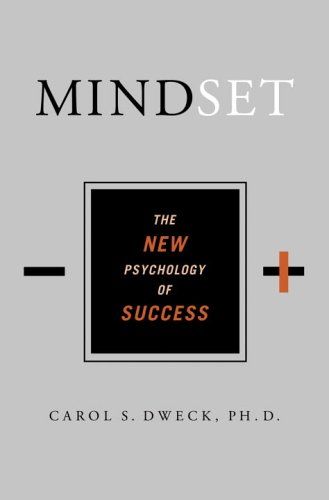
Nova: Carol Dweck’s research, particularly in her seminal work "Mindset," really crystallizes this. She identified two core mindsets: fixed and growth. Someone with a fixed mindset believes their abilities – their intelligence, their talents – are static traits. They’re born with a certain amount, and that’s it.
Atlas: I know that feeling. It’s like, you either get it or you don't. I've definitely felt that way trying to learn certain complex subjects, thinking, "Oh, I'm just not wired for this."
Nova: Exactly. And that's where the cold, hard fact comes in: many educational efforts miss the mark because they focus solely on content delivery. They inadvertently reinforce this fixed mindset. If the goal is just to absorb information, and you struggle, it feels like a personal failing, a confirmation that you "don't get it."
Atlas: So, if you hit a wall, your fixed mindset tells you to give up, because "this just isn't for me."
Nova: Whereas, the growth mindset is the belief that your abilities can be developed through dedication and hard work. It's not about being 'smart,' it's about getting smarter. Dweck saw this play out so vividly in her experiments. She’d give children a set of relatively easy puzzles. Then, she'd offer them a choice: either try harder puzzles, or do more of the easy ones.
Atlas: I'm guessing the kids who were praised for being "smart" stuck with the easy ones?
Nova: You got it. The kids who were praised for their were significantly more likely to choose the easier puzzles. They didn't want to risk looking less smart. But the children who were praised for their and? They eagerly embraced the harder challenges, seeing them as opportunities to learn.
Atlas: Wow. That’s actually really inspiring. It’s not just about getting the right answer, it’s about the journey of trying to figure it out. But wait, how does this apply to adults who feel stuck in their ways, who've spent decades being told they're "not a math person" or "not creative"? Isn't it hard to just 'decide' to have a growth mindset?
Nova: That’s a crucial question, Atlas. It’s not about a snap decision. It’s about understanding the underlying neurology. Our brains are incredibly plastic; they can form new connections and pathways throughout our lives. A growth mindset isn't just positive thinking; it's a belief rooted in the scientific reality of neurological development. When you approach a challenge with effort, your brain actually gets stronger. It's literally rewiring itself.
Atlas: So, it’s a subtle yet profound shift from 'I can't do it' to 'I can't do it,' and that 'yet' is where the magic happens. For someone like me, who loves diving into new knowledge areas, this makes failure an exciting stepping stone instead of a dead end.
Deep Dive into Core Topic 2: Intrinsic Motivation: Autonomy, Mastery, Purpose
SECTION
Nova: Exactly. And that naturally leads us to the second key idea, which shows us truly fuels that growth mindset once it's sparked. This is where Daniel Pink's work in "Drive" becomes so essential. He argues that genuine engagement, whether in learning, work, or life, isn't primarily driven by external rewards like money or grades.
Atlas: Okay, but isn’t that a bit idealistic? I mean, people need to pay bills, and grades matter for college. Are you saying those things don’t matter at all?
Nova: Not that they don't matter, but that they're often the primary drivers for deep, sustained engagement and high performance, especially in tasks that require creativity or problem-solving. Pink highlights three core intrinsic motivators: autonomy, mastery, and purpose. Autonomy is our desire to direct our own lives. Mastery is our urge to get better and better at something that matters. And purpose is the yearning to do what we do in the service of something larger than ourselves.
Atlas: That makes sense. I can definitely relate to wanting to learn just for the sake of getting better at it, or because it feels meaningful.
Nova: Consider the phenomenon of open-source software, like Linux or Wikipedia. These are incredibly complex, high-quality projects, built by thousands of people around the world. These developers aren't getting paid per line of code for these contributions. What’s driving them?
Atlas: Well, they're probably passionate about the technology, want to challenge themselves, and contribute to something that benefits everyone. That's autonomy, mastery, and purpose right there.
Nova: Exactly! It's a powerful illustration of intrinsic motivation in action. They choose what to work on, they hone their skills, and they contribute to a global public good. Contrast that with traditional corporate structures, where incentives often backfire. Pink cites experiments, like the famous "candle problem," where people were given a candle, thumbtacks, and matches, and asked to fix the candle to the wall so it wouldn't drip.
Atlas: Sounds like a classic creative problem.
Nova: It is. When people were offered monetary rewards for solving it quickly, they actually took than those who were just asked to solve it. The reward narrowed their focus, making it harder to think creatively about the solution.
Atlas: That's incredible. It makes me wonder, if external rewards are so ineffective, why do we still rely on them so heavily in schools and workplaces? And for someone like me, who loves learning new things, how do I cultivate of that intrinsic drive?
Nova: It’s a huge societal challenge, but for individuals, it means actively seeking out opportunities where you have choice over what you learn and how you learn it, where you can see tangible improvement in your skills, and where your learning connects to something you deeply care about. For a curious learner like you, Atlas, it’s about embracing learning for its own sake, not just for a grade or a credential.
Synthesis & Takeaways
SECTION
Nova: So, bringing it all together: a growth mindset, championed by Dweck, gives us the fundamental belief that we learn and grow, even when faced with challenges. And Pink's intrinsic motivation provides the, the deep, internal drive—through autonomy, mastery, and purpose—to pursue that learning with genuine passion and engagement.
Atlas: It's about realizing that true learning isn't just about absorbing facts, but about building an internal engine for continuous discovery and improvement. It’s about cultivating resilience and a genuine love for the process, not just the outcome.
Nova: Absolutely. It transforms learning from a passive reception of information into an active, inspiring journey of personal growth. And the 'Tiny Step' for this week, something we can all try, is to design one learning activity that emphasizes process and effort over immediate outcomes.
Atlas: That's a powerful challenge. For me, as someone always looking to deepen my understanding, it means shifting how I even approach a new book or skill. Instead of just trying to "get through it," I'll focus on the struggle, the little breakthroughs, and why it matters to me.
Nova: Exactly. It's about 'Stop Teaching, Start Inspiring' – not just for others, but for inspiring that deep, enduring learning within ourselves.
Atlas: I love that. It’s a complete reframing of what it means to truly learn.
Nova: Indeed.
Nova: This is Aibrary. Congratulations on your growth!