

Stop Guessing, Start Leading: The Guide to Motivating High-Performing Teams.
Golden Hook & Introduction
SECTION
Nova: Atlas, five words to describe the essence of 'Stop Guessing, Start Leading'? What's your lightning review?
Atlas: Beyond carrots, find the internal flame.
Nova: Ooh, I like that! And that's exactly what we're diving into today with a look at 'Stop Guessing, Start Leading: The Guide to Motivating High-Performing Teams.' This isn't just another management book; it's a distillation of years of real-world experience, born from observing countless organizations struggle with a fundamental disconnect in how they motivate their people.
Atlas: That resonates. I imagine a lot of our listeners, especially those driven by improvement and strategic thinking, have felt that frustration. You try the usual incentives, but sometimes it feels like you're pushing a boulder uphill. It makes me wonder, what is the core misconception we need to unlearn?
Nova: Exactly. The cold, hard fact the book lays out is that many of us believe motivation is about rewards and punishments. And while those have their place, true, lasting team motivation comes from within. It's about tapping into deeper human needs, not just external carrots or sticks. It’s about building belief, not just compliance.
The Intrinsic Motivation Engine: Autonomy, Mastery, Purpose
SECTION
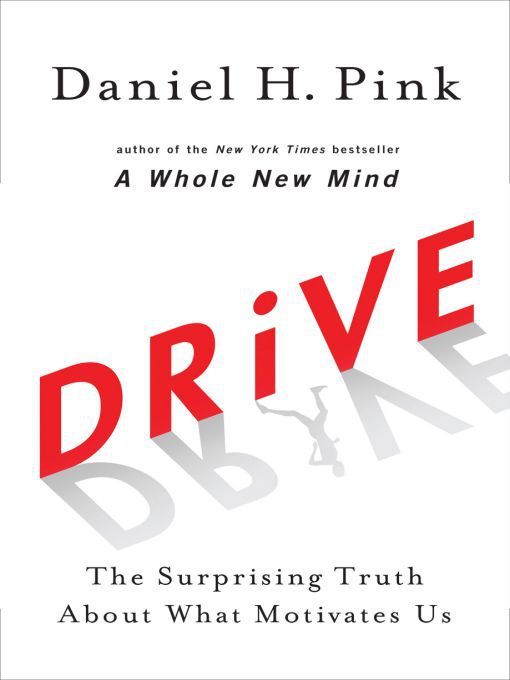
Nova: So, let's unpack that. Our first big idea comes from Daniel Pink's groundbreaking work in 'Drive.' He argues that for complex, creative work – which let's be honest, is most high-performing team work today – intrinsic motivators like autonomy, mastery, and purpose are far more effective than traditional incentives. People thrive when they direct their own lives, learn new things, and contribute to something bigger.
Atlas: Wait, are you saying bonuses and promotions are actually bad? Because that sounds a bit out there for anyone managing a team with quarterly targets.
Nova: Not bad, Atlas, but often misapplied. Imagine a tech company I worked with, let's call them 'InnovateX.' For years, they tried to boost innovation with huge quarterly bonuses tied to new product launches. But the engineers felt stifled, constantly chasing the next carrot, and creativity was actually.
Atlas: I can see how that would be. You're focused on the reward, not the actual problem-solving.
Nova: Precisely. So, they decided to experiment. They introduced a '20% time' policy, similar to what Google famously did. Engineers could dedicate one day a week to any project they wanted, no direct oversight, no immediate 'deliverable' pressure.
Atlas: That sounds risky! What about deadlines and roadmaps? Doesn't that just lead to chaos?
Nova: Quite the opposite. What happened was remarkable. Engineers, given the autonomy to choose, started working on passion projects. They learned new coding languages, explored unconventional solutions to existing problems, and collaborated across teams in ways management could never have mandated.
Atlas: That gives me chills. So, the cause was a lack of intrinsic drive, the process was granting autonomy, and the outcome was unexpected breakthroughs?
Nova: Exactly! That '20% time' led to two of their most groundbreaking products within a year, products that became core to their business. It wasn't about the bonus; it was about the freedom to explore, the chance to get better at something they cared about—that's 'mastery'—and the feeling that their work had a larger impact beyond just hitting a metric. Autonomy within boundaries actually increased ownership and quality.
Atlas: That’s actually really inspiring. So, it's not just about letting people do whatever they want, but giving them the space and trust to direct their own growth and contribute meaningfully. I imagine for our listeners, especially those who value efficiency, this approach might seem counterintuitive, but the results speak for themselves.
The Power of 'Why': Inspiring Purpose and Belief
SECTION
Nova: And that naturally leads us to the second key idea we need to talk about, which often acts as the guiding star for that autonomy: Simon Sinek's 'Start with Why.' Even with autonomy and mastery, what fuels the? That's where understanding your purpose comes in. Sinek emphasizes that inspiring leaders and organizations communicate their purpose first.
Atlas: Many leaders they have a 'why.' How does one find the one, beyond corporate jargon or a mission statement that sounds good on paper?
Nova: Great question. It's about digging deeper than "what we do" or "how we do it." Think of a struggling non-profit focused on community development. For years, their fundraising pitches and volunteer drives focused on the "what": "We build X number of houses," "We offer Y number of training programs." And while noble, the response was lukewarm.
Atlas: I can see that. It's like, "Okay, that's what you do. So what?"
Nova: Exactly. Their 'why' was buried. It wasn't about building houses; it was about alleviating suffering, inspiring hope, and creating lasting dignity for families. When they shifted their communication to lead with profound human impact, everything changed.
Atlas: So, they stopped talking about the hammer and nails and started talking about the safe, warm home and the child who could finally sleep through the night.
Nova: Precisely. Their fundraising surged, volunteers flocked to them, not just to build houses, but because they believed in the larger purpose. That fundamental 'why' resonated deeply and unlocked a surge in commitment. It's the difference between saying "We sell computers" and "We challenge the status quo and empower individuals to think differently." One is a product; the other is a belief system.
Atlas: That’s a perfect example. For someone focused on strategic thinking and process optimization, understanding this 'why' seems like it would simplify so many decisions. If you know your core purpose, it's easier to align every process, every project, every hire with that ultimate goal.
Nova: It absolutely does. Nova's take, as the book highlights, is that shifting from external control to internal drive, fueled by a clear 'why,' unlocks a team's full potential and builds genuine engagement. It's about creating an environment where people to come to work, not just to. It transforms tasks into a shared crusade.
Synthesis & Takeaways
SECTION
Nova: So, bringing it all together, Pink gives us the – the intrinsic motivators of autonomy, mastery, and purpose – and Sinek gives us the – a compelling, deeply understood 'why.'
Atlas: That makes sense. It’s not just about hiring smart people; it’s about creating the conditions where their intelligence and passion can truly flourish. I imagine a lot of leaders are out there trying to motivate, but they're using the wrong fuel.
Nova: They are. True motivation isn't about managing people, it's about cultivating an environment where people to excel. It’s about building belief, not just compliance. This creates a ripple effect, improving not just individual output but overall team cohesion, resilience, and ultimately, collective power. It's about moving from a transactional relationship to a transformational one.
Atlas: That’s a powerful distinction. So, for our listeners who are ready to stop guessing and start leading, what's one tiny step they can take this week to begin this shift? Something practical and immediate.
Nova: Here's a simple, actionable step: Ask your team members, one-on-one, "What's one task you'd like more autonomy over next week?" Just that question can open up a world of insight and begin to build that crucial trust.
Atlas: What a fantastic way to start that conversation and foster active listening. I love that.
Nova: It’s a small step, but it’s the beginning of a profound shift.
Atlas: This is Aibrary. Congratulations on your growth!