

Beyond the Org Chart: Cultivating a Culture of Trust and Autonomy
Golden Hook & Introduction
SECTION
Nova: Okay, Atlas, imagine I just handed you a copy of "Beyond the Org Chart: Cultivating a Culture of Trust and Autonomy." Give me your five-word review. Go!
Atlas: Beyond carrots, find the fire. Wow.
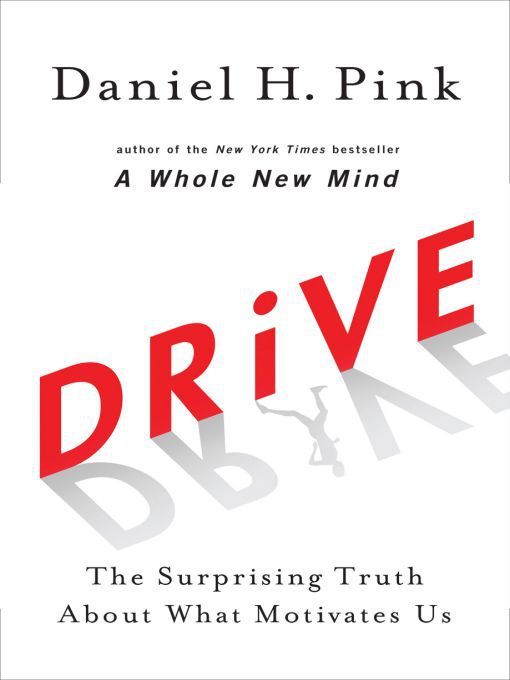
Nova: Oh, I like that! "Beyond carrots, find the fire." That perfectly encapsulates what we’re diving into today, which is the profound shift in how we understand what truly motivates people. We’re talking about the ideas championed by authors like Daniel Pink in his groundbreaking book, "Drive."
Atlas: Pink, right? The guy who was a speechwriter for Al Gore before he started dissecting human motivation? That’s quite a pivot. He went from crafting political narratives to unraveling our internal ones.
Nova: Exactly! It’s a fascinating journey, and it gives him a unique perspective. He’s looking at human behavior with a strategist’s eye, but with a deep understanding of the psychological undercurrents. And his work, along with others we'll touch on, really challenges our default settings about how to lead and inspire.
Atlas: Right. Because for innovators, strategists, and anyone trying to craft a meaningful experience, the old ways of thinking about motivation often feel… clunky. They don't quite fit the reality of complex, creative work.
Nova: Precisely. So, today we're going beyond the surface-level metrics and the traditional organizational structures to explore what truly fuels creativity, commitment, and genuine engagement. We're going to unpack why our default assumptions about motivation are often a 'blind spot' for leaders. Then, we'll discuss how shifting focus to autonomy, mastery, and purpose can unlock unparalleled engagement and innovation within any team.
The Illusion of External Rewards & The Blind Spot
SECTION
Nova: So, let’s start with this 'blind spot' that many leaders have. It’s the pervasive, almost instinctive belief that if you want someone to do more, or do better, you offer them a bigger carrot, or threaten them with a bigger stick. More money, a bigger bonus, a promotion, or conversely, the fear of losing their job.
Atlas: That makes sense, doesn’t it? For leaders focused on building innovative features and driving product-market fit, isn't it just logical to incentivize with bonuses or other external rewards? It feels like a direct path to impact. How does that actually backfire?
Nova: It absolutely feels logical because it works for certain types of tasks. Pink makes a crucial distinction. For what he calls 'algorithmic tasks'—think assembly line work, data entry, anything with a clear set of steps and a single right answer—external rewards, the carrots and sticks, can be quite effective. You pay someone more to do a repetitive task faster, and they generally will.
Atlas: Okay, so if I’m asking someone to process invoices, a bonus for efficiency works. But we’re talking about creating new things, solving complex problems, building teams that connect.
Nova: That’s where the 'blind spot' becomes a gaping chasm. For 'heuristic tasks'—anything that requires creativity, problem-solving, conceptual thinking, or strategic planning—external rewards don't just become ineffective; they can actively performance.
Atlas: Damage? That sounds rough. How does trying to motivate someone with a reward actually make them at something?
Nova: Think of a hypothetical scenario. Let's say you have a brilliant software development team. They're working on a groundbreaking new feature, something truly innovative that will redefine their product. It's complex, requires deep thought, collaboration, and a lot of creative problem-solving. Management, wanting to accelerate the launch, announces a huge bonus for anyone who finishes their module two weeks early.
Atlas: So far, so good, right? Sounds like a win-win.
Nova: On the surface, yes. But what often happens is that the team's focus shifts from 'how do we build the best, most elegant, most robust solution?' to 'how do we get this done and grab that bonus?' They start cutting corners, opting for quick fixes over sustainable solutions. The quality of the code suffers, they might ignore potential bugs, and their collaboration might even decrease because everyone is now competing for that individual reward.
Atlas: Oh, I see. So the very thing meant to boost impact actually undermines it. You end up with a rushed, buggy product, and probably a pretty demoralized team. It creates a negative feedback loop for collective success, which is the opposite of what you want when trying to harmonize a team.
Nova: Exactly. The intrinsic joy of solving a challenging problem, the pride in crafting something excellent, the desire to contribute to something bigger—those internal motivators get overshadowed, even extinguished, by the promise of external gain. Instead of feeling like a meaningful challenge, the work becomes a chore to be completed for a payout. People might get the bonus, but they lose their sense of purpose and commitment. The result is often a short-term gain at the cost of long-term innovation and team well-being.
Atlas: So it's not that rewards are evil, it's that we're using the wrong kind of rewards for the wrong kind of work. It’s about understanding human psychology, not just economic models.
Nova: Precisely. It’s about being strategic about what truly drives people in a world where complex, creative work is increasingly the norm.
Unlocking Human Potential: The Power of Autonomy, Mastery, and Purpose
SECTION
Nova: So, if carrots and sticks are out for creative work, what's left? This is where the magic happens, and it’s beautifully simple: Autonomy, Mastery, and Purpose. These three elements are the true fuel for intrinsic motivation.
Atlas: Autonomy in a high-stakes, fast-paced environment sounds like a recipe for chaos. For leaders who need a holistic approach to crafting experiences and maintaining strategic direction, how do you maintain control while fostering this kind of freedom? Isn't that just letting everyone do whatever they want?
Nova: That’s a common misconception, and an excellent question. Autonomy isn't about anarchy; it's about control over four key aspects: task, time, technique, and team. It means giving people the freedom to decide what they work on, when they work on it, how they do it, and even who they work with. Think of it as providing clear goals and boundaries, but within those, the individual or team gets to chart their own course.
Atlas: So, you're saying instead of dictating every step, a leader might say, "Here's the problem we need to solve," and then let the team figure out the best way to solve it?
Nova: Exactly. It's a profound shift in mindset. And for one of the most compelling real-world examples of this, we have to look at L. David Marquet, the author of "Turn the Ship Around!" He was a U. S. Navy submarine commander. Now, if there’s an environment built on rigid command-and-control, it’s a nuclear submarine. Lives are literally at stake.
Atlas: Okay, a nuclear submarine. That’s probably the furthest thing from a free-flowing, autonomous startup environment you can imagine. This is going to be good.
Nova: It's incredible. Marquet took command of a submarine that was dead last in every performance metric. His crew was disengaged, making mistakes, and simply going through the motions. He realized the traditional "leader-follower" model, where he gave orders and they obeyed, was fundamentally flawed. It stripped them of responsibility and ownership.
Atlas: So, what did he do? Did he just tell everyone to 'be more autonomous'?
Nova: He did something radical. He started giving control away. Instead of issuing commands, he empowered his junior officers and crew to declare their. So, instead of a junior officer saying, "Captain, may I flood the torpedo tube?"—which means they’re asking for permission and abdicating responsibility if something goes wrong—Marquet trained them to say, "Captain, I intend to flood the torpedo tube."
Atlas: Whoa. That’s a huge psychological shift. "I intend to" implies ownership and that they've thought through the consequences, even if Captain Marquet still has the final say.
Nova: Precisely. It forced them to understand the behind their actions, to think critically, and to take full responsibility. Marquet’s job then shifted from issuing commands to understanding their intent, asking clarifying questions, and ensuring they had the competence and clarity to execute. He created a "leader-leader" model, not "leader-follower."
Atlas: That’s amazing. And in that high-stakes environment, it must have built incredible personal resilience. Not just for the team members who were now truly owning their roles, but for the leader himself, trusting his crew to make critical decisions. It really fosters that deep connection and collective success our listeners are striving for.
Nova: It transformed the submarine. They went from worst to first in every metric, with unprecedented levels of ownership, accountability, and innovation. Crew members were actively seeking out problems to solve, training each other, and taking initiative far beyond their rank. It’s a powerful testament to what happens when you replace control with competence and trust.
Atlas: And that ties directly into the other two motivators: Mastery and Purpose. Because if you have autonomy, you naturally want to get better at what you’re doing—that’s mastery. And if you’re doing it with purpose, it's for something larger than just following orders.
Nova: Exactly. Mastery is the innate drive to get better at something that matters. When people have autonomy, they naturally seek opportunities to develop their skills and grow. And purpose is the yearning to do what we do in the service of something larger than ourselves. For innovators crafting experiences, for strategists wanting to make a real impact, and for harmonizers focused on collective success, purpose is the North Star. These aren’t just soft skills; they are the bedrock of conscious leadership.
Synthesis & Takeaways
SECTION
Nova: This shift, from command-and-control to fostering autonomy, mastery, and purpose, isn't about abandoning leadership or becoming 'soft.' It's about a deeper, more strategic understanding of human nature and what makes us flourish. It’s about building resilient, communicative teams that can navigate complexity and drive genuine innovation.
Atlas: It sounds like it’s about trusting your team to be adults, to be professionals, and to be invested in the outcome, which ultimately frees the leader to focus on vision and strategy, rather than micromanagement. It’s a true framework for personal resilience for everyone involved.
Nova: Absolutely. It’s a move from transactional leadership to transformational leadership. It recognizes that in a world demanding creativity and complex problem-solving, our most powerful resource is the intrinsic motivation of our people.
Atlas: So, for our listeners who are innovators, strategists, and harmonizers, consider this: think about a recent team project. How might you have structured it differently to foster greater autonomy, mastery, or purpose for your team members, even in a small, experimental way? What’s one tangible adjustment you could make?
Nova: That’s the deep question. Start small. Perhaps it’s identifying one decision, one specific problem, or one key part of a project where you can truly delegate the ownership. Let a team member, or a small group, own that challenge from conception to solution, rather than just executing your pre-defined plan. Give them the freedom to choose their technique, or even who they collaborate with on that specific piece.
Atlas: And remember, that small step towards autonomy isn't just about cranking out more features or meeting deadlines; it's about nurturing the well-being, building resilience, and fostering the deep connection that drives true, lasting innovation and collective success. It’s about igniting that internal fire.
Nova: It's about moving beyond the org chart and cultivating a culture built on genuine trust and empowerment. If you get this right, the results are astounding.
Atlas: This is Aibrary. Congratulations on your growth!