Breaking Free from Toxic Patterns
Golden Hook & Introduction
SECTION
Atlas: We have been conditioned to believe that keeping the peace is the highest virtue in our relationships. We are taught that if we just accommodate enough, if we just absorb enough, everything will eventually smooth out.
Nova: And that is a dangerous myth, Atlas. It is a recipe for resentment. When you prioritize the comfort of others over your own mental health, you are not actually keeping the peace. You are just paying a very high emotional tax to keep a dysfunctional system running.
Atlas: That is a brutal way to put it, but I suspect it hits home for anyone who has ever sat at a holiday dinner feeling like they are walking on eggshells.
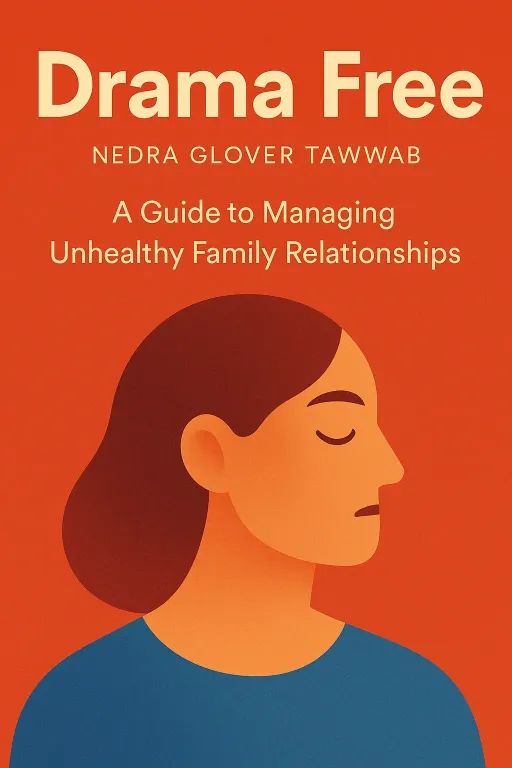
Nova: It is the reality for so many people. Today, we are going to dismantle that idea by looking at two distinct but complementary approaches to reclaiming your life. We are diving into the wisdom of Nedra Glover Tawwab’s book, Drama Free, and Melanie Tonia Evans’s work, You Can Thrive After Narcissistic Abuse.
Atlas: I am curious about how these two connect. Tawwab is a licensed therapist known for her very grounded, practical approach to boundaries, while Evans focuses on a more internal, deep-level healing from narcissistic dynamics. It feels like we are covering the spectrum from "how to deal with difficult people" to "how to heal from the damage they leave behind."
Nova: That is exactly right. Nedra Glover Tawwab, who has become a leading voice in the therapy space, wrote Drama Free to give people an actionable framework. She argues that we often stay in toxic dynamics because we lack the language to change them. On the other hand, Melanie Tonia Evans introduces the Quanta Freedom Healing method. She brings a perspective that shifts the focus entirely away from the abuser and onto the internal emotional recovery. Both books share a core truth: you cannot change the other person, but you have absolute power over your own boundaries and your own internal healing.
The Architecture of Boundaries
SECTION
Atlas: Let’s start with the boundaries piece, because that is where most people get stuck. I have heard people say that setting a boundary feels like building a wall. It feels like an act of aggression. Why is there such a massive gap between what we know we need to do and what we actually do?
Nova: The gap exists because of guilt. Tawwab is brilliant at identifying this. She points out that guilt is not a signal that you are doing something wrong. It is simply a signal that you are doing something new. When you have spent years—or decades—being the person who always says yes, who always absorbs the emotional labor of the family, changing that dynamic feels like a betrayal.
Atlas: That is a fascinating shift in perspective. Most people treat guilt like a compass. If I feel guilty, I must have crossed a line. But you are saying that in this context, guilt is just growing pains.
Nova: Exactly. And Tawwab’s framework is about turning those pains into a clear manual for others. Think of it this way: people are not mind readers. If you never tell them where your line is, they are going to keep walking right over it. She suggests that we should treat a boundary like an instruction manual for how to treat us. It is not about controlling them; it is about informing them of the terms of your engagement.
Atlas: I love that analogy. An instruction manual. It takes the emotion out of it. It is not "you are a bad person for doing X," it is "I am not available for X." But Nova, let’s get real. What happens when you present this "manual" to someone who is used to you having no boundaries? They do not just say, "Oh, thank you for the clarification, I will adjust my behavior." They usually throw a fit.
Nova: That is the crucial part of the process. When you set a boundary, you are essentially changing the game. The other players in the game are going to be confused, annoyed, or even hostile because the old rules—the ones that benefited them—are gone. Tawwab is very clear about this: you are responsible for setting the boundary, but you are not responsible for their reaction to it.
Atlas: That is the hardest part. The reaction. I imagine a lot of our listeners are thinking, "I would love to set a boundary, but I don't want to deal with the fallout."
Nova: The fallout is the price of admission for your own peace. If you never set the boundary, you pay for it in resentment. If you do set it, you pay for it in a temporary period of discomfort. The difference is that the resentment is a slow, chronic poison, while the discomfort is a short-term, necessary transition.
Breaking the Narcissistic Cycle
SECTION
Atlas: That makes perfect sense for general family dynamics. But let’s bridge this into the second part of our discussion. What about when the dynamic is not just "difficult family member," but moves into the realm of narcissistic abuse? Because that is a whole different level of intensity.
Nova: That is where Melanie Tonia Evans’s work becomes essential. While Tawwab gives us the tools to manage the behavior of others, Evans focuses on why we get stuck in those cycles in the first place. She argues that we often stay because we are looking for the abuser to change, or we are looking for them to validate our worth.
Atlas: That is the trap, right? The "if only they would see what they are doing" hope. It is like being a gambler who is convinced the next hand will be the one that wins back everything.
Nova: It is exactly like that. Evans introduces the Quanta Freedom Healing method, which is a bit more esoteric, but the core principle is incredibly practical. She suggests that we have to shift our focus from the abuser’s behavior to our own internal emotional recovery. She talks about "cellular-level healing." The idea is that trauma is not just a thought; it is an energetic imprint that keeps us vibrating at a frequency that attracts, or keeps us tethered to, the same kinds of toxic dynamics.
Atlas: So, she is saying that the reason we keep finding ourselves in these situations is that we haven't actually processed the initial trauma. We are carrying it around, and it is acting like a magnet for more of the same.
Nova: Precisely. It is about taking the energy we spend analyzing the narcissist—trying to figure out their motives, trying to explain ourselves to them, trying to get them to understand our pain—and redirecting that energy inward. It is a radical act of self-responsibility. Evans argues that until you heal those internal wounds, you will keep encountering the same type of person, even if you change your environment.
Atlas: That is a tough pill to swallow. It is much easier to blame the narcissist than to look at our own internal patterns. But I see the logic. If I am looking for a partner or a friend who treats me in a way that reflects my own sense of unworthiness, I am going to keep picking the same kind of person.
Nova: And that is the breakthrough. When you start the internal work—when you validate your own worth, when you clear out the old trauma—you become "allergic" to narcissistic behavior. You stop trying to change them because you realize they are irrelevant to your happiness. You are no longer engaging in the dance.
Atlas: I am thinking about how these two books work together. Tawwab gives you the external tools—the "what to say, what to do" when someone crosses a line. Evans gives you the internal foundation—the "why" and the "how to heal" so that you stop needing to set those boundaries as often because you are no longer attracting the people who force you to set them.
Nova: That is a brilliant synthesis. It is the difference between treating the symptom and treating the root cause. Tawwab helps you manage the environment you are currently in, and Evans helps you change the internal reality so you can eventually move into a different environment entirely.
Synthesis & Takeaways
SECTION
Atlas: This brings up a question I think a lot of people struggle with. Is it ever possible to have a healthy relationship with someone who has narcissistic traits, or is the only solution to walk away?
Nova: It is a question that comes up constantly. The consensus in these frameworks is that you cannot change them. You can only change your interaction with them. If they are willing to do the work, that is one thing. But you cannot do the work for them. The goal of both of these authors is to empower you to reach a state where you are okay regardless of what the other person does. That is the ultimate freedom.
Atlas: It sounds like the overarching theme here is agency. We spend so much time feeling like victims of our circumstances, our families, or the toxic people in our lives. But both Tawwab and Evans are pointing to the same exit door: reclaiming your power by focusing on what you can control.
Nova: It is the most empowering realization you can have. You are the only person you have any control over. The moment you accept that, you stop being a passenger in your own life.
Atlas: So, for the listener who is sitting there thinking, "Okay, this sounds great, but where do I start today?" What is the tiny step?
Nova: I would suggest starting with one recurring relationship dynamic that drains your energy. Just one. Don't try to fix the whole family tree at once. Write down a clear boundary statement you can comfortably communicate the next time it arises. Keep it simple. Something like, "I am not available to discuss this topic," or "I cannot help with this right now."
Atlas: And keep it short. Don't over-explain.
Nova: Exactly. Over-explaining is just a negotiation. A boundary is a statement of fact. If you want to take it a step further into the realm of Evans’s work, take five minutes today to sit with that feeling of guilt or obligation. Don't try to fix it, don't try to push it away. Just acknowledge it. Ask yourself, "Where is this coming from?" and give yourself the validation you are hoping to get from the other person.
Atlas: That is powerful. It is shifting from "seeking validation" to "self-validation."
Nova: It is the hardest work you will ever do, but it is the only work that actually changes your life.
Atlas: I love that. Focus on the boundary to protect your peace, and focus on the internal work to ensure you are no longer vibrating at the frequency of the people who violate those boundaries. It is a complete system.
Nova: It is a path to freedom. And it starts with the smallest, most uncomfortable conversation you have with yourself—and then with them.
Atlas: Thank you for walking through this with me, Nova. It feels like we’ve cleared a path through some pretty dense emotional forest today.
Nova: It was a pleasure, Atlas. To all our listeners, remember that reclaiming your life is not a one-time event; it is a daily practice. Start small, stay consistent, and be kind to yourself in the process.
Atlas: We will see you next time. This is Aibrary. Congratulations on your growth!