

Beyond the Surface: Unlocking True User Experience with Deep Empathy.
Golden Hook & Introduction
SECTION
Nova: Atlas, quick, tell me the secret to a product that just... works. Like, magically. You know, the kind you pick up and instantly understand, no instruction manual needed.
Atlas: Magic? Nova, my secret is usually more like 'hope and a prayer,' followed by 'frantic redesigns' when the magic clearly isn't happening. I’ve seen enough engineering marvels gather dust because nobody could figure out how to them.
Nova: And that's exactly why we’re diving into a fascinating new perspective today, one that challenges that tech-first mentality. We're exploring the core insights from a powerful new book, "Beyond the Surface: Unlocking True User Experience with Deep Empathy." It asserts that true innovation starts not with lines of code, but with understanding the very human heart and mind interacting with it.
Atlas: So, it's less about the wizardry of the code and more about the psychology of the user? That's a shift for a lot of builders out there, who often get lost in the technical elegance.
Nova: Exactly. Because the cold, hard fact is, many products fail not because of poor technology, but because they completely ignore fundamental human psychology. We pour resources into features, algorithms, and infrastructure, but if we don't understand how users think and feel, it’s all just digital noise.
Atlas: That resonates with anyone who’s ever launched something with high hopes, only to watch it flounder. So, what you're saying is, our first deep dive has to be into this fundamental principle: why empathy is the unseen blueprint for lasting design?
The Human Element: Why Empathy is the Unseen Blueprint for Lasting Design
SECTION
Nova: Absolutely. Think about it: we're constantly interacting with designed objects, from the moment we wake up and try to turn off an alarm, to brewing coffee, to navigating a complex app. And when something is poorly designed, it's not just inconvenient; it’s genuinely frustrating. It makes us feel incompetent, even though it's the design that's failing us.
Atlas: Oh, I know that feeling. It's like trying to open a door that says "push" but you instinctively pull, and then you feel like an idiot. It’s not just a minor annoyance; it actually creates friction in your day.
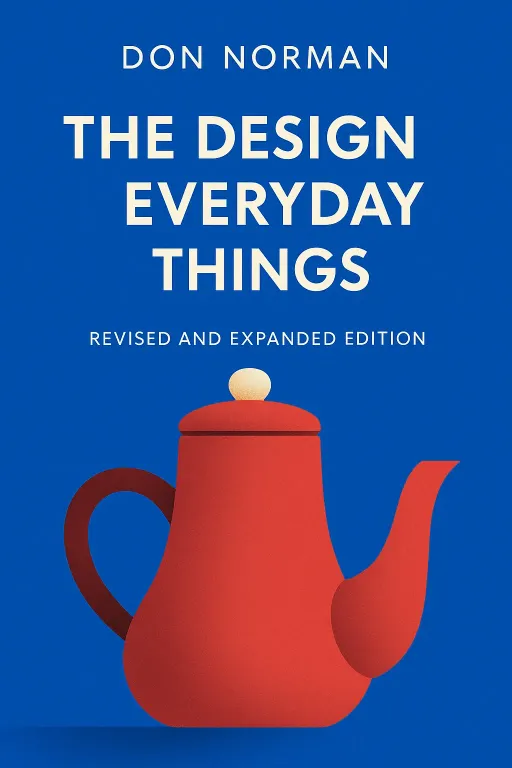
Nova: Precisely. That's a classic example Don Norman, author of "The Design of Everyday Things," would highlight. He practically wrote the bible on user-centered design, showing how good design makes products understandable and usable. He talks about – how an object's physical characteristics hint at how it should be used. A door handle that's a flat plate, for instance, pushing. A protruding knob grasping and turning.
Atlas: So, the object itself should communicate its purpose, without needing a label or a tutorial. That's a powerful idea, especially for leaders who are building complex systems and trying to simplify them. It's about designing for inherent human behavior, not against it.
Nova: Exactly! And he also emphasizes. When you press a button, does it light up? Does it make a sound? Does the screen change? Without clear feedback, users are left guessing, and that creates anxiety. Good design isn't just about aesthetics; it’s about a seamless conversation between the user and the product, guided by an understanding of human psychology.
Atlas: I imagine a lot of our listeners, especially those managing high-pressure tech teams, might be thinking, "Empathy sounds great, Nova, but how do we bake that into our sprint cycles? How do we quantify 'human psychology' when we're trying to hit KPIs?" Is it just about making things look pretty, or is there a deeper, almost scientific approach to this empathy?
Nova: That’s a brilliant question, Atlas, and it gets to the heart of it. Empathy here isn't just about being "nice" or "pretty." It's a rigorous process of deeply understanding user needs, mental models, and emotional states. It's about observing, listening, and anticipating. It means stepping into the user's shoes to uncover their unarticulated needs, their frustrations, and their aspirations.
Atlas: So, it's not just about asking users what they, but observing what they and understanding they do it? Because sometimes what people say they want and what they actually need are two very different things.
Nova: Spot on. Nova’s Take, the overarching philosophy of "Beyond the Surface," nails this: design that truly understands human behavior creates experiences that feel natural, intuitive, and ultimately, indispensable. It’s about creating products that integrate so seamlessly into a user's life that they can't imagine living without them. It transforms a functional tool into an extension of themselves. It's the difference between a product you and a product you. And that distinction, that level of integration, is what makes a product truly successful.
Designing for Intuition: The Art of Effortless Interaction and Reducing Cognitive Friction
SECTION
Nova: And once we grasp understanding human behavior is paramount, we naturally pivot to we actually design for that understanding. This brings us to the art of effortless interaction and reducing cognitive friction.
Atlas: Okay, so we've established that empathy is the blueprint. Now, how do we actually build the house? What are the practical steps to make something feel "natural" and "intuitive" instead of a frustrating puzzle?
Nova: That's where Steve Krug's classic, "Don't Make Me Think, Revisited," becomes an indispensable guide. His core argument is disarmingly simple, yet profoundly impactful: don't make users think. He advocates for clear, common-sense usability, focusing on removing obstacles and making user journeys as effortless as possible.
Atlas: "Don't Make Me Think." I love that. It's direct, and it immediately conjures images of clicking through endless menus or trying to find a simple setting. So, what does "not making me think" actually look like in practice?
Nova: It means prioritizing clarity above all else. It's about using conventions that users already understand, like a shopping cart icon for e-commerce, or a magnifying glass for search. It’s about clear labeling, so users don't have to guess what a button does. It’s about minimizing choices, because too many options can paralyze users. Every time a user has to pause, interpret, or decide, that's cognitive load, and it adds friction.
Atlas: So, it's like designing a road with clear signs and no unnecessary detours, rather than a maze. For a resilient innovator, this is gold. We want our users to flow through our product, not fight it. But how do we balance simplicity with the need for powerful features? Sometimes, complexity inherent in what a product does.
Nova: That’s the design challenge, isn't it? It's not about dumbing down the product, but about intelligently organizing and presenting its functionality. It’s about progressive disclosure – showing users only what they need, when they need it. Think about a professional photo editing software: it has immense power, but the basic functions are often accessible, with advanced tools tucked away until the user explicitly seeks them.
Atlas: I can see how this leads to more effective human connection, as the user profile mentioned. If people aren’t fighting the interface, they can actually connect with the of the product. It reduces frustration for them, and probably for the support teams too!
Nova: Precisely. And this ties back to Norman's feedback and affordances. When a button clearly looks like a button and gives you an immediate visual cue that you've pressed it, you don't have to about whether it worked. The interaction becomes intuitive, almost subconscious. The goal is a state of flow, where the user is so immersed, they forget they're even interacting with an interface.
Atlas: So, the harmony we seek in our teams and our products comes from this deep understanding and then a deliberate effort to make interactions effortless. It's not just about building; it's about building.
Synthesis & Takeaways
SECTION
Nova: Ultimately, Atlas, what "Beyond the Surface" really drives home is that the most profound technological advancements are those that feel least like technology. They feel like an extension of our own capabilities, because they are designed with our inherent human psychology, our limitations, and our desires at their very core.
Atlas: That’s such a hopeful way to look at it. It reframes "design" from a technical challenge to a deeply human one. It means that the best products aren't just innovative; they're empathetic and intuitive, almost like a good friend that anticipates your needs.
Nova: Exactly. It's about building products that respect the user's time, attention, and cognitive energy. The result isn't just user satisfaction; it’s user loyalty, word-of-mouth growth, and a product that truly becomes indispensable. It’s the difference between a fleeting trend and a lasting legacy.
Atlas: So, for all our collaborative architects, empathetic leaders, and resilient innovators listening, what's a tiny, actionable step they can take to start applying this deep empathy? Something immediate and impactful.
Nova: The book suggests a '5-second test.' Take your product's key interface – a landing page, a crucial feature, an onboarding screen – and ask someone completely unfamiliar with it to look at it for just five seconds. Then, ask them to describe its purpose.
Atlas: Five seconds? That's brutally short!
Nova: It is, but it's incredibly revealing. If they can't articulate its purpose or understand its core function, you have cognitive friction. It's a quick, low-cost way to immediately identify if your design is making people think too much. It’s a direct measure of intuition.
Atlas: That's brilliant. It's practical, it's immediate, and it directly tests the core principle of effortless interaction. No complex analytics, just raw human feedback.
Nova: It’s a tiny step with profound implications, steering you back to that empathetic core.
Nova: This is Aibrary. Congratulations on your growth!