

How to Build a 'Global Mindset' Without Leaving Your Desk
Golden Hook & Introduction
SECTION
Nova: Forget the globe-trotting flights and exotic locales. What if the most profound journey you could take to build a truly global mindset starts not with a passport, but with a book?
Atlas: Oh, I like that. That’s a bold claim, Nova. Especially when we talk about something as expansive and dynamic as a 'global mindset,' which often conjures images of diverse experiences and firsthand observation. You're telling me I can achieve that from my armchair?
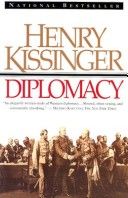
Nova: Absolutely! And today, we're unpacking that very idea, drawing incredible insights from two titans of strategic thought: Henry Kissinger's monumental 'Diplomacy' and Sun Tzu's timeless 'The Art of War.' Kissinger, of course, was not just an academic; he was a former Secretary of State who didn't just observe history, he shaped it. His analysis carries a unique, insider perspective that few can match, making 'Diplomacy' less a textbook and more a masterclass from the architect himself.
Atlas: Right. That's a powerful pedigree. And Sun Tzu, well, 'The Art of War' is practically a legend. So, how do these seemingly disparate works help us build this 'global mindset' without even packing a suitcase? What's the secret sauce here?
Nova: The secret, Atlas, lies in understanding the underlying currents, the deep patterns that govern international relations and conflict. It's about seeing the strategic chess game, not just the individual moves. And to do that, we first need to grasp the grand tapestry of historical diplomacy.
Understanding the Geopolitical Chessboard: Historical Diplomacy and Power Balances
SECTION
Nova: When we talk about a 'global mindset,' we're not just talking about knowing who the current players are. We’re talking about understanding they play the way they do. Kissinger’s 'Diplomacy' is a sweeping historical analysis that shows us how state interests, power balances, and negotiations have shaped the world order for centuries. He pulls back the curtain on these complex interactions, revealing the often-unseen forces at play.
Atlas: That makes me wonder, though. When we look at current international incidents—say, a dispute over maritime borders or an escalating trade war—it often feels like a brand-new crisis. How does something written decades ago, or even centuries, provide a foundational understanding for something so immediate and evolving?
Nova: It's all about patterns, Atlas. Kissinger masterfully illustrates, for instance, the delicate balance of power that defined 19th-century Europe. Think of the Congress of Vienna in 1815 after the Napoleonic Wars. European leaders weren't just redrawing maps; they were meticulously constructing a system designed to prevent another continent-wide conflagration. They understood that no single power could dominate without inviting a coalition against it. The outcome was a century of relative peace, not because everyone suddenly loved each other, but because the strategic interests of the major powers were balanced.
Atlas: So, you’re saying that historic power plays, like the maneuvering at the Congress of Vienna, provide a sort of template for understanding today’s geopolitical landscape? That the fundamental human and state motivations don't really change, just the actors and the technology?
Nova: Exactly! The specifics evolve, yes, but the core dynamics of nations seeking security, influence, and economic advantage remain remarkably constant. Kissinger’s work teaches you to look beyond the headlines and ask: What are the deep-seated national interests here? What historical grievances might be influencing this decision? Who is gaining, and who is losing, in terms of regional or global power? Understanding these patterns helps you anticipate global security challenges, rather than just reacting to them.
Atlas: That’s actually really inspiring. Because if you can recognize the pattern, you can start to predict the next moves, or at least understand the motivations behind them. It gives you a sense of control, or at least comprehension, in a world that often feels chaotic. But what about the 'ethical seeker' part of our audience? Sometimes, focusing purely on 'power balances' can feel very cold, almost devoid of morality. How do we reconcile that with a desire for a safer, more just world?
Nova: That’s a crucial point, Atlas. Kissinger himself operated in a world shaped by Realpolitik, where national interest often trumped abstract ideals. But understanding that reality doesn't mean endorsing it. It means acknowledging the chessboard as it is, so you can then strategically work it, or even it, to achieve more ethical outcomes. You can't change the game if you don't understand its rules, however harsh they may seem. It equips you to be effective, not just well-intentioned. And that brings us to the second critical piece of this global mindset puzzle: the timeless principles of strategy itself.
Mastering Strategic Foresight: Sun Tzu's Timeless Principles for Global Security
SECTION
Nova: So, if Kissinger gives us the historical stage and the grand narrative of diplomacy, then Sun Tzu’s 'The Art of War' provides the tactical playbook for navigating that stage. While ancient, his principles of strategy, deception, and understanding your adversary remain incredibly relevant for today’s complex international dynamics. We’re talking about anticipating global security challenges, not just reacting to them.
Atlas: That makes me wonder, how does an ancient military treatise apply to something like international law enforcement cooperation, which is ostensibly about collaboration, not conflict? Isn’t 'deception' a bit… well, counterproductive when you're trying to build trust between global agencies?
Nova: That’s a great question, and it's where the nuance of Sun Tzu comes in. His core message isn't about brute force; it's about winning fighting, about achieving your objectives through superior planning and understanding. Think about a complex international investigation into cybercrime. Law enforcement agencies from different countries need to collaborate, but they also operate under different legal frameworks, political pressures, and intelligence-gathering capabilities.
Atlas: Right. That sounds like a minefield of potential misunderstandings and conflicting interests.
Nova: Exactly. Sun Tzu would say: "Know your enemy and know yourself." In this context, the 'enemy' isn't necessarily another nation, but the itself—the criminal network, the information asymmetry, the bureaucratic hurdles. 'Knowing yourself' means understanding your agency's strengths and limitations. 'Knowing your enemy' means understanding the criminal organization's methods, its vulnerabilities, and even the cultural context it operates within. And 'deception' isn't about lying; it's about strategic misdirection, keeping your true intentions or capabilities obscured until the opportune moment.
Atlas: So, it’s less about literal battlefield tactics and more about strategic thinking and information management. Like, if you're trying to dismantle a global money laundering operation, you need to understand not just the financial flows, but the cultural norms of the countries involved, the political sensitivities, and how to leverage information without revealing your entire hand too early. That’s a much more sophisticated view of 'The Art of War' than I initially had.
Nova: Precisely. Sun Tzu's emphasis on intelligence gathering, on understanding the terrain—both physical and political—and on striking at the weakest point remains profoundly insightful. It's about being proactive, about foresight. It equips you with the mental models to dissect current incidents, to see the hidden levers of power, and to anticipate where the next challenge might emerge. It's about using wisdom to build a safer world, not just reacting when it’s already on fire.
Synthesis & Takeaways
SECTION
Nova: So, Atlas, what we've discovered today is that building a 'global mindset' isn't about accumulating facts alone. It’s about cultivating a profound understanding of historical patterns and strategic principles. Kissinger shows us the historical dance of power and interests, the enduring diplomatic patterns that shape our world. Sun Tzu provides the strategic clarity to navigate that complexity, to understand adversaries—whether they're nation-states or criminal networks—and to act with foresight.
Atlas: That's a powerful synthesis. It really hits home that these aren't just academic texts; they're foundational tools for anyone driven by a sense of justice and a desire for a safer world. It’s about equipping yourself with the 'why' and the 'how' to truly make an impact, even from your desk. You can analyze any current international incident, from a trade dispute to a humanitarian crisis, and see the echoes of these timeless dynamics.
Nova: Exactly. It's about developing that analytical edge, that deep insight to dissect things. It's about seeing the strategic chess game underlying international cooperation, helping you anticipate those global security challenges before they overwhelm us. So, for our listeners, I’d offer this challenge: identify one current international incident you're following, and try to analyze it through the lens of historical diplomatic patterns or Sun Tzu's strategic principles. What hidden forces or strategic moves do you start to see?
Atlas: That’s a fantastic tiny step for our listeners. It takes these profound ideas and makes them immediately actionable, turning understanding into insight. It truly is about mastering the game, not just playing it.
Nova: This is Aibrary. Congratulations on your growth!