The Hidden Cost of 'Always On': Reclaiming Your Mental Space
Golden Hook & Introduction
SECTION
Nova: Alright Atlas, let me hit you with a bit of a contrarian challenge right out of the gate. What if I told you that the very thing designed to connect us, to make us feel more in touch with the world, is actually disconnecting us from what truly matters?
Atlas: Really? That sounds almost heretical in our hyper-connected world! I mean, isn't more connection always better? More information, more people, more opportunities? That's the gospel we've been sold, right?
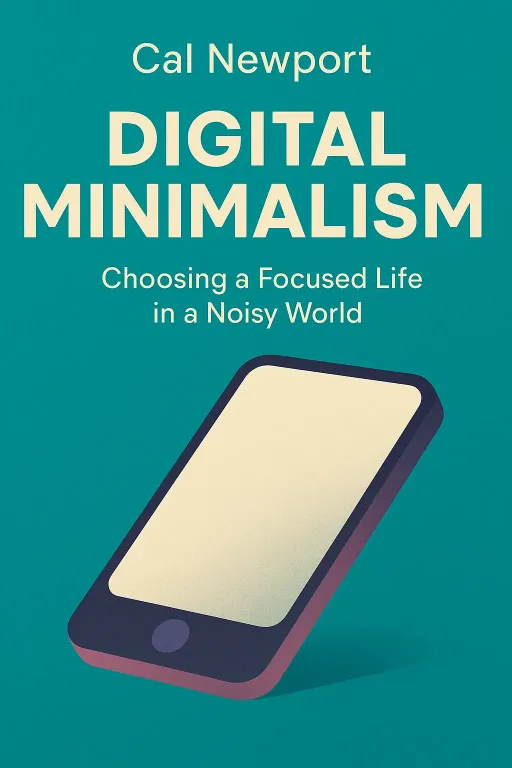
Nova: Exactly the gospel. But today, we're diving into a powerful set of ideas that challenge that very notion. We’re exploring the hidden cost of being "always on," drawing heavily from the profound insights of Cal Newport, particularly his works "Digital Minimalism" and "Deep Work."
Atlas: Ah, Cal Newport! The computer scientist who tells us to use our computers less. I love that paradox. He’s got that unique academic credibility paired with a very human concern about our digital habits.
Nova: He absolutely does. It’s what makes his work so compelling. He's not some Luddite; he's someone who deeply understands technology, yet advocates for a much more intentional, and often reduced, engagement with it. His books have sparked massive conversations globally, pushing people to rethink their relationship with their devices and their attention.
Atlas: That's a fascinating starting point. For anyone who feels constantly overwhelmed by notifications and endless feeds, this is going to resonate. So, where do we even begin to unpack this "hidden cost"?
The Silent Drain: Unpacking the 'Always On' Delusion
SECTION
Nova: We begin with what I call "The Silent Drain." Our modern world has tricked us into believing that more digital input equals more happiness, more productivity, more everything. But the truth is, this constant digital connection, this "always-on" state, silently drains our energy and focus. Think of your mental energy like a bucket. Every notification, every quick check of an app, every tab open in your browser, it’s like a tiny pinprick in that bucket. Individually, they seem harmless, but collectively, you’re left with very little in the bucket by the end of the day.
Atlas: I imagine a lot of our listeners, who love deep thinking and learning, feel this constantly. It's like my brain is always running background apps I didn't even open, and I can't figure out how to close them. Can you give a concrete example of how this 'always-on' state manifests in daily life?
Nova: Absolutely. Newport, especially in "Deep Work," talks about something called "attention residue." Imagine you're working on an important report, really trying to get into that flow state. Then, a notification pops up – an email, a social media alert – and you quickly check it. Even if you don't engage with it, even if you just dismiss it, your brain leaves a "residue" of attention on that previous task. It takes time, sometimes a lot of time, for your focus to fully return to the report. Do this twenty times a day, and you're constantly operating at a fraction of your cognitive capacity. It's like trying to run a marathon while stopping every few minutes to tie your shoelaces.
Atlas: Wow, that's almost insidious. It makes you feel like you're constantly fighting against your own brain's wiring. So, it's not just the time spent on the distraction, but the lingering effect the distraction. That's a game-changer. How does this 'silent drain' impact our ability to do meaningful work or have genuine connections?
Nova: It's profound. The constant craving for novelty and external validation that these platforms exploit, it’s like a variable reward schedule, similar to a slot machine. Our brains get hooked on the dopamine hit of the unpredictable notification. This craving fragments our attention, making true "deep work" – the kind of focused concentration that creates real value and meaning – almost impossible. And for genuine connection? It replaces deep conversations and shared experiences with superficial likes and fleeting comments. We feel connected, but it's often a shallow, unsatisfying connection that leaves us feeling more alone, not less. The illusion of constant connection actually fosters a kind of lonely crowd.
Atlas: That's spot on. I've felt that. You're scrolling through hundreds of people's lives, and yet you feel a strange sense of isolation. It's like the more connected we are digitally, the more disconnected we become from our internal selves and our immediate surroundings. It’s a powerful point that challenges our assumptions. So, if that's the problem, the pervasive "always-on" delusion, what's the strategic retreat? How do we fight back and reclaim that mental space?
Strategic Retreat: Cultivating Focus Through Digital Minimalism and Deep Work
SECTION
Nova: That's where Newport's genius truly shines, Atlas. He doesn't just diagnose the problem; he offers powerful, actionable solutions, primarily through "Digital Minimalism" and "Deep Work." Digital Minimalism isn't about abandoning technology and moving to a cabin in the woods. It's a philosophy of technology use where you "focus your online time on a small number of carefully selected and optimized activities that strongly support things you deeply value, and then happily miss out on everything else." It's about being intentional, not reactive.
Atlas: Okay, but for someone who relies on technology for learning, staying informed, or even their job, isn't 'digital minimalism' a bit extreme? How do you know what to keep and what to prune? It feels like a massive undertaking to audit every app and every notification.
Nova: That's where his practical approach comes in. Newport suggests a "digital declutter" – a 30-day period of abstinence from digital technologies. The goal isn't to become a Luddite, but to experience life without these tools, rediscover what truly brings you joy and value beyond the screen, and then, after the 30 days, reintroduce technologies and. You ask yourself: "Does this technology directly serve a deep value?" If not, it stays off. It's about designing your technology use around your values, not letting technology design your values for you. It's a powerful way to regain agency.
Atlas: That's smart. It's like hitting a reset button, allowing you to re-evaluate from a place of clarity rather than habit. So, minimalism clears the path, but then what do we with that newly created mental space? How do we cultivate focus?
Nova: That's where "Deep Work" comes in, and it's the perfect complement. Once you've minimized the distractions, you've created the runway for deep work. Newport defines deep work as "professional activities performed in a state of distraction-free concentration that push your cognitive capabilities to their limit. These efforts create new value, improve your skill, and are hard to replicate." It's the opposite of shallow work – the emails, meetings, and quick tasks that fill our days but rarely produce lasting value.
Atlas: That sounds like the holy grail for anyone who loves learning and creating. To be able to truly dive into a complex problem or a new subject without constant interruption. But how do you actually that environment in a world full of interruptions? It feels like an uphill battle, especially if you're in a collaborative environment.
Nova: It absolutely can feel like an uphill battle, but Newport provides practical strategies. It's about training your attention, much like building a muscle. You can schedule deep work blocks, creating rituals around them – maybe a specific time of day, a specific location, or even a specific way you prepare. Embrace "productive solitude," where you intentionally remove yourself from communication for focused periods. It's about protecting your attention fiercely. Think of it as a superpower in a hyper-distracted world. The less distracted you are, the more valuable your output becomes.
Atlas: So, digital minimalism clears the path, making it less cluttered, and deep work is how we run on that path, pushing our intellectual limits. It's a beautiful synergy. It’s not about doing less; it’s about doing what truly matters with higher quality.
Synthesis & Takeaways
SECTION
Nova: Exactly. It's not about abandoning our digital tools entirely, but about using them deliberately, masterfully, to serve our deepest values and goals. The ultimate goal is to reclaim that mental bandwidth, that precious cognitive resource, for genuine connection, for high-quality work, for deep thinking, and for a life that feels truly lived, rather than merely reacted to. It's about regaining control over your own attention.
Atlas: This isn't just about productivity; it's about reclaiming agency over our own minds and lives. It's about saying no to the noise so we can say yes to what truly matters, to that quiet internal space where real insights and creativity blossom. It's a profound shift in perspective.
Nova: And it starts small. This week, we're challenging our listeners with a tiny step straight from the philosophy: choose one notification on your phone – just one – and turn it off for the next 24 hours.
Atlas: And observe the difference. What mental space does that tiny act of rebellion create for you? What do you notice when that one little ping doesn't demand your attention? It’s amazing what one small change can reveal.
Nova: It truly is. We want to hear what you discover. This is Aibrary. Congratulations on your growth!