

The Cognitive Infrastructure of High Performance
Golden Hook & Introduction
SECTION
Nova: Most high-performers are currently running a Ferrari engine on low-grade, contaminated fuel. They have the cognitive horsepower to change the world, yet they burn through that potential on the digital equivalent of traffic jams. They are trading their most valuable asset—undivided attention—for the dopamine hit of a notification, and the cost of this trade is far higher than anyone realizes.
Atlas: That is a brutal way to frame it, but honestly, it feels completely accurate. We talk about productivity hacks and time management, but usually, we are just rearranging the deck chairs on the Titanic. We are trying to optimize our schedules when the entire environment is designed to fragment our focus. It is like trying to build a skyscraper in the middle of a hurricane.
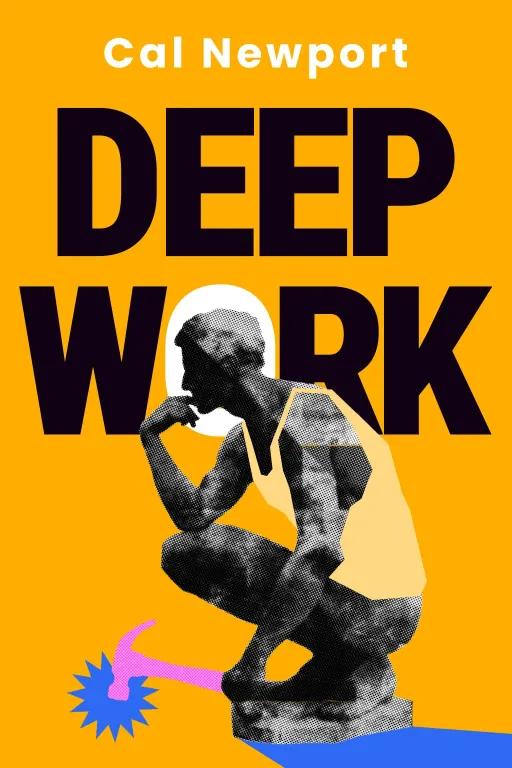
Nova: Exactly. And that is why we are looking at the work of Cal Newport today. Specifically, we are diving into his dual pillars of cognitive performance: Deep Work and Digital Minimalism. Newport is uniquely positioned to speak on this because he is a computer science professor at Georgetown University. He is not a productivity guru preaching from a mountain; he is a man who builds complex algorithms for a living. He has had to figure out how to produce high-level intellectual output in a world that is designed to interrupt him every six minutes.
Atlas: I have always appreciated that about his work. He writes from the trenches. He understands the mechanics of the internet because he studies computer science, which makes his critique of the digital landscape much more credible than someone just shouting from the sidelines about how social media is bad. Today, I want to figure out how to move from just managing the chaos to actually building a system that allows for that level of focus.
Nova: That is the perfect pivot. Let’s start with the foundation.
The Reality of Deep Work
SECTION
Nova: Newport defines Deep Work as the ability to focus without distraction on a cognitively demanding task. He argues that this is becoming a superpower. In an economy that is increasingly automated, the ability to learn hard things quickly and produce high-quality work at an elite level is what separates the top one percent of performers from everyone else.
Atlas: I can see why that sounds appealing, but I have a major issue with the premise. In my experience, and I imagine for many of our listeners, the modern workplace is literally designed to prevent this. I have meetings, Slack channels, emails, and constant pings. If I tell my team I am going into a four-hour block of deep work, I am often seen as being difficult or inaccessible. How do you reconcile the theory with the reality of a collaborative, fast-paced environment?
Nova: That is the central tension. Newport does not suggest you quit your job or move to a cabin in the woods. He points out that the "always-on" culture is often a performance of busyness rather than actual productivity. He identifies a phenomenon called Attention Residue. When you switch from Task A to an email, you do not immediately get back to Task A. A portion of your attention stays stuck on that email. You are essentially leaving mental sticky notes all over your brain, and each one drains your cognitive battery.
Atlas: That makes sense. It is like having thirty browser tabs open in your mind. You might be working on the document in tab one, but the other twenty-nine are using up all your RAM. I have felt that, especially at the end of a long day. I am exhausted, but when I look back at my calendar, I did not actually finish anything significant. I just responded to things.
Nova: That is the trap. We mistake activity for accomplishment. Newport’s evidence suggests that the highest value work—the kind that moves the needle on your career or your legacy—requires long, uninterrupted stretches. He uses the example of writers and researchers who retreat from the world to produce their best work. But he applies this to the corporate world, too. He suggests that if you want to be a top performer, you have to aggressively protect your cognitive resources.
Atlas: So, if I am a professional who has to be responsive, how do I actually implement this without getting fired? I am intrigued by the concept, but I need the tactical, boots-on-the-ground version. Are we talking about turning off the phone for half the day?
Nova: It is more strategic than just going dark. It is about batching. You treat your deep work sessions like sacred appointments. You communicate to your team that you are unreachable during certain blocks, not because you are ignoring them, but because you are producing the high-value output that the team needs to succeed. It is about shifting the culture from "I am available 24/7" to "I am available for high-impact collaboration, and I am hyper-focused during my deep work blocks."
Atlas: I like that framing. It turns it from an act of rebellion into an act of contribution. Instead of "I am hiding," it becomes "I am doing the work that matters most to the company." That is a shift in mindset that I think a lot of people could actually sell to their managers.
Nova: And it requires the courage to be a bit uncomfortable. Most people are addicted to the shallow work because it is easy. It is low-stakes. You answer an email, you feel a sense of completion. You write a complex strategy document, you face the possibility of failure or confusion. The shallow work is a safety blanket.
Atlas: That hits home. The comfort of the inbox. It is a never-ending game of whack-a-mole. You think you are winning because you cleared the pile, but the pile just grows back tomorrow. It is a recursive loop of mediocrity.
Digital Minimalism as Architecture
SECTION
Nova: Which leads us directly to the second pillar: Digital Minimalism. If Deep Work is the practice, Digital Minimalism is the architecture that supports it. Newport is very specific here. He is not suggesting you throw your smartphone in the river or become a Luddite. He is suggesting a philosophy of technology use.
Atlas: I have been thinking about this a lot. We treat our digital tools like they are neutral, like a hammer or a screwdriver. But these tools are designed to be addictive. They are designed to extract value from us. So, how do we apply this minimalism to a life that requires technology for basically everything?
Nova: The core of his strategy is the Digital Declutter. It is a thirty-day reset. You take a break from all optional technologies. Not the essential tools for your job, but the social media, the news feeds, the apps that are just there because you got bored three years ago. During that time, you do not just abstain; you rediscover what you actually value. You fill that time with high-quality leisure.
Atlas: I love the idea of "high-quality leisure." Most of us think leisure is just scrolling through a feed, but that is just a way to numb the brain. It is not restorative. If you take away the digital noise, you are forced to confront yourself. That sounds terrifying to some people, but it is probably exactly what they need.
Nova: Exactly. And at the end of that thirty-day period, you only add back the tools that serve a specific, deeply held value in your life. You don't ask, "Is this app useful?" You ask, "Does this app support the best version of my life?" If the answer is no, it stays gone.
Atlas: That is the part that resonates with the Strategic Architect mindset. It is not about restriction for the sake of restriction. It is about optimization. You are auditing your software stack. If you had a piece of software on your computer that slowed down your system by 50 percent and offered zero utility, you would uninstall it immediately. Why don't we treat our attention that way?
Nova: Because we are conditioned to believe that more is better. We fear missing out. But Newport flips that. He suggests that by clearing out the digital clutter, you actually gain more. You gain the clarity to pursue the deep work we were just talking about. You regain the ability to think in long, complex strings rather than short, fragmented bursts.
Atlas: I have a question about the "deeply held values" part. How does someone figure that out? It sounds simple, but I think a lot of people have lost the ability to even identify what they value because they are so constantly flooded with other people's values via their feeds.
Nova: That is the brilliance of the declutter. You cannot find your values while you are constantly consuming someone else’s. The silence is the point. When you step away, you start to notice what you miss. Do you miss the connection with people? Then maybe you call them instead of commenting on their posts. Do you miss the news? Maybe you subscribe to a high-quality publication instead of doom-scrolling headlines. You start to curate your life based on what you actually care about, not what the algorithm wants to show you.
Atlas: It is like switching from a passive consumer to an active curator. Instead of letting the algorithm decide what is important for me to know, I am deciding what is worth my time. That is a massive power shift.
Synthesis & Takeaways
SECTION
Nova: It is a power shift that ultimately leads to mastery. When you combine the ability to do deep, focused work with a digital environment that supports that focus rather than sabotaging it, you become an incredibly efficient engine for progress. You stop being a spectator in your own life and start being the architect of it.
Atlas: That is the synthesis I was looking for. It is not just about productivity; it is about reclaiming agency. We live in an age where our attention is the most valuable commodity on the planet, and we are giving it away for free to companies that do not have our best interests at heart. Deciding to protect that attention is an act of rebellion.
Nova: It is. And it is an act of self-respect. Newport’s work reminds us that we are capable of more than we think, but only if we are willing to build the systems that allow that capability to flourish. The question for our listeners is not "How can I get more done today?" but "What is the one thing I want to master, and what digital tools am I willing to sacrifice to make that happen?"
Atlas: I would add one more layer to that. Look at your daily stack. The tools you use every single day. If you had to pay for them with your time rather than your data, would you still use them? That is the litmus test. If you wouldn't pay for it, why are you paying for it with your focus?
Nova: That is a perfect diagnostic tool. If you wouldn't pay for it with your time, delete it. The path to high performance isn't about adding more, it is about stripping away everything that isn't essential to your vision. It is about creating the space where your best work can actually happen.
Atlas: I am definitely going to do an audit after this. It is time to clear the digital cache.
Nova: That is the spirit. This is about building a legacy that balances your personal goals with the kind of innovation that only comes from deep, sustained thought. We have the data, we know the strategy. Now, it is just about having the discipline to execute the blueprint.
Atlas: Well said. I am ready to close the tabs.
Nova: And that is a great place to leave it. Remember, you are the architect of your own focus. This is Aibrary. Congratulations on your growth!









