Charting Your Course: Career and Future Education
Golden Hook & Introduction
SECTION
Nova: Atlas, I was today years old when I realized that most career advice feels less like a roadmap and more like a treasure hunt where someone hid the map.
Atlas: Oh, I know that feeling! It’s like, you’re told to "follow your passion," but then you find out your passion doesn't pay the rent. So you're left holding a metaphorical shovel, but no X marks the spot.
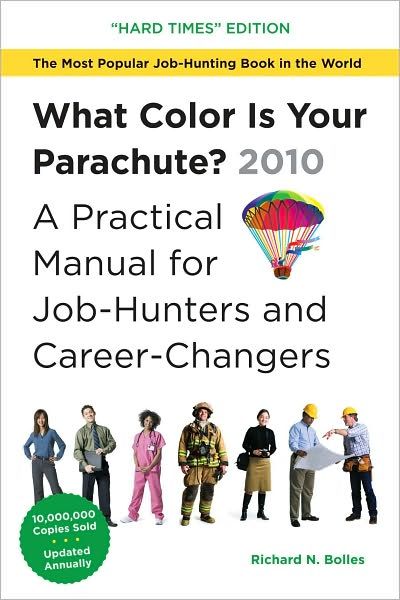
Nova: Exactly! And that’s why today, we’re digging into two phenomenal books that actually give you a compass, rather than just telling you to dig. We’re talking about "What Color Is Your Parachute?" by the legendary Richard N. Bolles, and "Designing Your Life" by Bill Burnett and Dave Evans.
Atlas: Oh, excellent choices! Bolles' book has been a career bible for decades, and Burnett and Evans really brought a fresh, almost playful approach to what can be a very daunting process. I mean, Bolles wrote the first edition of "Parachute" way back in 1970, originally for pastors, to help them navigate career changes, and it just blew up into this universal guide.
Nova: It’s incredible, isn’t it? That it started from such a specific need and then evolved to help millions. And Burnett and Evans, they’re Stanford design professors, applying principles they teach to product designers – like prototyping and iterating – to something as personal as your life. It’s a brilliant crossover.
Atlas: That’s a great way to put it. It’s about taking something abstract like "your future" and making it tangible. So, where do we start with these two titans of career wisdom?
Navigating the Labyrinth of Opportunity
SECTION
Nova: Well, Nova's take, combining insights from both, is that your future isn't a fixed destination you just stumble upon. It's an ongoing journey of exploration and iterative design, constantly guided by self-awareness and strategic action.
Atlas: I can definitely relate. I think a lot of our listeners probably feel like they're supposed to pick one path and stick to it forever. That pressure alone can be paralyzing.
Nova: Absolutely. And that's where Bolles' "Parachute" really shines. It pushes you to deep self-assessment first. It’s not about scanning job boards; it’s about understanding your skills – not just the ones on your resume, but your transferable skills, your preferred working conditions, your values, and even your ideal colleagues.
Atlas: So you're saying it's less about "what jobs are out there?" and more about "who am I, and what do I truly want to bring to a job?"
Nova: Precisely. Bolles developed this concept of the "flower exercise," where each petal represents a different aspect of yourself: your preferred people, your favorite skills, your ideal working conditions, your values, your purpose, and so on. Imagine trying to find a job without knowing what kind of flower you are! You’d just be grabbing at any old stem.
Atlas: That’s a great analogy. It makes me wonder, though, for someone who might feel lost, how do you even begin to identify those petals? It sounds like a lot of introspection.
Nova: It is. And that’s where the "design thinking" approach from Burnett and Evans comes in so beautifully. They acknowledge that self-assessment isn't a one-and-done questionnaire. It’s an ongoing process of "prototyping."
Atlas: Prototyping your life? That sounds a bit out there. Can you give an example?
Nova: Think of it like this: if you were designing a new app, you wouldn't just build the whole thing and hope it works. You'd create a small, testable version, get feedback, and then refine it. They suggest applying the same logic to your career. Instead of committing to a five-year degree in something you're unsure about, you might "prototype" it.
Atlas: So, like, if I'm thinking about becoming a linguist, instead of enrolling in a Ph. D. program, I might try tutoring English online for a few months, or volunteer to translate documents?
Nova: Exactly! Or even just interview people who are already linguists. It’s about creating "low-resolution prototypes" – small, inexpensive ways to experience different versions of your potential future. You're not making a full commitment; you're just gathering data and seeing how it feels.
Atlas: That makes so much sense. It takes the pressure off. Instead of a huge, life-altering decision, it becomes a series of small, manageable experiments.
Nova: And the beauty of it is, you learn something from every prototype, even if it tells you "this isn't for me." That's not a failure; it's valuable information that steers you toward something better. It aligns perfectly with the "embrace every mistake" mindset.
Sketching Your Next Steps
SECTION
Nova: Now, bringing it back to practical action, both books push us beyond just thinking and into doing. Bolles, with his emphasis on networking and informational interviews, and Burnett and Evans with their "Odyssey Plans."
Atlas: Odyssey Plans? That sounds like something out of Greek mythology.
Nova: It's a fantastic concept. They encourage you to sketch out three completely different, viable five-year plans for your life. One is your "plan A," the path you're currently on or most likely to pursue. The second is your "plan B," what you'd do if plan A suddenly disappeared. And the third is your "wild card" plan – what you'd do if money or fear were no object.
Atlas: Wow. That's a powerful exercise. I imagine a lot of our listeners, especially those feeling stuck, might find that third plan incredibly liberating. If fear were not a factor, what educational or career path would they explore first?
Nova: Precisely. It’s designed to unlock creativity and show you that there isn't just one right answer for your life. It's about generating options, expanding your sense of what's possible, and then, crucially, prototyping those options.
Atlas: So, you're not just dreaming; you're actively exploring those dreams, even the "wild card" ones, through those low-resolution prototypes.
Nova: Right. And this iterative design process is what Bolles implicitly nudges you towards with his networking advice. He emphasizes that the best job-hunting strategy isn't sending out hundreds of resumes; it's talking to people. Informational interviews are tiny prototypes. You're not asking for a job; you're asking for information, for their story, for their insights.
Atlas: That's a much less intimidating way to approach it. It aligns with that practical desire to seek guidance and make informed choices without feeling like you're putting all your eggs in one basket.
Nova: Exactly. And the "Tiny Step" recommendation from our user profile – spending 30 minutes free-writing about your ideal future day, then identifying one small action – is essentially a mini-prototype. It's a way to start sketching your next steps without committing to an entire odyssey.
Atlas: That’s a brilliant connection. It’s about making the grand vision of "your future" approachable. Like, instead of saying "I need to learn a new language," you say "I'll spend 15 minutes listening to a Spanish podcast today."
Nova: And that small action builds momentum. It’s about understanding that career exploration isn't a linear path; it's a dynamic dance between self-discovery and external engagement. It’s about building confidence, expanding your expression, and clarifying your path, one small, intentional step at a time.
Synthesis & Takeaways
SECTION
Nova: So, what we’ve really learned from Bolles and from Burnett and Evans is that charting your course isn't about finding path; it's about continuously your path. It's an active, ongoing process of self-discovery, experimentation, and adaptation.
Atlas: That’s actually really inspiring. It reframes the whole daunting idea of "career" from a rigid destination to an exciting, evolving journey. It’s about giving yourself permission to explore and learn, rather than feeling like every decision has to be perfect.
Nova: Absolutely. It’s understanding that your future isn't a fixed target you either hit or miss. It's a landscape you get to co-create, guided by your values and fueled by curiosity. For anyone feeling lost, or just wanting to refine their direction, the message is clear: start with self-awareness, then prototype, iterate, and don't be afraid to sketch out a wild card.
Atlas: And for our aspiring linguist who wants to build vocabulary and explore career paths, this approach offers a tangible way forward. Instead of just learning words, they can use those words to prototype conversations, to interview people, to design their linguistic future. It’s about making every mistake a stepping stone, not a failure.
Nova: Precisely. It’s about empowering yourself through action, however small. So, what’s one tiny step you can take this week to prototype a future day you’d love? Think about it.
Atlas: That’s a fantastic challenge. It makes the grand notion of "career exploration" feel immediately actionable. And that, I think, is the profound wisdom these books offer.
Nova: Indeed. This is Aibrary. Congratulations on your growth!