

The Future is Distributed: Building Resilient IoT Ecosystems
Golden Hook & Introduction
SECTION
Nova: You know, Atlas, I was reading this wild stat the other day: by 2030, we're talking about 50 billion connected IoT devices. Fifty billion! That's more than six devices for every person on Earth. My first thought was, "How on earth are we going to keep all that talking, let alone secure it?"
Atlas: Whoa, Nova. Fifty billion? That's not just a number, that's a digital ecosystem the size of a small planet. It makes me immediately think about the sheer vulnerability of such a massive, interconnected web. One weak link, and suddenly you're not just talking about a single device going down, but potentially entire grids.
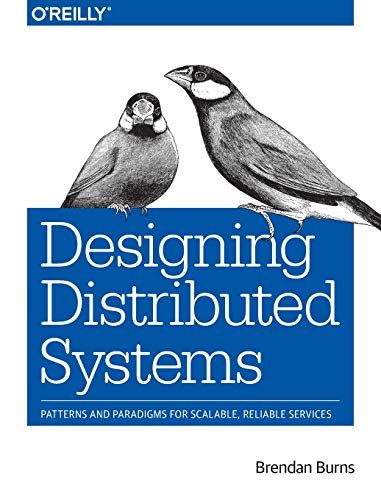
Nova: Exactly! And that brings us to the brilliant mind of Brendan Burns and his seminal work, "Designing Distributed Systems." Burns, as many know, is a co-founder of Kubernetes, which is practically the lingua franca of container orchestration. His insights are absolutely critical for understanding how to build these vast IoT networks to be resilient, even when things inevitably go sideways.
Atlas: So, Burns is essentially giving us the architectural blueprints for a world where everything is talking to everything else, all the time, and somehow, it all needs to stay up. I can see why that's crucial for pervasive sensing and smart grids, where downtime isn't just inconvenient, it's potentially catastrophic.
The Evidence: When Every Node Matters - Distributed Systems
SECTION
Nova: Absolutely. The core idea from Burns is about moving beyond centralized vulnerabilities. Think about it: a traditional, centralized system is like a single point of failure. If that one server goes down, everything grinds to a halt. Burns champions a distributed approach, where tasks are spread across multiple nodes. If one node fails, the others pick up the slack.
Atlas: That makes sense intuitively. It’s like having a team of engineers working on a project, rather than just one superstar. If the superstar gets sick, the project stalls. But with a distributed team, someone else can step in. But how does that translate to something as physical and dispersed as an IoT network, where sensors are out in the wild, often with intermittent connectivity?
Nova: Great question, and that's where Burns's deep dive into patterns and challenges becomes so valuable. He talks about concepts like redundancy, fault tolerance, and self-healing systems. Imagine a smart grid with thousands of sensors monitoring energy flow. If a few sensors in a remote area lose connection due to a localized issue, a truly distributed system is designed to not only continue functioning using data from other nodes but also to identify and potentially self-correct the problem. It's about designing for failure, not just hoping it doesn't happen.
Atlas: That's a profound shift in mindset. It's not about building an impenetrable fortress, but a flexible, adaptive organism. For someone trying to implement this in a real-world smart grid, what's a concrete example of a "pattern" Burns might suggest?
Nova: Well, one key pattern is the "leader-follower" model, or more generally, consensus algorithms. In a distributed system, how do all these individual nodes agree on the state of the world? If you have multiple temperature sensors, and they're all reporting slightly different readings, how does the system decide what the "true" temperature is? Burns explores various consensus mechanisms that allow these disparate nodes to achieve agreement, even when some are faulty or sending conflicting information. It's crucial for data integrity.
Atlas: So it's not just about keeping the lights on, but ensuring the information flowing through the grid is trustworthy. That sounds like a massive challenge, especially when you consider the sheer volume and velocity of data from pervasive sensing. And I imagine security becomes an even bigger headache when you decentralize everything.
Deep Question: Distributed Consensus and Decentralized Identity in IoT
SECTION
Nova: You've hit on the perfect segue, Atlas, because that's where Kevin Werbach's "The Blockchain and the New Architecture of Trust" enters the conversation. Werbach, a renowned expert in blockchain, explores how this technology, at its core, enables trust and coordination a central authority. It's a new paradigm for decentralized control and data management.
Atlas: Okay, so we're talking about taking the principles of a distributed ledger – like what underpins cryptocurrencies – and applying it to something as tangible as a smart grid. I can see the appeal of eliminating a central point of failure for security, but blockchain is often associated with heavy computational loads. How do you reconcile that with resource-constrained IoT devices? That sounds like trying to run a supercomputer on a smart lightbulb.
Nova: That's precisely the "deep question" we need to unpack. Werbach himself acknowledges that raw blockchain, as we know it, isn't a one-size-fits-all solution for IoT. It's about adapting the. Think of distributed consensus, as you mentioned. Blockchain provides an immutable, verifiable record of transactions – or in our case, sensor data, device identities, and operational logs. Instead of every tiny sensor running a full blockchain node, you could have a lightweight client on the device that only verifies transactions, or you could use a variant like a "permissioned blockchain" or a "Tangle" architecture, which is designed for micro-transactions and lower power consumption.
Atlas: So it's not about making every smart meter a Bitcoin miner, but leveraging the underlying concepts of secure, distributed agreement. I'm especially intrigued by the idea of decentralized identity management. In a smart grid, you have millions of devices, all needing to be authenticated and authorized. Centralized identity systems are huge targets for hackers.
Nova: Exactly. Imagine every device having a self-sovereign identity, managed peer-to-peer, rather than relying on a central server that could be compromised. This could dramatically improve security and privacy. If a sensor needs to communicate with a local energy hub, it can establish trust directly, cryptographically, without going through a vulnerable central identity provider. Werbach's work shows how this fundamentally shifts the security model from "protect the perimeter" to "trust no one, verify everything."
Atlas: That's a massive leap forward for resilience. So, if we combine Burns's architectural patterns for fault tolerance with Werbach's principles of decentralized trust, we're not just building systems that can handle failure, but systems that are inherently more secure and trustworthy from the ground up. It feels like we're moving from a brittle, centralized internet to a robust, distributed internet of things.
Nova: That's the vision, Atlas. Nova's Take, as we like to say, is that for IoT and pervasive sensing to truly scale and remain resilient, we deeply understand and apply these distributed system principles. We have to move beyond those centralized vulnerabilities. It’s about creating adaptive, trustworthy networks that can withstand the inevitable chaos of the real world.
Synthesis & Takeaways
SECTION
Atlas: So, to bring it all together, we're talking about a future where our smart grids and pervasive sensing networks aren't just a collection of gadgets, but intelligent, self-organizing communities of devices. A future where trust isn't granted by a single authority, but earned through cryptographic consensus, always verifiable, always resilient.
Nova: Precisely. The profound insight here is that resilience isn't an add-on; it's baked into the very architecture. It's about recognizing that systems will fail, connections will drop, and bad actors will try to exploit vulnerabilities. But by embracing distributed design and decentralized trust, we build ecosystems that don't just survive these challenges, but adapt and even thrive because of them. It's about creating a future that is distributed, and therefore, truly resilient.
Atlas: That gives me chills, in a good way. It's such a hopeful vision for a cleaner, smarter future. For anyone working in tech, especially with AI and machine learning, or sustainable energy solutions, understanding these principles is non-negotiable. It's how we build the next generation of truly adaptive and trustworthy systems.
Nova: Absolutely. And it's how we ensure that the convenience and power of pervasive sensing don't come at the cost of vulnerability. We're building the nervous system of our future world, and it needs to be robust.
Atlas: What a powerful thought. This is Aibrary. Congratulations on your growth!