

The 'Monolith to Microservices' Trap: Why You Need Foundational Design First.
Golden Hook & Introduction
SECTION
Nova: Everyone talks about microservices like they're the holy grail, the promised land of scalability and flexibility. But what if chasing that shiny new architecture too soon is actually setting you up for spectacular failure?
Atlas: Wait, isn't microservices the goal for everyone right now? Every article, every conference seems to be shouting about breaking down monoliths. You're saying that's... a trap?
Nova: Absolutely, Atlas. It's a significant blind spot many builders have. They jump straight into coding, eager to see results, eager to implement the latest trend. But without a clear, foundational design philosophy, your intricate applications can quickly become tangled messes. It slows down innovation, increases stress, and honestly, makes you wish you'd never started.
Atlas: Oh, I know that feeling. I imagine a lot of our listeners have felt that knot in their stomach when a system gets too complex to reason about, let alone change. So, if microservices isn't the immediate answer, what is?
Nova: Well, the core of our podcast today is really an exploration of why rushing to build without a foundational design philosophy—one that deeply understands both the business domain and the intricacies of data—is a trap that leads to brittle, unscalable, and ultimately frustrating software. Today we'll dive deep into this from two perspectives. First, we'll explore the crucial role of understanding your business's core domain before writing a single line of code, drawing insights from Vaughn Vernon. Then, we'll discuss how data is truly at the heart of any resilient system, guided by Martin Kleppmann's profound work, and connect it all back to building systems that are both robust and evolvable.
Atlas: That's a powerful statement. Most of the time, we're just trying to get features out the door.
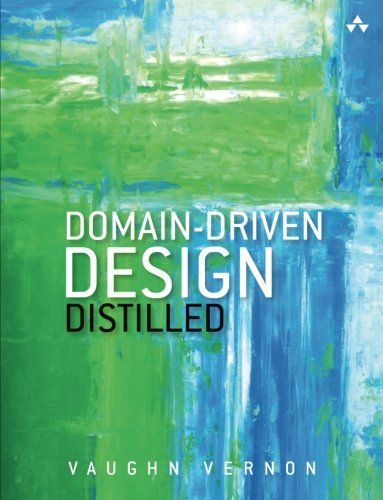
Nova: Exactly! But that's where the problem starts. We're talking about shifting focus from mere features to foundational, evolvable design. And two incredible minds help us do that. First, there's Vaughn Vernon, author of "Domain-Driven Design Distilled." Vernon is a renowned expert who’s spent decades in the trenches, making complex domain-driven design principles accessible and actionable for real-world development teams. He's not just theoretical; he's incredibly practical.
Atlas: Ah, practical is key. Theory is great, but builders need to know how to apply it.
Nova: Absolutely. And then there’s Martin Kleppmann, who wrote "Designing Data-Intensive Applications." Kleppmann is a research fellow at the University of Cambridge, and he literally wrote the book on how data shapes our systems. His work is revered for its academic rigor combined with incredibly practical insights into real-world distributed systems.
Deep Dive into Core Topic 1: Domain-Driven Design: Building Software Aligned with Business
SECTION
Nova: So, Atlas, how often have you seen a technically brilliant solution that just… didn't quite solve the business's actual problem? Or maybe it solved it perfectly for today, but couldn't adapt to tomorrow's changes?
Atlas: Oh man, too many times to count. It's like building a supercar for a farmer who just needs a tractor, right? Or worse, building a tractor that's fantastic at plowing, but suddenly the farm needs to harvest blueberries, and your tractor is useless.
Nova: That's a perfect analogy. And that's precisely what Vaughn Vernon addresses with Domain-Driven Design, or DDD. In "Domain-Driven Design Distilled," he emphasizes understanding the core business domain writing a single line of code. It’s about building software that speaks the language of the business, reflects its processes, and deeply aligns with its needs.
Atlas: So, it's not just about talking to the business, but truly embedding their language and processes into the code itself? That sounds incredibly powerful for flexibility.
Nova: It is. Let me give you a hypothetical example. Imagine a fast-growing online clothing retailer. Let's call them "TrendThreads." The development team is brilliant, full of eager engineers who love cutting-edge tech. They decide to build a new inventory management system. They pick the latest NoSQL database, implement a sophisticated microservices architecture, and optimize for blazing-fast product lookups. Technically, it's a marvel.
Atlas: Sounds great on paper. Fast, scalable, microservices. What could go wrong?
Nova: Well, the business team at TrendThreads, like many retailers, has a complex returns policy. Customers can return items in-store or online, often with different rules for exchanges, store credit, or refunds based on loyalty tiers. They also offer personalized styling services where stylists pre-select items for customers to try on. The engineers, focused on technical elegance and speed, modeled inventory purely as "items in stock" and "items sold."
Atlas: Oh, I see where this is going. They probably missed the nuances.
Nova: Exactly. When a customer returned an item, the system just added it back to general inventory. It didn't account for whether it was a "stylist pick" that needed to go back to a specific stylist's pool, or if it was a damaged item that couldn't be resold. When a customer exchanged an item, the system sometimes issued a refund sent a new item, because the "exchange" concept wasn't deeply modeled as a single business event.
Atlas: Whoa. So the system was technically sound, but fundamentally didn't understand the business's actual operations. That would lead to chaos.
Nova: Utter chaos. The business team had to resort to manual spreadsheets and workarounds, constantly fighting the system. Developers were continually patching, adding new "features" that were really just compensating for a mismatched understanding of the domain. Innovation slowed to a crawl because every change risked breaking a fragile workaround. The system was technically beautiful, but fundamentally useless for solving the business problems.
Atlas: That's a hard lesson. It highlights why comprehensive understanding is so critical. But how do you even begin to 'distill' a complex business domain? Isn't that a huge upfront cost before you even write a line of code?
Nova: That's a valid concern. Vernon isn't advocating for endless upfront documentation. He's talking about relentless collaboration, creating a "ubiquitous language" that both developers and business experts use, and modeling the domain iteratively. It's about ensuring your software is flexible and truly solves the user's problems, not just technical ones. It reduces that stress you mentioned earlier because you're building something that genuinely makes sense to everyone involved.
Deep Dive into Core Topic 2: Data-Intensive Applications: The Foundation of Reliability and Scale
SECTION
Nova: Speaking of foundations, even if you nail the business domain, there's another often-overlooked bedrock that can make or break your system: your data. Martin Kleppmann, in "Designing Data-Intensive Applications," really lays this bare.
Atlas: Data. That's a black hole for many, isn't it? We just pick a database and hope for the best. What's Kleppmann's big revelation here?
Nova: Kleppmann shows that data is absolutely at the heart of any system. He reveals how different data storage and processing choices deeply impact reliability, scalability, and maintainability. It's not just about what database you pick, but you pick it, and understanding its fundamental properties.
Atlas: So, it's not just about 'SQL versus NoSQL,' it's about the fundamental properties of how your data behaves under stress? That's a huge shift in perspective for someone just trying to get a feature out the door.
Nova: Precisely. Let's look at another hypothetical. Imagine a rapidly growing online gaming platform, "Nexus Games." Their engineering team, after learning from the TrendThreads example, did a fantastic job with their domain model. They understood user accounts, game sessions, in-game purchases, and leaderboards perfectly. They decided to use a popular, highly scalable NoSQL database because they anticipated massive user growth and wanted low latency.
Atlas: Sounds like they learned their lesson. Domain-driven, scalable tech. What could still go wrong?
Nova: The problem arose with consistency. The NoSQL database they chose was eventually consistent, meaning changes to data would propagate across the system over time, but not instantly. For most things—like updating a player's avatar—this was fine. But for leaderboards and in-game currency, it was disastrous.
Atlas: Oh, I can see that. If I just earned 100 gold, and the leaderboard still shows my old score, or worse, if I try to spend that gold and the system thinks I don't have it yet... that's a user experience killer.
Nova: Exactly. Players would win a match, see their score update on their screen, but the global leaderboard might not reflect it for several minutes. Even worse, sometimes a player would earn in-game currency, try to spend it on an item, and because the transaction wasn't immediately consistent across all database replicas, the purchase would fail due to insufficient funds, only to succeed five minutes later.
Atlas: That's horrible! That completely erodes trust in the game. It's like having a bank account where your balance is sometimes wrong, even if it eventually corrects itself.
Nova: A perfect analogy. Despite a great domain model, the fundamental choice of data infrastructure—without a deep understanding of its consistency models and trade-offs—undermined the entire user experience. Developers spent countless hours building complex compensating mechanisms and retries, essentially fighting the database's inherent properties. The system became incredibly hard to maintain, and users started abandoning the platform due to perceived unreliability.
Atlas: Wow, so it's not just about picking a database that's fast or popular, it's about deeply understanding the implications of its internal workings on your application's reliability and user trust. That makes me wonder, how does an architect, especially an independent builder, choose the 'right tool' when there are so many options and trade-offs?
Nova: Kleppmann doesn't give you a prescriptive "use this database." Instead, he gives you the framework to understand the trade-offs. He teaches you the fundamental concepts of distributed systems, consistency models, replication, and fault tolerance. A deep dive into this helps you choose the right tools for the right job, understanding their strengths and weaknesses in relation to your specific business and data needs. It's about informed decision-making, leading to a system that's truly reliable and scalable.
Synthesis & Takeaways
SECTION
Nova: So, we've talked about the business domain with Vaughn Vernon and the data domain with Martin Kleppmann. How do these two foundational pillars help us avoid that "monolith to microservices" trap?
Atlas: It sounds like both Vernon and Kleppmann are essentially telling us to slow down, understand the deep 'why's'—why the business works that way, why the data needs to behave that way—before we even think about the 'how' of microservices. If you don't have those foundations, splitting a monolith just gives you a distributed mess instead of a centralized one.
Nova: Exactly. The real trap isn't the monolith itself, it's the monolith, or worse, the. True evolvability doesn't come from arbitrarily adopting an architectural pattern like microservices. It comes from a profound, deliberate understanding of your core problem space, your business domain, and the data underpinning it. When you have that clarity, your architectural choices, whether monolith or microservices, become informed decisions, not just trends. This prevents the "tangled messes" and truly enables genuine innovation. It’s about building systems that evolve, not just systems that microservices.
Atlas: That's actually really inspiring. It means the power to build truly robust and evolvable systems is in our hands, if we just take the time to understand the fundamentals. For our listeners who are builders, architects, or just trying to make sense of their complex systems, what's one concrete step they can take today to start applying these foundational principles?
Nova: Start small, but start deep. Pick either one core business process in your application and map out its precise language and events with a business expert, or choose one critical data flow in your system and truly understand its journey, its consistency requirements, and what happens if something goes wrong. Don't just build; truly understand the 'why' behind what you're building.
Atlas: That's a powerful call to action. Stop, think, understand.
Nova: This is Aibrary. Congratulations on your growth!