

Design your life
Introduction: Life as a Design Project
Introduction: Life as a Design Project
Nova: Welcome to the show. Imagine you’re handed a brand new, incredibly complex product—your life—but there’s no instruction manual, and the warranty expired before you even opened the box. That’s where most of us feel stuck. But what if you could apply the rigorous, creative process used to design the iPhone or a new skyscraper to design your own fulfilling future?
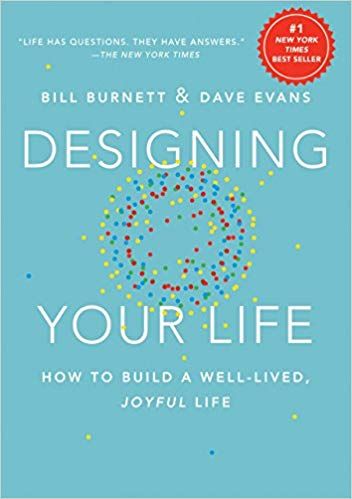
Nova: Exactly! And that’s the core premise of the New York Times Bestseller, "Designing Your Life," by Bill Burnett and Dave Evans. These aren't just life coaches; they are the architects behind the famous Stanford d. school, where they teach product design. They realized that the tools they used to build revolutionary products could solve the wicked problem of life planning.
Nova: It is. They argue that meaning isn't something you out there in the world, waiting to be discovered; it’s something you right here, through action and iteration. They reject the myth that you must first find your passion before you can start living well. In fact, they suggest passion is often the of good design, not the starting point.
Nova: The first step is to stop thinking and start. It’s about shifting your mindset from analysis paralysis to active experimentation. We’re going to break down the three core mindsets and the three essential exercises that turn life planning from a philosophical debate into a tangible, hands-on project. Get ready to prototype, because this isn't a lecture; it’s a workshop.
Reframing and Embracing Failure as Data
The Designer's Mindset: Killing Dysfunctional Beliefs
Nova: The foundation of the entire book rests on adopting five key mindsets from the design world. But the most crucial one, especially for people feeling stuck in their careers, is reframing. They call out what they term 'Dysfunctional Beliefs.' These are the ingrained assumptions that block us from seeing possibilities.
Nova: The biggest one, which we touched on, is: 'I must follow my passion.' Burnett and Evans argue this is a trap. If you don't know your passion, you feel like a failure. Their reframe is: 'Passion is the result of good design.' You build passion by engaging with things, prototyping them, and seeing what energizes you.
Nova: It’s the belief that 'My life is a single, fixed path.' They point out that we often feel we have to choose perfect job, perfect city, perfect partner, and if we mess up the choice, the whole structure collapses. The reframe? 'You never finish designing your life.' It’s iterative, like software development. You launch a version, you gather feedback, and you update.
Nova: They do this by emphasizing the concept of Prototyping, which we’ll get to, but the mindset required is 'Bias Toward Action.' They want you to run small, low-stakes experiments. If you’re thinking about becoming a baker, you don't quit your job and enroll in culinary school immediately. You prototype by baking for friends every weekend for a month. That’s a prototype, not a commitment.
Nova: Precisely. They also stress the importance of curiosity over certainty. Certainty closes doors; curiosity opens them. They found that people who reported being happier and more fulfilled were those who were constantly asking 'What if?' and exploring adjacent possibilities, rather than digging deeper into one narrow track.
Nova: Absolutely. And this leads directly into the first major exercise that forces you out of your head and into the world: Mind Mapping. It’s about brainstorming wildly, without judgment, to see what themes emerge when you look at what truly engages you—what energizes you, what you’re curious about, and what you’re good at. It’s about mapping the terrain of your current reality before you try to chart a new course.
Getting Out of Your Head and Into the World
Prototyping Your Future: The Power of Small Experiments
Nova: Chapter two is where the rubber meets the road: Prototyping. In product design, you never build the final product first. You build cheap, fast versions to test assumptions. Burnett and Evans insist we must do the same with our lives. The goal is to test your life hypotheses.
Nova: That’s the beauty of it. You break down the big, scary idea into the smallest possible testable unit. If the hypothesis is 'Remote work equals happiness,' the prototype isn't moving. The prototype might be: 'I will work from a coffee shop three days next week and track my focus levels and mood.' Or, 'I will schedule a one-hour video call with someone who has been working remotely for five years to understand their actual day-to-day reality.'
Nova: Exactly. They emphasize that prototyping is about the potential future, not to it. They use the term 'Conversation with the Future' because you are literally having a dialogue with a potential version of yourself. A key technique they introduce here is the 'Prototyping Interview.'
Nova: It is. Instead of asking someone, 'What would you do if you were me?'—which yields generic advice—you ask people who are already living the life you are curious about. You ask them about their actual day, what they love, what they hate, and what surprised them. You are interviewing them as a of your future self. They suggest you need about five of these interviews to start seeing patterns.
Nova: It does. And this process is crucial for dealing with the concept of 'path dependency.' We get stuck on the path we’re on because we feel the sunk cost is too high to switch. Prototyping allows you to test a side path without abandoning the main road entirely. You can run three prototypes simultaneously—one for your current path, one for a slight pivot, and one for a radical change.
Nova: Perfect examples. Notice how Prototype C is low-stakes, fun, and requires minimal commitment, yet it tests your actual engagement with the craft. The research shows that people who run these prototypes—who get out of their heads and into the world—report significantly higher levels of clarity and reduced anxiety about their next steps.
Breaking Free from the 'One Right Answer' Trap
The Blueprint: Creating Three Lives with Odyssey Plans
Nova: Now we move to the most visually compelling and perhaps most liberating exercise in the book: The Odyssey Plan. This is where you actively design three distinct, viable versions of your life for the next five years.
Nova: They are meant to be wildly different. The goal is to break the illusion that there is only one path forward. Life Path One is usually an iteration of where you are now—what your life might look like if you stay on your current trajectory but make some minor adjustments. It’s the 'safe' option.
Nova: Path Two is the life you would live if Path One suddenly became impossible or undesirable. Maybe your industry vanishes, or you decide you absolutely must move to a different continent. This path forces you to look at your skills and values and see how they translate into a completely different context. It’s about building resilience by imagining disruption.
Nova: Path Three is the fantasy life. The one you’d pursue if money, time, and what other people think were completely irrelevant. This is where you let your most outlandish curiosities run free. Maybe you want to be a deep-sea welder who also writes poetry, or a full-time volunteer running a small animal sanctuary in Patagonia. The key here is that even this fantasy life must be grounded in real.
Nova: Because you must identify the or the driving that fantasy. If your fantasy is the Patagonian sanctuary, the underlying value might be 'connection to nature' or 'caring for the vulnerable.' That underlying value is the real takeaway, not necessarily the welding or the poetry. You then look for ways to prototype that in your current life.
Nova: Precisely. And the authors stress that you should spend significant time on all three. They found that most people spend 90% of their time on Path One, maybe 9% on Path Two, and 1% on Path Three. They want you to flip that ratio—spend time exploring the possibilities that scare you a little, because that’s where the real innovation lies. They found that people who created these three plans felt significantly more optimistic about their future.
Nova: And the final piece of this puzzle is connecting these plans back to your values. You map out what you value most—things like connection, mastery, contribution, or autonomy—and then you check: Does Path One honor those values? Does Path Two? Does Path Three? If your current path is deeply misaligned with your core values, the Odyssey Plan immediately highlights the necessary pivot points. It makes the abstract concept of 'values alignment' concrete and actionable.
Actionable Takeaways for Iteration
Conclusion: The Generative Life
Nova: We’ve covered a lot of ground today, moving from the abstract fear of the unknown to the concrete steps of design thinking. The core message from Burnett and Evans is that a well-designed life is not a destination you arrive at; it’s a continuous process.
Nova: Absolutely. Let’s summarize the three biggest actionable takeaways for our listeners who want to start designing this week. First: Identify and reframe one Dysfunctional Belief. Is it 'I must follow my passion,' or 'I’m too old to change'? Write it down and write the designer's reframe next to it.
Nova: And third: Start sketching your Odyssey Plan. Don't worry about making it perfect. Just brainstorm Path One, Path Two, and Path Three. Focus on harvesting the underlying values from the fantasy path.
Nova: That’s the ultimate gift of this methodology. It takes the overwhelming scope of 'What should I do with my life?' and breaks it down into manageable, exciting design challenges. The future isn't something that happens to you; it’s something you build, one prototype at a time.
Nova: Indeed. Stop looking for the instruction manual, and start building the prototype. This is Aibrary. Congratulations on your growth!