

From Academia to Impact: Designing Your Post-Degree Career
Golden Hook & Introduction
SECTION
Nova: You know, Atlas, if I asked you to brainstorm three wildly different career paths or life scenarios for your next 3-5 years, what’s the first thing that comes to mind? No filter, just pure possibility.
Atlas: Oh, I love that challenge. Immediately, my brain goes to: first, maybe running a small, sustainable farm-to-table restaurant – totally different from what I do now. Second, perhaps a deep dive into urban planning, focusing on community gardens. And third, honestly, just traveling the world writing fiction. They’re all so distinct.
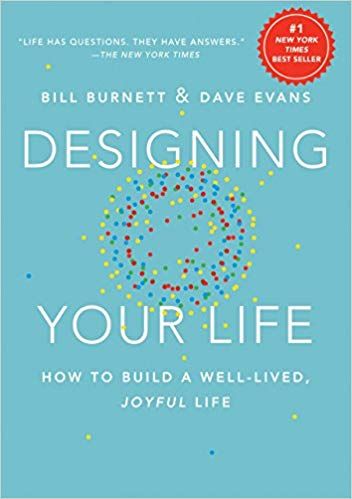
Nova: Exactly! And that exercise, that vivid envisioning of multiple "odyssey plans," is right at the heart of one of the most transformative books we’re discussing today: by Bill Burnett and Dave Evans.
Atlas: That’s a book that’s been on so many people’s radar. What’s the story behind these authors?
Nova: Well, Bill Burnett and Dave Evans are fascinating. They’re both design professors at Stanford University. Dave Evans co-founded Electronic Arts, a massive video game company, before returning to academia. They brought this incredibly practical, iterative design thinking approach, usually reserved for building products, and applied it to the messy, often overwhelming challenge of building a life. It’s a complete reframing of career and life planning.
Atlas: That’s a brilliant crossover! So, not just career advice, but almost like an engineering manual for your existence.
Engineering Your Future with Purpose
SECTION
Nova: Exactly. And that leads us to our first core idea: the concept of engineering your future with purpose. It’s about more than just finding a job; it’s about crafting a life that truly resonates with your values and aspirations. The books we’re looking at, and by Meg Jay, both hammer this home.
Atlas: Oh,! Meg Jay’s work is so powerful. She really challenges that idea that your twenties are just for "finding yourself" without any real consequences.
Nova: She absolutely does. Jay, a clinical psychologist, pushes back against the cultural narrative that the twenties are a disposable decade. She argues that the decisions and experiences during this period are critically important for long-term career and life satisfaction. She backs this up with years of clinical research, showing how seemingly small choices in your twenties compound, shaping who you become and what opportunities are available to you later. It’s a wake-up call for intentionality.
Atlas: That makes so much sense. I imagine a lot of our listeners, especially those transitioning from degrees, might feel this pressure to "figure it all out" right away, or conversely, feel like they have all the time in the world.
Nova: Exactly. And offers the antidote to that paralysis. They say, look, you wouldn't design an iPhone by just brainstorming once and building it. You prototype, you test, you iterate. They apply that exact thinking to your life. The core idea is that you don't need to know your "one true calling." Instead, you need to generate multiple possibilities, test them out, and then pivot based on what you learn.
Atlas: So it’s like instead of trying to find the perfect map, you’re given a compass and told to start exploring, making small adjustments as you go.
Nova: Precisely. They introduce the concept of "life design interviews." Instead of just surfing job boards, they encourage you to talk to people who are actually doing the jobs or living the lives you're curious about. It’s not about asking for a job; it’s about asking for their story, understanding their day-to-day, what they love, what they hate. It's a low-stakes way to prototype different futures.
Atlas: That’s so practical. I can see how that would help someone who feels stuck, just to get some real-world data points instead of just imagining things. And it directly addresses that "Nurturing Strategist" in many of us, who wants to plan but also learn.
Nova: And it’s not just about jobs. They talk about "energy mapping"—paying attention to activities that energize you versus those that drain you. If you spend your days drained, no matter how prestigious the job, it’s not a well-designed life for you. It's about designing a life that aligns with your unique energy patterns.
Atlas: That’s a great way to put it. It’s almost like personal thermodynamics. You want to maximize your positive energy flow.
Nova: Exactly! It's a continuous process of observation and adjustment. They even encourage "failure." Not big, catastrophic failures, but small, learning-oriented failures. Like, if you prototype a new activity and it doesn't work out, that's not a failure; it's just data. You learn from it and try something else.
Charting Your Course with Clarity
SECTION
Nova: Which brings us to our second core idea: charting your course with clarity, using tools like these odyssey plans we just touched on. This is where you move beyond just dreaming and start actively brainstorming and sketching out those different possible futures.
Atlas: Okay, so the odyssey plan. I mentioned my three earlier: restaurant, urban planning, travel writing. But how do you go from those broad ideas to something concrete enough to actually "prototype"?
Nova: The books suggest creating three distinct 5-year plans. Plan A is your current path, slightly tweaked or optimized. Plan B is what you'd do if Plan A suddenly disappeared. And Plan C is the wild card—what you'd do if money or image were no object. The goal isn't to pick one; it's to force yourself to generate real alternatives and see what lights you up.
Atlas: That’s brilliant. It’s a commitment device for imagination. It forces you to think beyond the obvious. I imagine for someone who’s a "Curious Balancer," someone trying to juggle many roles, this could feel overwhelming at first.
Nova: It can, but the beauty is that it’s not about perfection. It's about ideation. They even suggest drawing them out, adding titles, questions, and dashboards to each plan. It makes them feel real, tangible. And the questions are crucial: What would you learn? What experiences would you gain? What impact would it have?
Atlas: So it's not just about the outcome, but the process of living that plan. I can see how that would appeal to the "Future Builder" in all of us, someone who wants to create a better future not just for themselves but for their family.
Nova: Absolutely. And Meg Jay’s work complements this perfectly by asking: what are you doing to build towards those future possibilities? She talks about "identity capital"—the collection of personal assets, experiences, and skills that help us define who we are and what we want. These are things you acquire in your twenties, like internships, mentors, travel, meaningful relationships. They aren't just resume builders; they're building blocks for your future self.
Atlas: So if you’re sketching out an odyssey plan for, say, becoming a marine biologist, your identity capital during your twenties would be volunteering at aquariums, taking relevant courses, maybe even a diving certification.
Nova: Precisely. And it's not about linear progression. Sometimes, the most valuable identity capital comes from unexpected places. A challenging volunteer experience, a side project that teaches you a new skill, even a failed startup can provide immense identity capital if you reflect on what you learned.
Atlas: That’s a really hopeful way to look at setbacks. It’s not just a dead end; it's a detour that adds to your internal toolkit.
Nova: And both books emphasize the social aspect. Burnett and Evans talk about building your "dream team" – not just mentors, but peers who can support you, give you feedback, and challenge your assumptions. Jay, in, underscores the importance of choosing your friends and partners wisely, as they significantly influence your trajectory.
Atlas: So it's not a solo journey. You’re engineering your life, but you’re also building a support structure around that engineering process. That’s a powerful combination for someone who nurtures growth in others.
Synthesis & Takeaways
SECTION
Nova: So, bringing it all together, what these books fundamentally teach us is that our journey post-degree, or at any stage really, is an active design process, not a passive discovery.
Atlas: It’s not about waiting for a map to appear, but about sketching multiple maps and then taking small steps to see which terrain feels right. And building up your "identity capital" along the way.
Nova: Exactly. And the profound insight here is that the mindset shift is everything. It's moving from "What should I be when I grow up?" to "What problems do I want to solve, and how can I prototype solutions in my life?" It embraces experimentation and learning over rigid planning. The world is too complex for a single, perfect plan.
Atlas: That’s a hugely freeing thought. It redefines "failure" as data, and it empowers you to be the architect of your own future, rather than just a passenger. It’s about intentionality, iteration, and understanding that your twenties, or any decade, are prime time for building that foundation.
Nova: Absolutely. It encourages us to embrace self-compassion, to understand that our worth isn't tied to our output, but to the iterative process of growth and learning. It’s about scheduling that "me-time" to reflect, to recalibrate, to nurture the strategist and balancer within.
Atlas: And for anyone feeling overwhelmed by the sheer possibilities, or the pressure to get it "right," these books offer a framework that’s both practical and deeply human. It transforms the daunting task of career development into an exciting design challenge.
Nova: This is Aibrary. Congratulations on your growth!