

The Hidden Curriculum: Understanding What Learners Really Absorb.
Golden Hook & Introduction
SECTION
Nova: You know, it's fascinating how often we focus intensely on we're teaching, the explicit lessons, the curriculum on paper. But what if I told you that the most powerful lessons, the ones that truly shape beliefs and behaviors, are often the ones we're even aware we're delivering?
Atlas: Oh, I love that. So, it's not just about what's on the syllabus, but what the is teaching? That makes me wonder about all those subtle cues we pick up without even realizing.
Nova: Exactly! It’s what we call the "hidden curriculum." This unseen architect of learning is shaping attitudes and beliefs far more than we realize. Today, we're diving deep into this concept, drawing profound insights from educational giants like Paulo Freire and Ivan Illich, whose radical ideas continue to spark vital conversations and inspire revolutionary changes in how we think about learning.
Atlas: For anyone out there building programs, designing educational content, or just trying to foster a better learning environment, this isn't just theory. This is about understanding the invisible forces at play. It's about empowering others, which I know is a huge driver for our listeners who are constantly seeking to innovate and improve.
Unveiling the Hidden Curriculum: The Unseen Architect of Learning
SECTION
Nova: So, let's start with a common scenario. Think about a typical classroom, or even a corporate training session. You have a set time, a specific location, a designated 'expert' at the front, and a group of 'learners' expected to absorb information. On the surface, it’s about transmitting knowledge. But look deeper. What else is being communicated? The bell rings, you sit down, you raise your hand to speak, you complete tasks for grades or evaluations. These aren't explicit lessons in the textbook.
Atlas: Oh, I see. So the hidden curriculum isn't just about what's of the syllabus, but what the are actually teaching us. Like, if you're always being told what to do and when, you're implicitly learning compliance, not necessarily critical thinking.
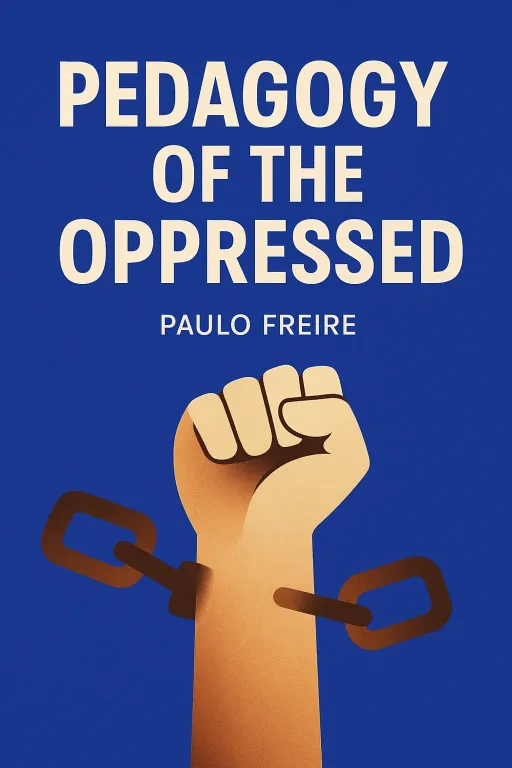
Nova: Precisely. It's the implicit values, norms, and power dynamics embedded within educational systems. It can be incredibly powerful, sometimes empowering, but often, it's disempowering. This is where Paulo Freire comes in, with his seminal work "Pedagogy of the Oppressed." Freire introduced the concept of "banking education."
Atlas: Banking education? That sounds... clinical. Tell me more.
Nova: It's a powerful metaphor. Freire argued that traditional education often treats students as empty receptacles, like bank accounts, into which teachers deposit knowledge. The teacher is the active subject, the one who knows, and the students are passive objects, expected to receive, memorize, and repeat.
Atlas: So, the implicit message there is: "Your role is to absorb, not to question or create." That’s going to resonate with anyone who's ever sat through a long, one-way lecture. It feels like it stifles curiosity. For an innovator trying to build compelling programs, this sounds like a complete mindset shift is needed.
Nova: It absolutely is. Freire saw this as a dehumanizing process that reinforces existing power structures and inhibits critical consciousness. He argued that it teaches students to be adaptable to the world as it is, rather than to see themselves as agents capable of transforming it. His work, though controversial in its radical critique, has had a profound and lasting impact on critical pedagogy worldwide.
Atlas: But wait, I have to ask, isn't some 'banking' necessary? How do you teach foundational knowledge, like basic math or reading, without some level of direct instruction? For our listeners who are trying to build effective learning programs, this can feel like an impossible tightrope walk.
Nova: That's a crucial point. Freire wasn't advocating for chaos. He was advocating for a shift to "problem-posing education." Here, the teacher and students become co-investigators of reality. Knowledge isn't deposited; it's through dialogue and critical reflection on real-world problems.
Atlas: So, instead of just telling someone a process works, you present a challenge, and together, you figure out the best approach? That's a completely different dynamic. It's like moving from a recipe book to a culinary lab.
Nova: Exactly! Imagine teaching history not by memorizing dates, but by posing a historical dilemma and asking students to analyze primary sources, debate solutions, and understand the motivations of the people involved. The explicit content is still there, but the hidden curriculum shifts from passive reception to active inquiry, critical thinking, and agency. It's about seeing learners not as recipients, but as active participants in their own liberation and the transformation of their world.
Beyond the Institution: Designing for Agency and Authentic Learning
SECTION
Atlas: That idea of agency is incredibly powerful. When you talk about the implicit messages that educational structures send, it makes me think about the very idea of 'school' itself. Are our current institutions inherently designed against this kind of empowerment? That makes me think of Ivan Illich.
Nova: Absolutely, it's a perfect segue. Ivan Illich, in his equally provocative book "Deschooling Society," took an even more radical stance than Freire. He argued that institutionalized education, with its fixed curricula, compulsory attendance, and credentialing, often stifles natural learning and creates dependency. He believed that schools, far from being neutral providers of education, actually "school" us into accepting a particular social order and economic system.
Atlas: So, if the institution is the problem, what's the solution? For someone passionate about transforming learning environments, this feels like throwing the baby out with the bathwater! What does 'deschooling' actually look like for someone designing a modern program, especially when the world still demands credentials and structured learning? Illich's ideas were quite polarizing, weren't they?
Nova: They were, and still are, often seen as utopian or impractical by many, but the core of his critique remains incredibly relevant. Illich wasn't necessarily saying abolish all learning environments, but rather to question the of the school as the sole legitimate path to learning. He called for a shift towards self-directed, communal learning networks – what he termed 'learning webs.' These were meant to connect learners with resources, skill-exchanges, and peers, empowering them to pursue their own interests and learn what they truly needed, outside the constraints of traditional institutions.
Atlas: That's a fundamental shift in mindset, from "what do I teach?" to "how do I empower learners to find their own path and resources?" For our listeners who are educators and innovators, this is about recognizing that we're not just delivering content, we're building an.
Nova: Exactly. And this brings us right back to Nova's Take. Recognizing and intentionally designing for the hidden curriculum is crucial. It means not just focusing on knowledge we transmit, but our programs cultivate critical thinking, creativity, and agency. It’s about asking: Are we creating environments where learners are encouraged to question, to explore, to collaborate, or are we inadvertently reinforcing passivity and conformity?
Atlas: This is huge. It really makes you pause and reflect on your own methodologies. What unspoken assumptions or power dynamics might our current educational structures be reinforcing, and how can we shift them? That's the deep question we need to be asking ourselves, especially for those of us striving to build truly impactful learning experiences.
Nova: It is. It’s about understanding that every design choice you make, from how you structure feedback to how you allocate time, sends a message. Are you teaching learners to chase grades, or to master a skill? Are you teaching them to follow instructions, or to solve complex problems independently? The hidden curriculum is always at play; our choice is whether to be passive recipients of its influence or active architects of its design.
Synthesis & Takeaways
SECTION
Nova: So, what we've really been exploring today is that learning is never just about the explicit content. It’s a much richer, more nuanced process, deeply influenced by the hidden curriculum – those implicit messages and power dynamics woven into the very fabric of our educational structures.
Atlas: It’s about being archeologists of our own learning structures, unearthing those hidden messages, and then becoming architects of something better. For all the innovators and strategists out there, this isn't just theory; it's a blueprint for building programs that truly empower. It's moving beyond mere instruction to genuine transformation.
Nova: Absolutely. The key takeaway, the practical strategy, is to regularly ask yourself two profound questions: First, "What is being taught here?" Look beneath the surface of your curriculum, your policies, your interactions. And second, "How can I intentionally design this environment to foster true agency and critical consciousness?"
Atlas: Because ultimately, we're not just shaping minds; we're shaping futures. And by understanding the hidden curriculum, we can ensure those futures are built on empowerment, curiosity, and the ability to critically engage with the world.
Nova: This isn't just about tweaking a lesson plan; it's about a fundamental shift in our approach to education, recognizing that every choice we make has a hidden impact. What assumptions are you reinforcing in your own learning environments? We invite you to reflect on that.
Atlas: Thanks for joining us for this deep dive into the hidden curriculum. We hope this sparks some powerful insights for you.
Nova: This is Aibrary. Congratulations on your growth!