

The Architecture of Extreme Empathy in Business
Golden Hook & Introduction
SECTION
Atlas: We often talk about business as a game of optimization. We track the metrics, we watch the conversion rates, we obsess over the bottom line. But there is a massive, hidden variable that most people treat as a soft skill, when in reality, it is the most powerful piece of infrastructure you can build.
Nova: That variable is empathy. And the reason it feels like a soft skill is because we have spent decades defining it as something fuzzy or sentimental. But when you look at the architecture of high-performing organizations, you see that empathy is actually a hard, structural asset. It is not just about being nice. It is about being precise.
Atlas: Right. It is about the difference between a generic interaction and a high-fidelity connection. If you are just a transaction to me, I am just a resource to you. That is the baseline. But we are here to talk about moving past that baseline.
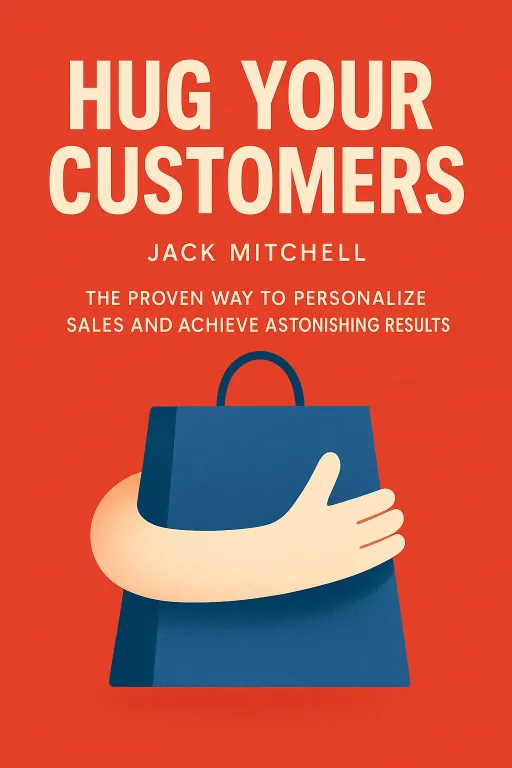
Nova: Exactly. Today, we are looking at two seminal approaches to this. First, we are diving into the philosophy of Jack Mitchell, specifically his work in Hug Your Customers. Mitchell built a retail empire by treating the 'hug' as a scalable, systematic business asset. Then, we are connecting that to the legacy of Tony Hsieh. In Delivering Happiness, Hsieh fundamentally argued that a company's external success is just a mirror of its internal culture. He made the case that if you prioritize the happiness of your team, world-class customer service is the natural, organic byproduct.
Atlas: I am interested in how we bridge that gap. Most people hear 'hug' and think of a greeting card. But Mitchell and Hsieh were talking about something much more, let's say, industrial. This is about building a machine that runs on human connection.
Nova: That is the perfect way to frame it. It is an industrial approach to human connection. Let’s start with that 'hug' philosophy. When Mitchell talks about hugging customers, he is not talking about physical contact. He is talking about a system of hyper-personalization. He argues that the deeper you know the person on the other side of the transaction, the less friction there is in the business. And when you remove friction, you increase efficiency.
The Mechanics of the Hug
SECTION
Atlas: That makes sense from a retail perspective. You know the customer’s size, their preference, their history. You reduce the time they spend searching. But I want to push back on the complexity of that. If you are running a high-stakes, high-growth environment, how do you scale that level of 'hugging'? Is it even possible to maintain that without it becoming performative?
Nova: That is the essential question. The trap most people fall into is thinking that personalization requires a massive amount of extra labor. But Mitchell’s insight is that it requires a massive amount of. It is about creating feedback loops where the information you gather about the customer becomes a tool for future service. In his experience, the 'hug' is just a metaphor for deep relationship-building. It is the act of saying, 'I see you, I remember you, and I value your time.' When you systematize that—when you make it a standard operating procedure rather than a sporadic act of kindness—you create a moat around your business.
Atlas: So, it is about data-driven relationships. It is not about the manager walking the floor and shaking hands, though that helps. It is about the infrastructure of the organization ensuring that every touchpoint is informed by the previous one.
Nova: Precisely. Think about the opposite. Think about the times you have had to explain your problem to three different departments in a company. That is the antithesis of the 'hug.' That is systemic indifference. It is high-friction, high-cost, and it destroys trust. Mitchell’s argument is that the 'hug' is a cost-saving mechanism. It prevents the churn, it prevents the miscommunication, and it builds the kind of loyalty that money cannot buy.
Atlas: That is a great way to put it. It is an efficiency hack, not a charity project. If I have to explain my situation to you once, and you solve it, that is efficient. If I have to explain it five times, that is a system failure. So, applying this to business, the 'hug' is really just high-fidelity communication.
Nova: You hit the nail on the head. And this brings us to the second piece of the puzzle, which is Tony Hsieh’s work with Zappos. Hsieh’s approach was radical because he looked at the organization from the inside out. He realized that if your employees are miserable, they cannot possibly deliver that level of 'hug' to the customer. It is impossible to fake genuine care for a customer when you are being treated like a cog in a machine.
Atlas: It sounds simple, but it is incredibly difficult to execute. Most corporate structures are built on command and control, which is the enemy of that kind of internal happiness. How did Hsieh actually turn that into a strategy?
Nova: He treated the culture as the product. He famously argued that the customer service department should not be a cost center; it should be the marketing department. By empowering his employees to make decisions, to be themselves, and to prioritize the relationship with the customer over the efficiency of the script, he created a culture where the employees were invested in the outcome. They weren't just following orders; they were owning the 'hug.'
Atlas: I can see how that works for a customer-facing role. But let’s challenge that. What about the back-office? What about the engineers, the accountants, the people who never see a customer? How does that 'hug' philosophy apply to them? Because if you only focus on the front line, you create a massive divide in the company.
Nova: That is the crux of the challenge. The 'hug' philosophy has to be internal. You have to treat your teammates like your customers. If you are an engineer, your 'customer' is the person who has to maintain the code you write. If you are an accountant, your 'customer' is the department that relies on your reports. If you treat those internal relationships with the same level of attention, the same 'hug,' you eliminate the silos that kill efficiency.
The Internal Architecture of Trust
SECTION
Atlas: Okay, let’s get granular. If I am an analytical person, someone who values systems and metrics, how do I apply this 'hug' philosophy to my teammates this week? Because, honestly, if I walk into a meeting and start 'hugging' my colleagues, I am going to get some strange looks.
Nova: We need to strip the metaphor of its physical connotation. Think of the 'hug' as 'investing in the context of the other person.' It is about understanding what your teammate is actually trying to achieve, not just what they are asking you for. This week, try a simple exercise. When you interact with a teammate, pause for a second. Ask yourself: What is the biggest friction point for them right now? What is the one thing they need from me that would make their day 10 percent easier?
Atlas: So, it is proactive problem solving. Instead of waiting for a ticket or a request, I am anticipating the need because I understand their workflow.
Nova: Exactly. That is the internal 'hug.' It is the act of reducing their cognitive load. If you can anticipate what your colleague needs before they ask, you are building trust. And trust is the ultimate efficiency multiplier. When you have high trust, you don't need to double-check work. You don't need to have three meetings to clarify a simple point. You just move faster.
Atlas: That is a very different way of looking at it. It turns empathy into a logistical advantage. I am not doing it because I want to be friends with everyone; I am doing it because it makes the entire system run faster and smoother.
Nova: That is the key. You are treating the organization as an ecosystem where the health of the whole depends on the health of the relationships. When you ignore that, you are essentially paying a 'friction tax' on everything you do. Every time you have to re-explain a project, every time there is a misunderstanding because someone didn't feel heard, that is a tax you are paying in time and energy.
Atlas: I like that framing. The 'friction tax.' It makes it very tangible. So, how does this fit into the broader historical pattern? We see these ideas pop up in different ways, don't we? It is not just Mitchell and Hsieh. It feels like this is a recurring theme in the history of management.
Nova: You are right. It is a recurring theme, but it is often ignored because it is hard to measure. It is much easier to measure widgets produced than it is to measure the quality of a relationship. But the most successful leaders in history, from the early industrialists who realized that a rested worker is more productive, to the modern tech leaders who focus on psychological safety, they all understood that you cannot separate the human from the output.
Atlas: It is interesting because we are in an era where technology is doing more of the heavy lifting. We have automation, we have AI. You would think that this would make the 'human' side less important. But the opposite seems to be true. As the routine tasks get automated, the only thing left for us to do is the high-value, high-context work. And that work requires deep human alignment.
Nova: That is a profound insight. As the low-value tasks are automated away, the premium on human connection goes up. If you are just a processor of information, you are going to be replaced by a machine. But if you are a builder of relationships, if you are someone who can align a team, who can understand the needs of a stakeholder, who can 'hug' the process with empathy and intelligence, you become indispensable.
Atlas: So, the 'hug' philosophy is actually a form of future-proofing yourself. It is not just about being nice; it is about developing a skill set that machines cannot replicate.
Nova: Precisely. Machines can process data, but they cannot build trust. They cannot look at a teammate and understand the unspoken stress they are under. They cannot navigate the nuance of a complex human negotiation. Those are the skills that define the next generation of leadership.
Synthesis & Takeaways
SECTION
Atlas: Let’s pull this all together. We have discussed the idea that empathy is not a soft skill, but a structural one. We have looked at how Mitchell’s 'hug' is a system for reducing friction, and how Hsieh’s culture-first approach is the engine that drives that system. And we have arrived at the idea that this isn't just about customers; it is about the internal ecosystem of our teams.
Nova: And the takeaway for this week is very concrete. The challenge is to identify one internal stakeholder—a teammate, a boss, a collaborator—and shift your approach from 'transactional' to 'relational.' Don't just ask, 'What do I need from this person?' Ask, 'What is the friction in their workflow, and how can I help remove it?'
Atlas: I love that. It is a very analytical way to practice empathy. You are essentially doing a 'root cause analysis' on their daily frustrations and offering a solution. It is proactive, it is helpful, and it builds an immense amount of social capital.
Nova: And it is self-reinforcing. Once you start doing that, you will find that people start doing it for you. You create a culture of reciprocity. That is how you build a team that doesn't just work together, but wins together.
Atlas: It also helps with the 'efficiency' mindset we talked about. By removing friction for others, you are often removing friction for yourself. It is the ultimate leverage.
Nova: Exactly. It is a force multiplier. You are not just adding to your output; you are amplifying the output of everyone around you. That is the architecture of extreme empathy. It is not about being soft; it is about being smart. It is about understanding that in a complex world, the strongest asset you have is your ability to connect.
Atlas: This has been a great conversation. It really reframes the 'soft skills' debate. It is not about feelings; it is about performance. It is about building a system that is resilient because it is rooted in real, human connection.
Nova: And that is the foundation of long-term significance. When you align your daily output with that kind of deep, meaningful collaboration, you are not just getting things done; you are building a legacy of trust.
Atlas: Well said. Let’s challenge our listeners to try that this week. Just one person. One 'internal hug.' See how it changes the dynamic. See how it changes the efficiency of your project.
Nova: It will change the trajectory of your work, and likely, the trajectory of your professional life. It is a small shift, but it has massive leverage.
Atlas: I am definitely going to try that with my dev team. I have a feeling it is going to save us a lot of back-and-forth emails.
Nova: That is the goal. Less noise, more signal. That is the power of the 'hug.'
Atlas: This is Aibrary. Congratulations on your growth!