The Information Overload Trap: Why Less Input Leads to More Insight
8 minGolden Hook & Introduction
SECTION
Nova: Atlas, I've got a challenge for you. Give me a five-word review of "The Information Overload Trap."
Atlas: Oh, I love this! Okay, 'Less input, more brain zen.'
Nova: That's perfect! Mine: 'Unplug, focus, truly understand.' We're diving into a fascinating, almost counter-intuitive idea today. It's drawn from the brilliant minds of Daniel Levitin, who's not just a neuroscientist but also a cognitive psychologist, and Cal Newport, a computer science professor. Their combined work fundamentally challenges how we think about information, especially in our hyper-connected world.
Atlas: That interdisciplinary approach, blending neuroscience with computer science, sounds exactly what we need to make sense of things. What's the core idea here, Nova?
Nova: It's powerful. It's about why less input actually leads to more insight. We're exploring "The Information Overload Trap: Why Less Input Leads to More Insight." It’s a call to arms for anyone feeling overwhelmed.
Atlas: Oh, I know that feeling. I imagine a lot of our listeners, especially those who spend their days analyzing complex data or trying to grasp foundational theories, feel constantly swamped by emails, news feeds, and endless notifications. It's like we're drowning in data, but starving for true wisdom.
Nova: Exactly! And that brings us perfectly to our first core topic...
The Cognitive Trap of Information Overload
SECTION
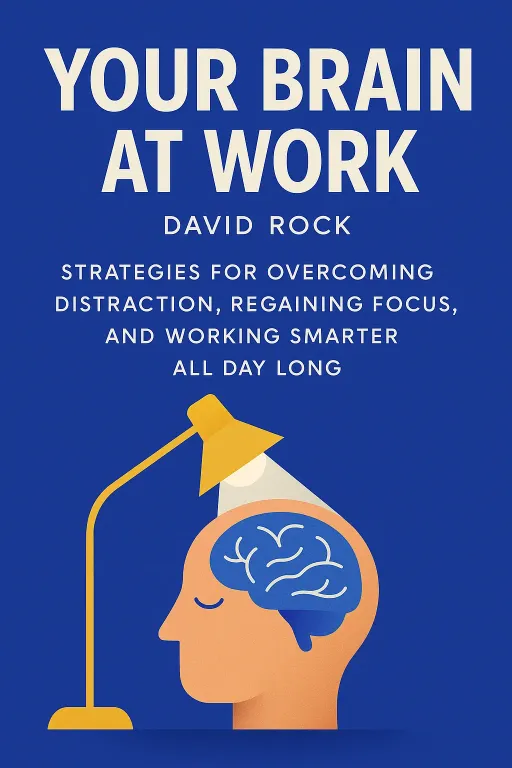
Nova: ... the cognitive trap of information overload. We live in a world that tells us more information is always better, right? More news, more updates, more data points. But Daniel Levitin, in "The Organized Mind," shows us how our brains are simply not built for this constant barrage.
Atlas: Wait, so you’re saying our brains actually perform when constantly fed new information? That feels counter-intuitive for someone who needs to see patterns and connect dots across vast amounts of data.
Nova: It’s absolutely true. Think of your brain like a high-performance computer. It has incredible processing power, but if you open 50 different applications and tabs at once, what happens? It slows down, it crashes, it struggles to perform any single task effectively. That's cognitive load in action. Levitin explains that our attention is a finite resource. Every notification, every new email, every headline we skim, it all chips away at that resource.
Atlas: That makes sense. It’s like trying to listen to five different conversations at once. You hear noise, not meaning. But how does this translate into shallow thinking? For someone trying to understand, say, the foundational theories of governance or the intricate dynamics of AI on geopolitics, isn't broad exposure crucial?
Nova: That’s a great question. Broad exposure is important for context, but not for. When our brains are constantly switching tasks, even for a split second, there's a "switching cost." It takes time and mental energy to reorient ourselves to the original task. This constant context-switching prevents us from engaging in what Levitin calls "orchestrated attention" – the ability to sustain deep focus on one complex problem. The result? We might feel busy, we might feel productive because we're constantly, but we're never truly sinking our teeth into a problem to uncover its hidden patterns or foundational truths. We're skimming the surface of knowledge, not plumbing its depths.
Atlas: So basically, you’re saying that the illusion of productivity, that constant busy-ness, is actually sabotaging our ability to think deeply and analytically. It's like we're collecting puzzle pieces, but never actually sitting down long enough to assemble the puzzle.
Nova: That’s a perfect analogy, Atlas. And the consequence is that we struggle to innovate, we struggle to make profound connections, and our insights remain superficial. We mistake information quantity for intellectual quality.
The Path to Profound Understanding: Cultivating Deep Work and Intentional Focus
SECTION
Nova: So, if our brains are getting bogged down, what's the antidote? This is where Cal Newport steps in with his groundbreaking concept of "Deep Work." He argues that true breakthroughs come from sustained, distraction-free concentration.
Atlas: Okay, so if Levitin diagnoses the problem, Newport offers the prescription. But how do you even define "deep work"? It sounds almost mythical in today's always-on culture.
Nova: It can feel that way, but Newport defines it as "professional activities performed in a state of distraction-free concentration that push your cognitive capabilities to their limit." It's the kind of work that creates new value, improves your skill, and is hard to replicate. Think of a philosopher meticulously crafting an argument, or an analyst uncovering a subtle trend in vast datasets – that's deep work.
Atlas: That gives me chills just thinking about it, that level of focus. But for someone whose role might involve navigating constant demands, from urgent emails to stakeholder meetings, how do you even begin to cultivate this "deep work" habit? It sounds like it requires retreating to a monastery!
Nova: Not necessarily a monastery, but it does require intentionality. Newport offers actionable strategies. One is scheduling deep work. Don't wait for inspiration; block out specific, uninterrupted time on your calendar, even just 60 or 90 minutes. Another is creating rituals: establishing a consistent routine for your deep work sessions, like going to a specific quiet place, having your coffee ready, and turning off all notifications.
Atlas: Like creating a mental "do not disturb" sign. I can see how that could help analysts focus on complex reports, or humanists on dense philosophical texts. But what about the constant temptation to check that email, or glance at social media? That's the real monster, isn't it?
Nova: Absolutely. And that's why Newport also advocates for embracing boredom. When we feel the urge to check our phones, he suggests resisting it and letting our minds wander. It's in those moments of intentional boredom that our brains can process information, consolidate memories, and even generate creative solutions. It's about training your attention muscle. Many groundbreaking thinkers throughout history, from scientists to artists, often describe periods of intense, isolated focus as critical to their discoveries. They weren't just working harder; they were working.
Atlas: That gives me a new perspective. It’s not about ignoring the world, but about strategically engaging with it. It’s about building the mental fortitude to choose and you consume information, rather than being a passive recipient.
Synthesis & Takeaways
SECTION
Nova: Exactly. The ultimate insight here is that controlling your attention is controlling your intellectual output and understanding. It allows you to move beyond surface-level observations and truly grasp the foundational principles that govern societal structures, or to deeply analyze the complex impact of AI on geopolitics, seeing patterns where others only see noise.
Atlas: That’s actually really inspiring. For anyone who strives to understand the 'why' behind things, who wants to connect the dots and see the bigger picture, this isn't just about productivity; it's about intellectual integrity. It’s about reclaiming the capacity for profound thought.
Nova: It truly is. So, for our listeners, here's a tiny step you can take tomorrow: Designate a 30-minute block for focused reading or a single complex task. Turn off all your notifications – your phone, your email, everything. Just 30 minutes of intentional, deep engagement. See what insights emerge when you give your brain the space to truly think.
Atlas: And I imagine the insights you gain in those 30 minutes will be far more valuable than hours spent skimming. It’s a powerful invitation to trust your inherent curiosity and let it lead you to profound understanding.
Nova: Absolutely. It’s about being deliberate with your most precious resource: your attention.
Atlas: This is Aibrary. Congratulations on your growth!