The Hidden Cost of Busyness: Reclaiming Your Time and Focus.
6 minGolden Hook & Introduction
SECTION
Nova: What if the path to greater impact isn't doing more, but doing less, strategically?
Atlas: Oh, I imagine a lot of our listeners, especially those driven by contribution, just felt a jolt of anxiety and relief at the same time. How can 'less' possibly mean 'more' when there's so much to do?
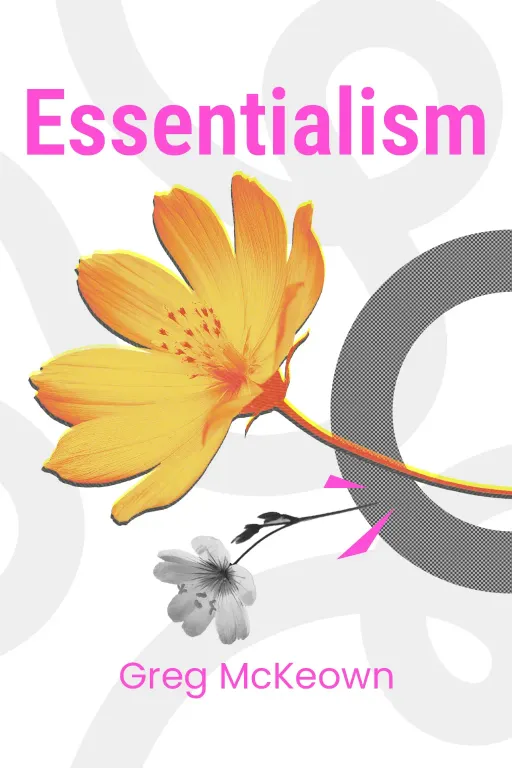
Nova: Exactly, Atlas. Today, we're diving into that precise paradox, exploring two foundational texts: "Essentialism" by Greg McKeown and "Deep Work" by Cal Newport. These aren't just productivity hacks; they're philosophical frameworks for reclaiming your time and focus in a world obsessed with busyness.
Atlas: That sounds like a radical idea for anyone feeling stretched thin, trying to build something meaningful.
The Power of Less: Embracing Essentialism
SECTION
Nova: McKeown's "Essentialism" is a powerful call to arms. He argues that busyness is often a choice, not a necessity. It’s about the disciplined pursuit of less. He provides a framework to discern what is absolutely essential and then eliminate everything else.
Atlas: Okay, but for someone trying to make a significant impact, perhaps launching a new initiative or navigating complex power structures, that sounds easier said than done. How do you 'gracefully say no' when every opportunity feels like a step forward?
Nova: That's the core challenge, isn't it? It's not about being unproductive; it's about being productive. McKeown tells a story about a high-powered executive who was constantly overwhelmed, saying yes to every request, every meeting. His team was diluted, his personal life suffered. By implementing essentialism, he started asking, "If I could only do one thing this week, what would make the biggest difference?" He dramatically cut down his commitments, delegated ruthlessly, and suddenly, his crucial projects saw unprecedented progress, and his team felt more focused.
Atlas: Wow. That actually resonates. It's like, the more plates you spin, the less attention each one gets. So, it's not just about time management, it's about energy allocation for maximum impact.
Nova: Precisely. It's about setting clear boundaries and understanding that every 'yes' to something non-essential is a 'no' to something truly vital. McKeown emphasizes that this isn't about laziness; it's about strategic clarity.
Atlas: For our listeners who are trying to integrate broad knowledge and build understanding, this feels like a crucial first step: clearing the intellectual clutter.
Cultivating Focus: The Art of Deep Work
SECTION
Nova: And that naturally leads us to Cal Newport's "Deep Work," which complements Essentialism beautifully. Once you've identified the essential, Newport shows you to do it with maximum effectiveness.
Atlas: I'm curious, what exactly distinguishes 'deep work' from just, you know, 'working'? Because I imagine many people feel they're working deeply, even if they're constantly interrupted.
Nova: That's a great question, Atlas. Newport defines deep work as "professional activities performed in a state of distraction-free concentration that push your cognitive capabilities to their limit. These efforts create new value, improve your skill, and are hard to replicate." It's the opposite of "shallow work"—the email, the meetings, the social media pings.
Atlas: So, it's not just about quiet; it's about pushing past your current cognitive limits. That sounds intense. How does one cultivate that in a world designed for constant notifications?
Nova: Newport himself, a highly successful computer science professor, wrote multiple books and groundbreaking papers while maintaining a reasonable work schedule. His secret was structuring his day, sometimes in monastic isolation, sometimes in rhythmic blocks, to allow for uninterrupted deep work. He'd schedule specific, long blocks of time for focused research, shutting off all communication channels. The quality of his output, the complexity of the problems he could tackle, skyrocketed.
Atlas: That's incredible. It's like, for someone who seeks wisdom and broad learning, deep work isn't just a choice; it's a necessity for truly integrating knowledge, not just accumulating it. Otherwise, it's all surface-level.
Nova: Exactly. He argues that the ability to perform deep work is becoming increasingly rare and, therefore, increasingly valuable. It's the superpower in a distracted age.
Synthesis & Takeaways
SECTION
Nova: So, when you combine Essentialism—choosing less, but choosing wisely—with Deep Work—executing those chosen few things with profound focus—you unlock an incredible synergy. It's about building a life of deliberate impact, not reactive busyness.
Atlas: It almost feels like a rebellion against the constant pressure to be "always on." For our listeners who are driven by impact and want to genuinely contribute, this isn't just about personal efficiency; it's about building a more resilient and meaningful path. What's one tiny step someone could take this week?
Nova: This week, identify just one activity you can gracefully say 'no' to. It could be a non-essential meeting, a social obligation that drains you, or even an internal commitment. Create that small space. Then, dedicate just 30 minutes of that reclaimed time to truly deep, uninterrupted focus on something truly important to you. Reflect on how that feels.
Atlas: I love that. It's about trusting your inner guide to define what's essential and then creating the quiet time for reflection and integration, just as our growth recommendations suggest.
Nova: Absolutely. The real cost of busyness isn't just lost time; it's the lost opportunity for profound impact and deep wisdom. Reclaiming your focus is reclaiming your power to shape your world.
Atlas: What a powerful idea to end on. How often do we let the urgent drown out the truly important?
Nova: Far too often, Atlas. Far too often.
Nova: This is Aibrary. Congratulations on your growth!