Stop Teaching to the Test, Start Cultivating Deep Understanding: The Guide to Lasting Learning.
10 minGolden Hook & Introduction
SECTION
Nova: Atlas, quick! I'll throw out a word, you give me the first thing that comes to mind, no filter. Ready? "Learning."
Atlas: Memorization!
Nova: Growth.
Atlas: Uncomfortable!
Nova: Test.
Atlas: Anxiety!
Nova: Exactly! And that, my friend, is precisely why we need to stop teaching the test and start cultivating deep understanding. We're talking about a fundamental shift, moving beyond the superficial to build robust mental models and a truly resilient mindset.
Atlas: Oh man, that hits home. I think most of us have experienced that "anxiety" around tests, and the feeling that "learning" often just means cramming facts. So, how do we escape that cycle?
Nova: Well, today we're diving into an idea that challenges this old paradigm. We’re exploring how to foster genuine mastery, not just surface-level knowledge. Our insights today are drawing from the powerful concepts synthesized in an article titled, "Stop Teaching to the Test, Start Cultivating Deep Understanding: The Guide to Lasting Learning."
Atlas: That's a mouthful, but I like the promise! So, what's guiding this "guide"?
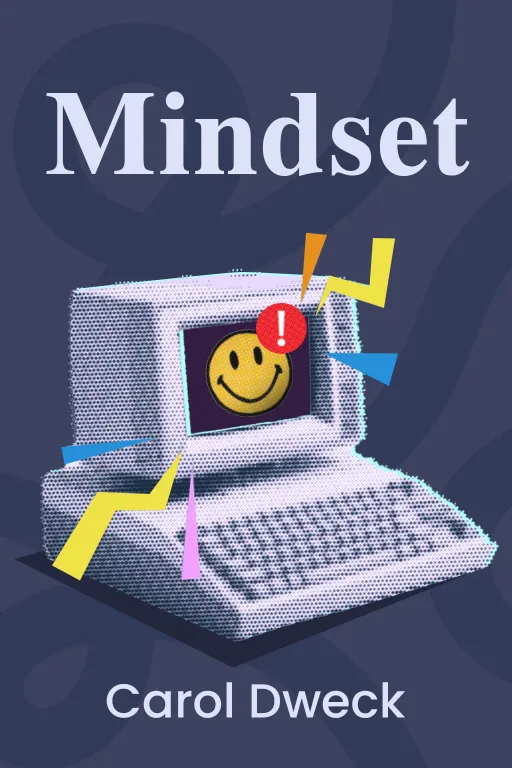
Nova: It’s a synthesis, really, of two incredibly influential works. First, Carol Dweck’s groundbreaking book, which has truly reshaped educational psychology. Dweck, a Stanford professor, spent decades researching how our beliefs about our abilities fundamentally impact our potential. Then, we look at Cal Newport’s, where this computer science professor from Georgetown University makes a radical argument for focused concentration in an increasingly distracted world.
Atlas: I’m curious, a computer science professor writing about? That feels almost counterintuitive. I mean, tech is usually the source of all the distractions, isn't it?
Nova: Exactly! That's what makes his perspective so powerful. He’s walking the talk and showing how to thrive in that environment. But before we get to the deep work, we need to address the very foundation of how we approach challenges and learning. And that brings us directly to Dweck's work.
The Transformative Power of a Growth Mindset
SECTION
Nova: Dweck’s core insight is elegantly simple: our mindset—how we view our abilities—profoundly shapes our success. She identifies two main mindsets: fixed and growth. Someone with a fixed mindset believes their intelligence, talents, and abilities are static. They’re born with a certain amount, and that’s it.
Atlas: So, like, "I'm just not a math person" or "I'm not creative"? That resonates. I’ve heard people say that their whole lives.
Nova: Precisely. And the implication of that belief is huge. If you think your abilities are fixed, then effort feels pointless. Challenges become threats to expose your limitations. Mistakes are failures. Dweck did this incredible study with children, giving them challenging puzzles. The kids with a fixed mindset, when they struggled, would often get discouraged, give up, or even choose easier puzzles next time to protect their ego. Their narrative was, "I failed, I'm not smart enough."
Atlas: Wow, that's kind of heartbreaking. It's like they're protecting their perceived intelligence rather than actually trying to learn.
Nova: Exactly. But then you have the children with a growth mindset. They believe their abilities be developed through dedication and hard work. For them, challenges are opportunities to grow, effort is a path to mastery, and mistakes are vital feedback for improvement. In that same puzzle study, the growth mindset kids, when faced with a difficult puzzle, would often say things like, "I love a good challenge!" or "I'm going to learn from this." They saw the struggle as part of the process, not a judgment on their inherent worth.
Atlas: That's actually really inspiring. It sounds like such a fundamental shift in how you navigate the world. But isn't it just another way of saying "think positive"? Like, if I just I can do it, I will?
Nova: That’s a common misconception, Atlas, and it’s important to differentiate. It’s not just about positive thinking or empty affirmations. A growth mindset isn't about ignoring difficulties; it's about embracing them as part of the learning process. It’s about understanding that the brain is like a muscle that strengthens with exercise. Dweck's research shows that when people are taught about the brain's plasticity—how it forms new neural connections when challenged—they actually better. It’s a scientific understanding that empowers a different approach.
Atlas: I can see how that would be a game-changer for learning, especially in education. If you believe your intelligence can grow, then every struggle is just a growth spurt in disguise. It turns failure into feedback.
Nova: Exactly! It fosters resilience. When you hit a wall, a fixed mindset tells you to stop. A growth mindset tells you to find a ladder, or a pickaxe, or a new route around it. This is crucial for anyone building learning systems, especially in areas like edtech, where innovation often means confronting setbacks. You can't strategically innovate with a fixed mindset.
Mastering Deep Work in a Distracted World
SECTION
Atlas: So, once you you can learn, and you’re resilient enough to push through challenges, how do you actually the learning effectively? Because even with the best mindset, I still feel like my brain is constantly being pulled in a million directions. Emails, notifications, social media… it’s a constant battle for focus.
Nova: That’s a perfect segue, Atlas, because that’s precisely where Cal Newport’s concept of "Deep Work" comes in. He argues that in our increasingly noisy, distracted world, the ability to concentrate deeply on a cognitively demanding task without distraction is becoming incredibly rare and, therefore, incredibly valuable.
Atlas: It’s like a superpower now, isn't it? To actually for an extended period. I mean, my attention span feels like it’s been whittled down to a TikTok length.
Nova: You're not alone. Newport defines deep work as "professional activities performed in a state of distraction-free concentration that push your cognitive capabilities to their limit. These efforts create new value, improve your skill, and are hard to replicate." Contrast that with "shallow work," which is non-cognitively demanding, often logistical-style tasks performed while distracted—responding to emails, scheduling meetings, endless scrolling.
Atlas: Okay, so the difference is stark. But how do you actually deep work? It sounds a bit monastic, or like something only academics in ivory towers can achieve. How is this possible for, say, a strategic innovator trying to build an edtech ecosystem, constantly juggling calls and urgent issues?
Nova: That's the challenge, and Newport offers practical strategies, not just a philosophy. He doesn't say abandon all communication; he says your deep work. He advocates for creating rituals—a specific time, a specific place, a specific routine—that signals to your brain: "Now we focus." Think of it like a craftsman in a workshop, deeply engrossed in their work, oblivious to the outside world. They’ve designed their environment and their routine to allow for that immersive focus.
Atlas: Right, like a sculptor chipping away at marble, lost in the process. It's about intentionality, then. Not just waiting for focus to strike, but actively cultivating it.
Nova: Precisely. He argues that the ability to perform deep work is how you truly master complex information and produce high-quality, impactful work. It's how you move beyond just knowing something to truly and something new. For someone engaging with AI ethics or cross-cultural leadership, where nuanced understanding is paramount, surface-level engagement simply won't cut it. You need to carve out that time to truly wrestle with complex ideas.
Atlas: This makes me wonder about the cost of doing deep work. If we're constantly in shallow work mode, are we actually hindering our own potential for genuine innovation and problem-solving?
Nova: Absolutely. The article points out that many educational systems fail because they focus on surface-level learning. When students are only taught to memorize for a test, they’re essentially doing shallow work. They aren't building those robust mental models. They aren't pushing their cognitive limits. They're not truly mastering the material, and they're certainly not being prepared to tackle complex, real-world problems that require deep thought and a growth mindset. The consequences are profound, hindering genuine growth and problem-solving skills across the board.
Synthesis & Takeaways
SECTION
Nova: So, when we combine Dweck's growth mindset with Newport's deep work, we get a truly powerful recipe for lasting learning and impactful innovation. A growth mindset gives you the belief and resilience to tackle challenges, while deep work provides the focused environment and strategy to actually build mastery and solve those challenges effectively.
Atlas: That’s a great way to put it. It’s not just about believing in yourself; it’s about putting in the focused, deliberate effort. It’s the belief the execution. It’s the engine the fuel.
Nova: Exactly. This isn't just about individual productivity; it's about fundamentally reshaping our approach to education and personal development to build a better future. Imagine learning ecosystems where every student and professional is encouraged to embrace challenges, learn from mistakes, and then given the tools and environment to deeply engage with complex material. That’s where true innovation flourishes, and where we can truly guide responsible innovation in edtech and master nuanced global collaboration.
Atlas: That's actually really inspiring. It feels like a pathway to building the future of learning, not just adapting to it. So, for our listeners who are ready to take this on, what's one tiny step they can take this week to start cultivating this kind of deep understanding?
Nova: Here’s a tiny step: identify just one area in your current learning approach where you can intentionally apply a growth mindset principle this week. Maybe it's a skill you've always thought you "weren't good at," or a challenging project at work. Instead of saying "I can't," reframe it as "I can't, but I can learn." Then, try to carve out just 30 minutes of distraction-free time to deeply engage with that challenge. It's about starting small but starting deliberately.
Atlas: I love that. It’s actionable, and it focuses on that initial mindset shift. It’s a great way to build that muscle.
Nova: Absolutely. It’s about building a better future, one focused, growth-oriented learning experience at a time.
Atlas: This is Aibrary.
Nova: Congratulations on your growth!