

Strategic Time Mastery: Beyond Productivity Hacks
Golden Hook & Introduction
SECTION
Nova: Alright, Atlas, quick game. If "productivity hacks" were a person you met at a networking event, what would be your instant, witty one-liner roast?
Atlas: Oh, man. I'd probably say, "You talk a lot about 'synergy' and 'leveraging assets,' but I get the feeling you just move things around on a whiteboard."
Nova: ** Perfect! That nails the superficiality we often see. Because, let's be honest, we're all drowning in advice that promises a magic bullet, but often just adds more noise to our already chaotic lives.
Atlas: Absolutely. It’s like everyone’s trying to sell you a shiny new hammer when what you really need is to learn how to build a house, brick by brick.
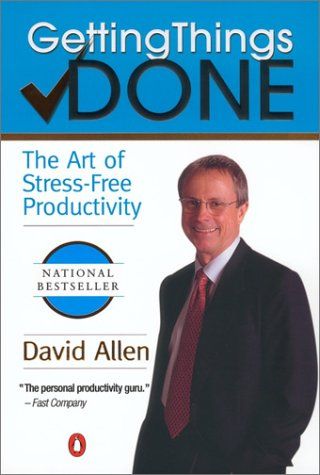
Nova: Exactly! And that's why today we're diving into two foundational texts that actually teach you how to build that house, brick by brick, in your mind and your workflow. We're talking about "Getting Things Done" by the legendary management consultant David Allen, and "Deep Work: Rules for Focused Success in a Distracted World" by computer science professor Cal Newport.
Atlas: Two absolute powerhouses. Allen, with his decades of experience coaching executives, really codified how to manage the sheer of demands. And Newport, coming from a more academic, research-driven background, makes a compelling case for the of our focus.
Nova: They’re complementary in a brilliant way. Allen gives you the system to clear the decks, and Newport shows you why clearing those decks is utterly critical for truly impactful work. It’s about more than just checking off boxes; it’s about making space for the kind of work that truly moves the needle, especially for an aspiring leader.
The Strategic Imperative of Focused Attention
SECTION
Atlas: That makes me wonder, Nova, what the real cost of not having that space? Because I imagine a lot of our listeners are constantly juggling, constantly switching tasks, feeling like they're being productive just by being busy.
Nova: That’s the illusion, isn't it? Cal Newport’s "Deep Work" completely unravels that. He argues there are two types of work: "Shallow Work," which is non-cognitively demanding, logistical, easily replicable stuff—like answering routine emails or scheduling meetings. Then there's "Deep Work": professional activities performed in a state of distraction-free concentration that push your cognitive capabilities to their limit. This kind of work creates new value, improves your skill, and is hard to replicate.
Atlas: Oh, I love that distinction. Because honestly, the shallow work often feels like it's screaming the loudest for our attention. It feels urgent, even if it’s not truly important.
Nova: Precisely. Think of an architect. Shallow work is responding to client emails about minor revisions or coordinating with contractors. Necessary, yes. But deep work is when that architect sits down, cuts off all distractions, and immerses themselves in designing a complex structural solution for a new skyscraper. They’re visualizing, calculating, innovating—that’s where the real value, the true genius, emerges. If they're constantly interrupted, that deep, complex thought process breaks, and the quality of the design suffers.
Atlas: Wow, that’s actually really inspiring. But wait, in a world of constant notifications, instant messaging, and urgent client demands, how do you even that space? Especially for someone who needs to be highly communicative and responsive, say, in a global service role? Doesn’t that sound almost impossible to implement?
Nova: It’s definitely a challenge, and Newport doesn’t pretend it’s easy. He acknowledges that our modern work environments are practically designed to fragment our attention. But he offers strategies: scheduling specific blocks of deep work, creating rituals around it, even embracing boredom to retrain your brain to focus. The key insight is that deep work isn't something that just; it’s something you into your life. It’s a strategic choice to protect your most valuable resource: your attention.
Atlas: That gives me chills, actually. Because it reframes productivity away from just "getting stuff done" to "getting the stuff done, with quality." It’s about mastering your attention, not just your calendar.
Building Your Mental Space with Foundational Systems (The Two-Minute Rule)
SECTION
Nova: And that naturally leads us to a crucial question: how do you even to clear the mental clutter to for that deep work? Because if your mind is constantly buzzing with small, unfinished tasks, deep work becomes almost impossible.
Atlas: I totally know that feeling! It’s like trying to have a profound conversation in a messy room where you keep tripping over things. Your mind just can’t settle.
Nova: Exactly. And this is where David Allen’s "Getting Things Done" offers a deceptively simple, yet incredibly powerful, solution: the 'two-minute rule.'
Atlas: Okay, so it’s like… if it takes two minutes, just do it? That sounds almost too simple to be revolutionary.
Nova: Seriously! That’s the beauty of it. Allen says, if a task takes less than two minutes to complete, do it immediately. Don't defer it, don't write it down, don't add it to a list. Just get it done.
Atlas: But wait, looking at this from someone managing a high-pressure team, isn't that just going to interrupt your flow if you're in the middle of a strategic report, for instance? Or if you're trying to have a focused conversation with a colleague?
Nova: That’s a valid point, and it’s about context. The rule applies when you the task. So, if you open an email that requires a two-minute reply, just send it. If you notice a quick filing task, do it. The power isn't in interrupting a deep work session to do it, but in preventing those tiny tasks from ever mental clutter that deep work.
Atlas: In other words, it’s about proactively defusing those mental bombs before they explode into a pile of distractions later.
Nova: Precisely. Think of it like a kitchen counter. If you immediately wipe up a spill, put a dish in the dishwasher, or toss a piece of mail, your counter stays clear. If you let those tiny things accumulate, suddenly you have a mountain of chores, and the thought of even to clean feels overwhelming. The two-minute rule isn't just about efficiency; it's about psychological liberation. It builds momentum, reduces decision fatigue, and frees up your mental RAM for the bigger, deeper tasks.
Atlas: That’s actually really inspiring. I imagine a lot of our listeners struggle with that feeling of being constantly overwhelmed by small, nagging tasks that just pile up. So this isn’t just about speed; it’s about creating mental space.
Synthesis & Takeaways
SECTION
Nova: Absolutely. And that’s the profound connection between Allen and Newport. Deep work, the ability to create high-value output, requires a clear mind. The 'two-minute rule' is one of the simplest, yet most effective, tools from GTD to that mental clarity. It's about designing your environment, both external and internal, so that when you decide to engage in deep work, your mind isn't fighting a thousand tiny battles.
Atlas: So it's not about doing more. It’s about doing what matters, with your full, undivided attention, and then systematically clearing away everything that tries to pull you away from that. The synthesis here is that true strategic time mastery isn't about hacks; it's about an integrated system of attention management and task execution.
Nova: Exactly. It's about empowering yourself to be the architect of your own focus, to consistently engage in the kind of high-impact work that not only pushes your own growth but also genuinely elevates those you lead and serve. It's about moving from frantic busyness to profound, purposeful achievement.
Atlas: That makes me wonder, listeners, what's one "two-minute task" you can clear off your plate right after this episode? Or, what small pocket of time could you dedicate to a moment of deep, focused work this week?
Nova: Start small, observe the impact, and watch how that mental space begins to open up for truly meaningful contributions.
Atlas: This is Aibrary. Congratulations on your growth!