

Harnessing Focus: Deep Work for Mastery and Productivity
Golden Hook & Introduction
SECTION
Nova: Here's a thought: our obsession with being "busy" is actively sabotaging our greatest potential. The more we chase productivity through sheer quantity, the less significant impact we truly make.
Atlas: Whoa, Nova. That's a bold claim right out of the gate! I mean, isn't busyness just... the modern condition? Everyone I know, myself included, feels like they're constantly juggling a dozen things. Are you saying we're doing it wrong?
Nova: Absolutely, Atlas. And it’s a trap many high-achievers, especially those striving for mastery and tangible impact, unwittingly fall into. We've been conditioned to equate activity with accomplishment, but the truth is far more nuanced. Today, we're diving into two phenomenal books that don't just challenge this notion but provide the blueprint for a different way forward.
Atlas: Okay, so you’re not just here to tell us we're busy for nothing, but to give us the antidote. I like that.
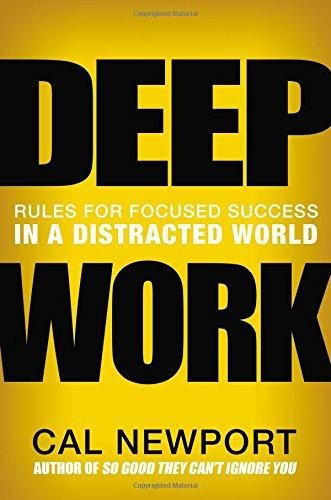
Nova: Exactly! First up, we have by Cal Newport. Newport, a computer science professor at Georgetown, is famously known for his contrarian stance on digital tools and his argument that true intellectual production requires an almost monastic dedication to focus. He makes a compelling case for why this skill is not just valuable, but becoming increasingly rare in our hyper-connected world.
Atlas: That makes me wonder, how does someone, especially our listeners who are analytical strategists and practical achievers, actually that? It sounds aspirational, but how do you bridge the gap between knowing you focus and actually it?
Nova: And that's where our second book comes in, providing the essential "how." We'll be pairing Newport's philosophy with the practical, step-by-step methodology of by James Clear. Clear, a renowned expert in habits, decision-making, and continuous improvement, offers a framework that allows you to embed these profound focus practices into your daily routine, almost automatically. Together, these two books offer a powerful one-two punch for anyone looking to truly harness their focus.
The Philosophy and Practice of Deep Work
SECTION
Nova: So, let's start with Cal Newport's central thesis: the distinction between "deep work" and "shallow work." Deep work, as he defines it, is professional activity performed in a state of distraction-free concentration that pushes your cognitive capabilities to their limit. These efforts create new value, improve your skill, and are hard to replicate.
Atlas: So, answering emails all day, attending endless meetings, managing notifications... that’s shallow work, even if it feels urgent and like you’re constantly "doing" things? That sounds rough.
Nova: Precisely. Shallow work is non-cognitively demanding, logistical-style tasks, often performed while distracted, that don't create much new value in the world and are easy to replicate. The problem, Newport argues, is that our modern work culture has become increasingly biased towards shallow work. It’s visible, it’s immediate, and it creates the of productivity.
Atlas: I can see that. For our listeners who are analytical strategists and impact seekers, there's often this pressure to be constantly responsive, to have an open door, to be "available." But if deep work is where the real value is created, how do you even carve out that time? It almost sounds like a luxury for a select few.
Nova: That's the common misconception, Atlas. Newport argues deep work isn't a luxury; it's a skill, and a strategic advantage. He identifies several "philosophies" for integrating deep work into your life. For instance, there's the "monastic" approach, where you minimize shallow obligations entirely – think a researcher retreating to focus solely on their magnum opus.
Atlas: That sounds great for a hermit, but not so much for someone who still needs to collaborate and lead a team. What about the rest of us?
Nova: Exactly. Most of us can't become hermits! So, he also offers the "bimodal" approach, where you dedicate clearly defined blocks of time—say, a few days a week or even a month—to deep efforts, while the rest of your time is open to shallow tasks. Or the "rhythmic" approach, which is about creating a habit of deep work, like scheduling 90 minutes every morning.
Atlas: Okay, so it’s not just about turning off notifications and hoping for the best. It's about structuring your entire approach to work—and your life—to protect and prioritize that deep cognitive effort. For someone driven by mastery, this resonates. The "impact" comes from the quality of strategic thinking, not just the quantity of tasks checked off.
Nova: Absolutely. And think about the "Analytical Strategist" profile. Their drive for expertise and making a tangible difference requires not just thinking, but. The ability to synthesize complex information, identify patterns, and formulate innovative solutions doesn't happen when you're constantly context-switching. It requires sustained, uninterrupted concentration. Newport provides case studies of individuals who, despite demanding schedules, built routines around deep work and saw remarkable breakthroughs in their fields. It's about being intentional, not just busy.
Building Habits for Sustained Focus
SECTION
Nova: Understanding deep work is crucial is only half the battle. The other half is actually it consistently. And that, Atlas, is where James Clear's becomes an indispensable companion.
Atlas: Ah, the "how-to" manual. Because knowing you focus doesn't magically make it happen, especially when our phones are practically begging for our attention every five minutes.
Nova: Exactly! Clear breaks down behavior change into his famous Four Laws: Make it Obvious, Make it Attractive, Make it Easy, and Make it Satisfying. Let's apply these to building a deep work ritual. First, "Make it Obvious." What does that mean for focus?
Atlas: I guess that makes sense. For deep work, does that just mean putting "Deep Work" on my calendar? Like, a big, undeniable block?
Nova: That’s a great start. But it also means designing your environment. If your phone is on your desk buzzing with notifications, it's you should check it. If it's in another room, on silent, it's you check it. Clear talks about how our environment often dictates our behavior more than our willpower. So, make your deep work environment obvious for deep work, and your distraction environment obvious for... well, distractions.
Atlas: That’s a perfect example. So, remove the visual cues for distraction. What about "Make it Attractive"? How do I make staring at a complex problem for two hours when there's social media just a click away?
Nova: This is where habit stacking and temptation bundling come into play. Clear suggests pairing an action you to do with an action you to do. Maybe after 90 minutes of deep work, you get to listen to an episode of your favorite podcast or enjoy a specific treat. Or, habit stack: "After I finish my morning coffee, I will immediately open my deep work document."
Atlas: I can see how that would be motivating. It’s like, you earn the reward. And "Make it Easy"? For our practical achievers, this is probably key.
Nova: Absolutely. Clear emphasizes reducing friction. If starting deep work requires a 10-step setup process, you'll never do it. Make the first step incredibly small – your "two-minute rule." Maybe it's just opening the relevant documents, or putting on your noise-canceling headphones. The goal is to make the so easy you can't say no. And for the "Impact Seeker," making it easy means making progress visible, which leads to "Make it Satisfying."
Atlas: Right? Because if I put in all that effort and don't see results, it’s hard to keep going. So, "Make it Satisfying" means celebrating small wins?
Nova: Precisely. It's about immediate reinforcement. A simple checkmark on a physical list, a quick note in a journal about what you accomplished, or even a mental pat on the back. The satisfaction of completing a deep work session, and seeing the tangible progress you've made on a challenging task, is a powerful motivator. Clear shows how these tiny steps, these "atomic habits," compound over time to remarkable results. It's about making the to deep work as frictionless and rewarding as possible, almost automatic.
Synthesis & Takeaways
SECTION
Nova: So, bringing it all together: Cal Newport gives us the profound and of deep work – its scarcity, its value, and the cognitive benefits it offers for true mastery. James Clear then hands us the practical – the systematic, almost invisible methods to build those deep work rituals into our lives, one atomic habit at a time.
Atlas: That’s a great way to put it. For our listeners striving for that "desired role or promotion," or looking to build a competitive edge in "digital marketing and analytics," this isn't just about productivity hacks. It’s fundamentally about redesigning their approach to work and their daily lives to maximize their most valuable asset: their focused attention.
Nova: Exactly. In a world drowning in distraction, the ability to focus deeply is akin to a superpower. It's what differentiates the good from the great, the busy from the truly impactful. It's about choosing deliberate practice over endless busyness, and cultivating that uninterrupted concentration that leads to genuine breakthroughs. It’s a skill that compounds, making you not just more productive, but more skilled, more innovative, and ultimately, more fulfilled.
Atlas: That gives me chills. Thinking about it, it's not just about getting more done, it's about doing work, more work. So, for everyone listening, what's one small habit you can start today to protect your most valuable asset – your attention?
Nova: A powerful question, Atlas, and the perfect note to end on.
Atlas: This is Aibrary. Congratulations on your growth!