The 'Busy Trap' is a Trap: Why Focused Execution Delivers Real Agent Value.
8 minGolden Hook & Introduction
SECTION
Nova: What if I told you that being constantly busy, feeling productive and indispensable, is actually the biggest threat to creating truly groundbreaking Agent systems?
Atlas: Oh, I know that feeling. It's like you're running on a treadmill, going nowhere fast, but you're too afraid to step off because everyone else is still running. That’s going to resonate with anyone who struggles with the constant demands of a high-pressure tech environment.
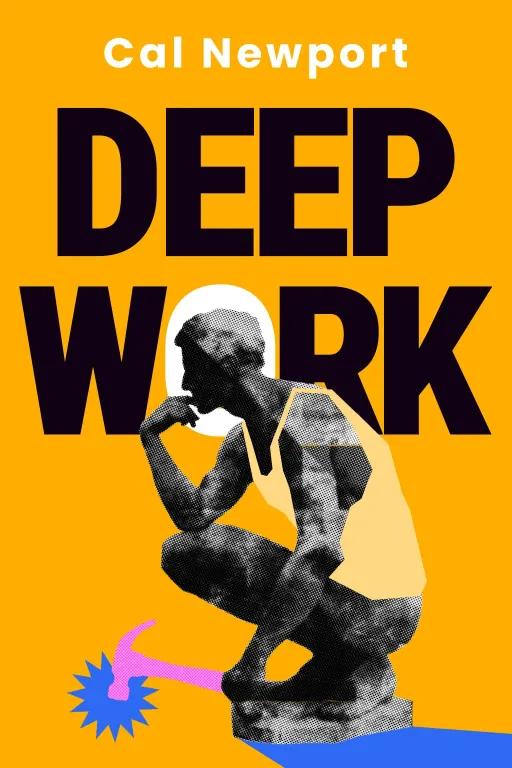
Nova: Absolutely. And that's exactly what we're dissecting today, drawing powerful insights from two seminal works: by Cal Newport and by Greg McKeown.
Atlas: Newport, the computer science professor who famously avoids social media, is definitely a radical voice in our hyper-connected world. And McKeown, with his background consulting for huge companies, brings a different kind of rigor to the conversation.
Nova: They both challenge this ingrained belief that more activity equals more value, especially when it comes to something as complex and demanding as Agent engineering. The core of our podcast today is really an exploration of how the relentless pursuit of 'busyness' can sabotage real value creation in Agent engineering, and how these two powerful frameworks offer a path to profound impact.
Atlas: So you’re saying, all that multitasking and quick-fire context switching we do daily, especially in an agile dev environment, might actually be counterproductive for building stable, scalable Agent systems? That makes me wonder.
The Illusion of Busyness & Deep Work
SECTION
Nova: Exactly. Think about the 'busy trap.' It's this blind spot where we mistake activity for productivity. We feel good checking emails, attending meetings, jumping between tasks, but what kind of work is that? Cal Newport calls it 'shallow work.'
Atlas: Shallow work. I like that. So, what exactly defines shallow work versus, say, the "deep work" he champions? Give me an example from an Agent engineer's day.
Nova: Shallow work is cognitively undemanding, logistical-style tasks, often performed while distracted. Replying to non-critical emails, managing minor project updates, endless Slack messages. For an Agent engineer, it might be tweaking a UI element that doesn't impact core functionality, or debugging a minor logging issue that isn't mission-critical, or even just sitting in non-essential meetings.
Atlas: Okay, so it’s not inherently bad, but it eats up time without moving the needle on the really complex stuff. But how does that directly affect Agent development, which often involves a lot of rapid iteration and communication?
Nova: It’s insidious. Agent engineering, at its core, demands intense focus. You're dealing with complex decision trees, sophisticated algorithms, integrating multiple data sources. If you're constantly pulled away, you're not just losing a few minutes; you're losing the mental state required for that deep, concentrated problem-solving.
Atlas: Right, like getting into that "flow state" where you're really in the zone. I imagine a lot of our listeners, especially architects trying to design a high-performance Agent system, feel that constant interruption. It's like trying to build a skyscraper with someone tapping you on the shoulder every five minutes.
Nova: It's worse than that. Studies show that even a brief interruption can take 20 minutes to recover from. So, that quick Slack message isn't just 30 seconds; it's a 20-minute cognitive penalty. Newport, an MIT PhD, argues that the ability to focus without distraction on a cognitively demanding task is a superpower in our economy. He provides strategies to cultivate deep work habits, leading to higher quality and faster output.
Atlas: Wow, that’s actually really compelling. So, what are some of these strategies? Is it just about locking yourself in a room and turning off your phone? Because for a full-stack engineer, that sounds… difficult, to say the least.
The Power of Less & Essentialism
SECTION
Nova: That's where Greg McKeown's comes in, and it beautifully complements Newport's work. McKeown advocates for doing less, but better. He shows how to identify and eliminate non-essential activities to maximize your contribution to what truly matters.
Atlas: So, it’s not just about finding focus, but about deciding what’s even worth focusing on in the first place? That sounds like a critical step for an architect trying to integrate Agent technology with existing business, ensuring they're building real value.
Nova: Exactly. McKeown’s core message is about disciplined pursuit of less. It’s about distinguishing the vital few from the trivial many. For an Agent architect, this could mean ruthlessly prioritizing which features truly enhance system stability or deliver new business value, rather than chasing every shiny new AI trend.
Atlas: Okay, but how do you actually that? In a fast-moving tech environment, everything feels essential. How do you tell the difference between "important" and "truly essential" when you're trying to achieve breakthroughs?
Nova: It requires a systematic approach. McKeown suggests asking three core questions: 'What is essential?', 'How can I remove the non-essential?', and 'How can I make execution effortless?' It’s about saying 'no' to good opportunities to say 'yes' to great ones. Think about an Agent project with scope creep. An essentialist approach would be to constantly filter out features that don't align with the core, high-impact goal.
Atlas: That’s a great way to put it. It’s like, instead of trying to build an Agent that does everything decently, you build one that does a few things exceptionally well, which ultimately leads to better stability and scalability. It’s not about being unproductive; it’s about being productive.
Nova: Precisely. These insights fundamentally shift your approach from a reactive, busy mindset to a proactive, focused strategy for impactful Agent engineering. It's about designing your work, not just doing it. It's about creating space for that deep, cognitively demanding work that truly advances your projects.
Atlas: And for someone driven to become a domain expert and create new business value, this is crucial. It’s the difference between being a busy cog and being the engine that drives innovation.
Synthesis & Takeaways
SECTION
Nova: So, if we synthesize these two powerful ideas, it’s not just about managing your time better, it’s about managing your and your with surgical precision. It’s recognizing that the 'busy trap' is a seductive illusion that keeps us from our most valuable work.
Atlas: That gives me chills. It’s truly about breaking boundaries, as our listener profile suggests. Beyond just tech, it’s about a mindset shift. It's about recognizing that constant activity doesn't equal impact, especially in complex fields like Agent engineering where true breakthroughs require sustained, uninterrupted thought.
Nova: Exactly. The real value for an architect or engineer isn't in how many tasks they juggle, but in the depth and quality of their most critical contributions. It’s about creating systems that are not just functional, but truly stable, scalable, and innovative.
Atlas: So, the deep question from the material: What is one 'shallow work' activity you could eliminate this week to create more time for deep, concentrated effort on your Agent projects? That's a perfect challenge.
Nova: A perfect challenge indeed. It could be dedicating an hour each morning to focused coding, or blocking out an afternoon for architectural design without email interruptions. The impact on your Agent projects, and your career as a value creator, could be immense.
Atlas: I’m going to personally try eliminating non-essential meeting attendance for a solid block of time each day. I imagine a lot of our listeners could experiment with something similar.
Nova: And we’d love to hear what you eliminate and what you gain. This is Aibrary. Congratulations on your growth!