Beyond the Band-Aid: How to Build Lasting Wellness, Not Just Treat Symptoms
Golden Hook & Introduction
SECTION
Nova: Here's a thought that might just turn your understanding of health completely on its head: What if our entire medical system, for all its incredible advancements, is actually designed to keep us sick?
Atlas: Whoa, Nova. That's a bold claim right out of the gate. Are you saying doctors us to be unwell? Because that feels… counter-intuitive, to say the least.
Nova: Not at all, Atlas! It’s not about malicious intent. It’s about a deeply ingrained systemic approach. We're talking about a paradigm where the focus is overwhelmingly on repairing damage it's done, rather than building resilience so the damage doesn't occur in the first place. This idea, this critical shift, is really the essence of what we're exploring today.
Atlas: Okay, I see. So it’s less about individuals and more about the architecture of care. That makes me wonder about the foundational texts for this kind of thinking. What are we diving into today?
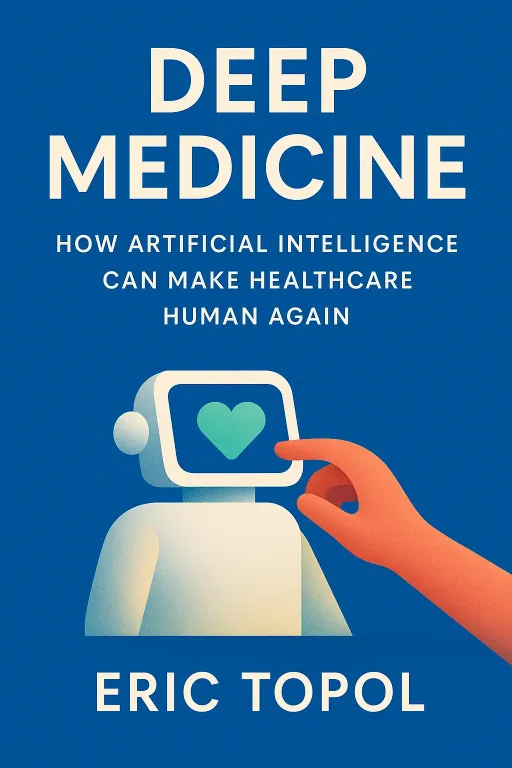
Nova: Well, we're drawing heavily from the pioneering work of figures like Eric Topol, with his concept of "Deep Medicine," and David Agus, who challenged conventional wisdom with "The End of Illness." These are authors who aren't just critiquing the system; they're envisioning and advocating for a completely transformed approach to health. Their work has really sparked a global conversation about what true wellness even means.
Atlas: That’s fascinating. It sounds like they’re almost futurists, but grounded in hard science.
Nova: Exactly! And the core idea today is this: moving beyond merely fixing what’s broken in our bodies, to actually building a foundational, lasting state of well-being. Today we'll dive deep into this from two perspectives. First, we'll explore why our current healthcare system often leaves us feeling perpetually unwell, then we'll discuss how we can proactively leverage data and personalized insights to build true, lasting wellness.
The Reactive Trap: Why Our Current Healthcare System Fails Long-Term Wellness
SECTION
Nova: So, let's start with the cold, hard fact: our current healthcare system often excels at crisis intervention, but it falls short in fostering long-term wellness. Think of it like this: our medical system is an incredibly efficient, highly trained fire department. When your house is on fire, you want them there, and you want them to be the best.
Atlas: Absolutely. No complaints when there's a medical emergency. They save lives every single day.
Nova: Precisely. But what if your house keeps catching fire because of faulty wiring, or a leaky roof, or you left the stove on every night? The fire department will put out the flames every single time, but they’re not going to fix the underlying issues. They’re not the city planners, electricians, or plumbers. They're there for the crisis.
Atlas: That's a powerful analogy. So, our doctors are incredible at putting out fires, but not necessarily at preventing them, or even designing a fire-resistant home in the first place.
Nova: Exactly. We react to illness instead of proactively cultivating health, and this leads to these cycles of symptom management. Consider someone experiencing chronic fatigue, persistent low energy, or recurring digestive issues. They go to the doctor, get tests, maybe get a diagnosis, and then get a prescription to manage the symptoms.
Atlas: Right. Painkillers for the headache, antacids for the heartburn, a stimulant for the fatigue. I imagine a lot of our listeners can relate to that cycle.
Nova: It’s incredibly common. But what often doesn't happen is a deep dive into those symptoms are occurring. What are the lifestyle factors? The nutritional gaps? The stress levels? The environmental exposures? The genetic predispositions? We treat the smoke, but we don't always investigate the fire.
Atlas: That makes perfect sense. For someone who values understanding the root cause, like an analyst, this reactive approach must feel incredibly frustrating. You’re constantly chasing symptoms without ever getting to the core problem.
Nova: And it’s not just frustrating, it's financially draining, emotionally exhausting, and ultimately, it doesn't lead to true health. It leads to a state of. Imagine a patient with high blood pressure. They get a prescription for medication. Great, the numbers look better. But if that high blood pressure was caused by a diet high in processed foods, chronic stress, and lack of exercise, the medication isn't fixing those underlying issues. The patient is now reliant on a pill, potentially for life, while the root causes continue to silently erode other aspects of their health.
Atlas: So, they're not actually getting, they're just getting, but the fundamental drivers of their illness are still in play. That’s a bleak picture. It also sounds like a system that benefits from repeat customers, in a way.
Nova: It's a system that's optimized for acute care and intervention, and that’s a legacy of how medicine developed. But the diseases of our time are largely chronic, lifestyle-driven conditions. And for those, the fire department model is deeply inefficient and ultimately ineffective for long-term well-being. It’s like trying to bail out a leaky boat with a teacup instead of patching the hole.
Atlas: That's a great metaphor. It highlights the sheer futility of just treating symptoms. But if that's the problem, what's the solution? How do we stop bailing and start patching?
Pioneering Proactive Health: Leveraging Data and Personalization for Lasting Wellness
SECTION
Nova: Well, that naturally leads us to the second key idea, which is championed by figures like Eric Topol and David Agus: the move towards pioneering proactive health. Think of it as shifting from being a passive recipient of care to an empowered architect of your own well-being.
Atlas: So, we move from the fire department to the city planner, as you said earlier. How do we even begin to do that?
Nova: Eric Topol, in his concept of "Deep Medicine," argues for an individualized, data-driven approach. He envisions a future where technology empowers patients to understand and manage their own well-being like never before. We're talking about genomics, continuous biometric monitoring through wearables, AI-driven diagnostics – all creating a rich, personal data stream.
Atlas: That sounds incredibly futuristic, but also a bit overwhelming. For someone who's not a biohacker, how does an everyday person even begin to tap into this 'Deep Medicine'? What does 'individualized, data-driven' actually look like in practice?
Nova: Let’s break it down. Imagine someone with a family history of diabetes. In the reactive model, they might wait until their blood sugar levels are high, get diagnosed, and then start medication. In the proactive model, they might get their genome sequenced early on, revealing a predisposition. They wear a continuous glucose monitor – a tiny sensor that gives real-time blood sugar readings.
Atlas: Oh, I've heard of those. So, instead of a snapshot at the doctor's office, you get a dynamic, minute-by-minute picture of how your body is responding to food, exercise, and stress.
Nova: Exactly! They learn that certain foods cause massive spikes, while others keep their levels stable. They see how a walk after dinner flattens a sugar curve. This isn't generic advice; this is unique biology, real-time data. They become an active participant, seeing the immediate impact of their choices. This is the empowerment Topol talks about – moving beyond generic treatments to understanding unique biological narrative.
Atlas: That’s incredible. It’s like having a personalized health dashboard, giving you agency over your own physiology. And how does David Agus fit into this proactive picture?
Nova: Agus, in "The End of Illness," really pushes for proactive prevention and early detection based on cutting-edge science. He challenges the conventional wisdom that we should just wait for symptoms. He advocates for aggressive screening, understanding inflammation, and personalized nutrition. He's less about reacting to a cancer diagnosis, and more about understanding your cellular health to prevent it from ever taking hold.
Atlas: So, while Topol is about the tech-driven data, Agus is about applying the latest scientific understanding to prevention, even if it means challenging established norms. It sounds like they're both advocating for a fundamental shift in mindset.
Nova: Absolutely. Nova's Take, which really synthesizes their ideas, is that true wellness comes from understanding your unique biology and proactively building health, not just waiting for problems to arise. It’s about being a participant, not just a patient. Imagine our high blood pressure patient from earlier. With this proactive approach, they might discover a specific genetic marker that makes them sensitive to sodium, or that their body handles stress hormones in a way that predisposes them to cardiovascular issues. They could then tailor their diet, exercise, and stress management strategies the blood pressure even becomes an issue.
Atlas: That’s truly transformative. It sounds like a move from a one-size-fits-all approach to something incredibly bespoke. But what about the ethical considerations, or even just the sheer volume of data? For someone who's an analyst, the promise of data is exciting, but the potential for misinterpretation or privacy concerns is also very real.
Nova: Those are critical questions, and both Topol and Agus address them. The ethical frameworks for data ownership and privacy are still evolving, but the potential benefits are so immense that the conversation is pushing forward. And regarding data overload, that's where AI and smart algorithms come in. The goal isn't for you to drown in raw data, but for intelligent systems to present you with actionable, personalized insights, curated by your physician. It's about making the complex accessible, so you can make informed decisions.
Atlas: So it's about empowering you with information, not just information. That distinction is key. This really resonates with the idea of informed perspectives – having the truth about your own body, not just generic advice.
Synthesis & Takeaways
SECTION
Nova: Exactly, Atlas. What we're really talking about is a profound shift in perspective. It's moving from a passive, reactive stance where health is something that happens you, or something you after it's lost, to an active, informed pursuit where health is something you and every single day.
Atlas: It’s a complete redefinition of what 'healthy' means, from merely 'not sick' to 'optimally thriving.' And it emphasizes individual responsibility, but with powerful tools at your disposal.
Nova: Yes. The beauty of these insights from Topol and Agus is that they empower us to step out of that reactive trap. They show us that by embracing technology, understanding our unique biology, and taking proactive steps, we can move beyond the band-aid solutions and truly build lasting wellness. It's about designing a robust, resilient health system for ourselves, rather than just waiting for the next fire.
Atlas: That's a powerful call to action. It truly makes you reflect on your own health journey. So, I have to ask our listeners: what's one area of your health you've only treated reactively? What's one proactive step you can research and take today, even a tiny one, to start building that lasting wellness?
Nova: A brilliant question, Atlas. That's the mindset shift right there.
Atlas: This is Aibrary. Congratulations on your growth!