

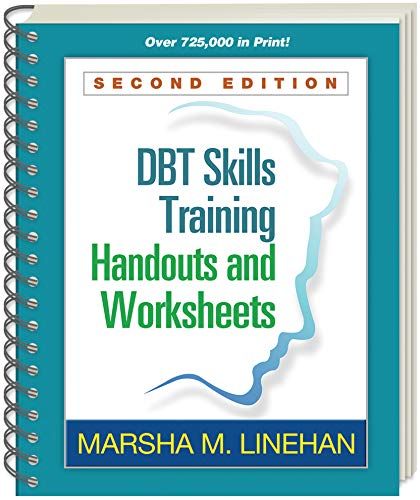
DBT® Skills Training Handouts and Worksheets, Second Edition
Introduction
Nova: Imagine being one of the world's leading psychologists, a pioneer in treating the most severe mental health conditions, and then one day, you stand up in front of your colleagues and reveal that you were once the patient you are now trying to save. That is exactly what Marsha Linehan did in 2011, and it changed the way we look at therapy forever.
Nova: It really is. For decades, Marsha Linehan kept her own history of self-harm and hospitalization a secret while she developed what is now considered the gold standard for treating Borderline Personality Disorder and chronic suicidality. Today, we are diving into her seminal work, the DBT Skills Training Handouts and Worksheets, Second Edition. This isn't just a book; it is a toolkit for survival and, ultimately, for building what she calls a life worth living.
Nova: Because it takes complex psychological theories and turns them into concrete, actionable steps. It is the bridge between understanding why you feel a certain way and actually knowing what to do when your emotions feel like they are going to swallow you whole. Today, we are going to break down the four pillars of DBT and see how these worksheets actually work in the real world.
Key Insight 1
The Dialectical Balance
Nova: To understand the worksheets, we first have to understand the word dialectical. It sounds like a heavy academic term, but the concept is actually quite beautiful. It is the idea that two seemingly opposite things can both be true at the same time.
Nova: Exactly. In the context of DBT, the central dialectic is the balance between acceptance and change. Linehan realized that traditional therapy often failed because it pushed people to change too fast, which felt like a rejection of who they were. But pure acceptance didn't work either because their current behaviors were causing them immense pain.
Nova: Precisely. The second edition of this book is divided into four modules. Two of them focus on acceptance, and two focus on change. It is a constant dance between the two. If you lean too hard into change, you burn out. If you lean too hard into acceptance, you stay stuck.
Nova: Not necessarily. It is more like a buffet. Depending on what you are struggling with, you might spend months on the mindfulness section before even touching interpersonal effectiveness. But the core philosophy remains the same: you are doing the best you can, and you need to do better.
Nova: It is actually incredibly validating for people who have been told their whole lives that they just aren't trying hard enough. Linehan says, no, you are trying incredibly hard, but you lack the skills. This book provides those skills. It treats emotional regulation like a muscle that needs to be trained, rather than a character flaw that needs to be fixed.
Nova: It is a total paradigm shift. It moves the focus from the past to the present moment. It asks, what can you do right now, in this second, to keep yourself safe and move toward your goals?
Key Insight 2
The Acceptance Pillars
Nova: Let's look at the first two modules, which are the acceptance-based skills: Mindfulness and Distress Tolerance. These are the foundation of everything else in the book.
Nova: Not quite. Linehan’s version of mindfulness is very practical. She introduces the concept of the Wise Mind. Imagine a Venn diagram. One circle is your Emotional Mind, where your feelings drive the bus. The other circle is your Reasonable Mind, where logic and facts rule. The overlap in the middle is your Wise Mind.
Nova: They give you what she calls the What and How skills. The What skills are simple: Observe, Describe, and Participate. You learn to just notice a feeling without judging it. Instead of saying, I am a failure, you say, I am having the thought that I am a failure. It creates a tiny bit of space between you and the emotion.
Nova: That is where Distress Tolerance comes in. This is arguably the most famous part of the book. These are the emergency brake skills. When you are at a ten out of ten on the distress scale, you aren't trying to solve your problems; you are just trying to survive the next five minutes without making things worse.
Nova: Yes, TIPP is a classic. It stands for Temperature, Intense exercise, Paced breathing, and Paired muscle relaxation. The Temperature part is wild—it suggests splashing ice-cold water on your face to trigger the mammalian dive reflex, which physically slows your heart rate down. It is a biological hack to force your body out of fight-or-flight mode.
Nova: Exactly. There is also the STOP skill: Stop, Take a step back, Observe, and Proceed mindfully. The worksheets walk you through these step-by-step so that when you are actually in a crisis, you don't have to think. You just follow the instructions you have already practiced.
Key Insight 3
The Change Pillars
Nova: Now we move to the other side of the dialectic: the change-based skills. These are Emotion Regulation and Interpersonal Effectiveness. This is where you start building that life worth living.
Nova: One of the most powerful tools in this section is called Opposite Action. It is based on the idea that every emotion has an action urge. When you are sad, you want to withdraw. When you are angry, you want to attack. Opposite Action says that if the emotion is unjustified or not helpful, you do the exact opposite of what the emotion is telling you to do.
Nova: Yes, but it has to be done all the way. You can't just go for a walk while grumbling. You have to throw yourself into the opposite action. The worksheets help you identify which emotions are justified and which ones are just your brain playing tricks on you.
Nova: It is more about how to get what you want while keeping your self-respect and your relationships intact. The star of this module is the DEAR MAN skill. It is an acronym for how to make a request or say no.
Nova: Describe the situation, Express your feelings, Assert what you want, and Reinforce why it is good for the other person. That is the DEAR part. The MAN part is stay Mindful, Appear confident, and Negotiate. It is a script for having difficult conversations.
Nova: That is exactly what Linehan found. People often oscillate between being a doormat and being a bulldozer. DEAR MAN gives you a middle path. There are also skills like GIVE, which is about maintaining the relationship, and FAST, which is about maintaining your self-respect. The worksheets actually have you script out your conversations before you have them.
Case Study
The Practicality of the Worksheets
Nova: One thing that makes the second edition so special is how much it has expanded. There are now over 225 handouts and worksheets. Linehan added a lot more on mindfulness and specifically tailored some of the skills for different populations, like adolescents or people with substance abuse issues.
Nova: It is actually a very intentional design choice. It is meant to be laid flat on a desk or a lap. It is meant to be written in, photocopied, and carried around. This isn't a book for your shelf; it is a book for your backpack. It is a working document.
Nova: That is a bit of a debate. While DBT was designed to be done with a therapist and a skills group, many people use these worksheets as a self-help tool. The second edition is much more user-friendly for that. However, the intensity of the skills training is usually what makes it so effective. It is the repetition and the accountability.
Nova: Absolutely. There is a worksheet for everything. There is a worksheet for tracking your urges, a worksheet for analyzing a specific behavior to see where it went wrong, and even worksheets for planning out your sleep and eating habits, which she calls the PLEASE skills.
Nova: It stands for treat Physical illness, balanced Eating, avoid mood-Altering substances, balanced Sleep, and Exercise. It is the idea that you can't regulate your emotions if your body is a mess. It is the foundation of emotional resilience.
Conclusion
Nova: We have covered a lot of ground today, from the biological hacks of the TIPP skills to the social scripts of DEAR MAN. But at the heart of Marsha Linehan's work is one central goal: building a life worth living. She doesn't just want people to stop being miserable; she wants them to find joy and purpose.
Nova: That is exactly why it resonates so deeply. It is grounded in the reality of human suffering, but it refuses to leave you there. Whether you are dealing with a severe diagnosis or just trying to navigate the stresses of everyday life, these worksheets offer a way to find your Wise Mind and stay there.
Nova: Well said. If you are looking for a place to start, just pick one skill. Maybe it is the STOP skill next time you are frustrated, or a DEAR MAN script for that conversation you have been avoiding. Small changes, practiced consistently, lead to a completely different life.
Nova: My pleasure. This is Aibrary. Congratulations on your growth!