

Stop Guessing, Start Measuring: The Data-Driven Path to Marketing Success
Golden Hook & Introduction
SECTION
Nova: Every marketer out there, at some point, says, "Marketing is an art, not a science." They paint these beautiful campaigns, right? But Atlas, what if that 'art' is actually just really expensive guesswork?
Atlas: Oh man, that's a gut punch for anyone who's ever poured their soul, and budget, into a campaign only to cross their fingers and hope for the best. Are you saying our creative genius is just… a gamble?
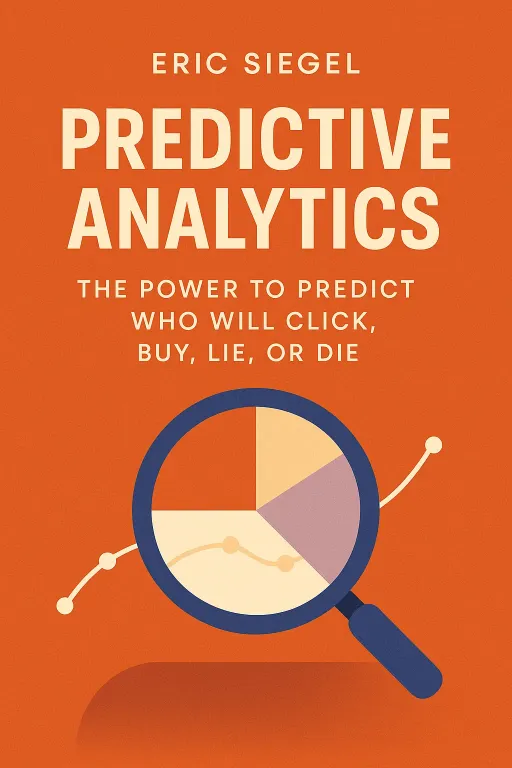
Nova: Well, I'm saying the line between inspired art and pure speculation can be incredibly thin when you're not grounded in hard facts. Today, we're diving into how to move beyond that guesswork, transforming marketing into a powerhouse of predictability and precision. We're talking about "Stop Guessing, Start Measuring: The Data-Driven Path to Marketing Success." And to guide us, we're pulling insights from two absolute titans: Eric Siegel's "Predictive Analytics" and Mark Jeffery's "Data-Driven Marketing."
Atlas: Okay, so, "stop guessing" sounds amazing. But for a lot of our listeners, the sheer volume of data out there is overwhelming. It feels less like a path and more like drowning in a spreadsheet ocean. How do these books help us cut through the noise and actually this data, rather than just collect it?
Nova: That's the million-dollar question, isn't it? Because data everywhere. But true insight, the kind that actually moves the needle, that's rare. And that's where Eric Siegel steps in, showing us how to turn that data deluge into a crystal ball.
Predictive Power: Unveiling Tomorrow's Consumer Behavior Today
SECTION
Nova: Siegel's "Predictive Analytics" isn't about fortune-telling in the mystical sense. It's about demystifying how we use data to forecast future outcomes. Think about it: every time you get a personalized recommendation on a streaming service, or a credit card company flags a suspicious transaction, that's predictive analytics at work.
Atlas: Right, like when my grocery store app somehow knows I'm about to run out of my favorite coffee before I do. It’s kind of spooky, but also incredibly convenient. So, how does that translate for a marketing team? How do they build that 'crystal ball' for consumer behavior?
Nova: Well, let's take a classic example: customer churn. Imagine a large telecom company. They have millions of customers, and they know a certain percentage will leave every month. The old way? Reactive offers, maybe a blanket discount when someone calls to cancel. The data-driven way, as Siegel outlines, is far more sophisticated.
Atlas: So basically, they're not waiting for the breakup call. They're trying to spot the signs before the relationship even sours.
Nova: Exactly! They collect vast amounts of historical data: call center interactions, billing inquiries, website visits, service usage patterns, demographic information. Then, they build predictive models. These models analyze hundreds, sometimes thousands, of variables to identify patterns of behavior that churn. For instance, a sudden drop in data usage combined with two calls to customer service about billing discrepancies might be a strong churn predictor for a specific segment of customers.
Atlas: That makes sense. It's like a doctor looking at a patient's symptoms and medical history to predict a future illness. But how accurate can these predictions really be? And isn't there a risk of alienating customers by bombarding them with retention offers when they weren't even thinking about leaving?
Nova: That's a fantastic point, Atlas. Siegel tackles that directly. The goal isn't 100% accuracy, which is often impossible, but rather accuracy. If a model can identify with 70-80% certainty that a customer is at high risk of churning, that's incredibly valuable. You can then tailor a proactive, personalized retention strategy – maybe a special offer, a free upgrade, or even just a personalized check-in call – they've made up their mind to leave. The key is intervention at the right time, with the right message.
Atlas: So it's not just about knowing might leave, but and, so you can intervene strategically. That's a huge leap from just sending out generic "we miss you" emails. That's about proactively shaping behavior.
Nova: Precisely. It’s about leveraging the past to inform the future, moving from a reactive stance to a proactive, strategic advantage. It shifts marketing from simply responding to market changes to actually anticipating and, in some cases, influencing them. And that brings us perfectly to the next layer of this data-driven journey: how do we ensure those proactive strategies are not just good guesses, but meticulously optimized for real business impact?
Performance Precision: Optimizing Every Marketing Dollar for Measurable Impact
SECTION
Nova: So we've talked about predicting what customers do. But what about making sure every single dollar we spend on marketing actually something measurable? That's where Mark Jeffery's "Data-Driven Marketing" becomes our indispensable guide.
Atlas: Oh, I like that. Because it's one thing to say, "We predict X will happen." It's another to say, "We invested Y, and because of that, X happened, and we made Z profit." The second one is what boards and budgets really care about.
Nova: Absolutely. Jeffery provides a practical roadmap, emphasizing key metrics and analytics techniques that directly link marketing efforts to business results. He champions the idea that every marketing dollar spent should be optimized, not just allocated. Think about the classic scenario: a company launches a big, splashy advertising campaign. In the old world, success might be measured by "brand awareness" or "buzz."
Atlas: Which are notoriously hard to quantify, right? Like, how much "buzz" translates into actual sales? That's the eternal struggle for the "Impact Driver" listener – proving the value.
Nova: It is. Jeffery illustrates this with powerful examples. Consider a company that traditionally invested heavily in broad-reach TV ads. They it was working because sales were generally up. But they weren't attributing those sales specifically to the TV campaign. A truly data-driven approach, following Jeffery's principles, would meticulously track individual customer journeys. They'd use unique codes, landing page analytics, attribution models, and A/B testing across all channels.
Atlas: So, instead of just saying "sales went up," they're asking, "Did the TV ad bring in this specific customer who then clicked on this digital ad and eventually bought this product?" That's a much more granular view.
Nova: Exactly. They might discover that while the TV ad created some initial awareness, the majority of their high-value customers actually came through targeted social media campaigns or content marketing, which had a much lower cost per acquisition. By shifting their budget based on these insights, they're not just getting more bang for their buck; they're getting.
Atlas: That sounds like a game-changer for anyone managing a marketing budget. But so many companies claim to be "data-driven." What's the real differentiator between just data and genuinely being in the Mark Jeffery sense?
Nova: That's a critical distinction. Simply having a dashboard full of numbers doesn't make you data-driven. Being data-driven means you have a culture of,, and. It means you're constantly asking: what's working? What isn't? Why? And then, critically, making decisions and based on those answers. It's about moving from vanity metrics to metrics that directly impact your bottom line. Jeffery would argue that if you can't measure it, you can't manage it, and if you can't manage it, you're just guessing.
Atlas: That's a powerful challenge. For our listeners who are trying to make a significant mark, this isn't just about doing marketing better; it's about doing marketing smarter, with tangible results.
Synthesis & Takeaways
SECTION
Nova: So, bringing these two giants together, we see a complete picture. Siegel gives us the ability to see around the corner, to predict consumer behavior before it even fully manifests. And Jeffery gives us the tools to ensure that when we act on those predictions, every effort is precisely measured, managed, and optimized for maximum impact.
Atlas: It's a profound shift, really. It's moving from a world where marketing felt like a series of educated guesses and hoping for the best, to a strategic discipline where you're anticipating the future and meticulously ensuring your actions in the present are perfectly aligned to achieve that future. It transforms marketing from a cost center into a predictable growth engine.
Nova: Absolutely. It's not just about better campaigns; it's a fundamental change in how businesses operate, innovate, and gain a competitive edge. It empowers marketers to be true strategic partners, not just creative executors.
Atlas: That's actually really inspiring. So, for our listeners, the strategic analysts and impact drivers out there, what's one tiny step they can take right now to stop guessing and start measuring?
Nova: Here's a simple, actionable step: choose one current marketing campaign you're running. Identify one key metric for that campaign – maybe click-through rate, conversion rate, or customer acquisition cost. Then, brainstorm how you could use your for that specific metric to predict its future performance. Even a simple trend analysis is a powerful first step towards predictive power and performance precision.
Atlas: That's brilliant. Start small, build the muscle. Don't try to predict the entire market, just predict your next click.
Nova: Exactly. Because every step is progress.
Nova: This is Aibrary. Congratulations on your growth!