

Dark alliance
Introduction
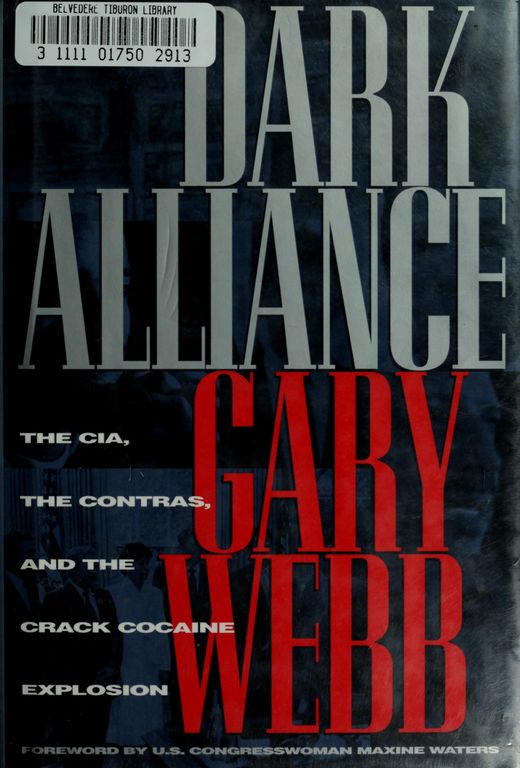
Nova: Welcome to Aibrary. I'm Nova, and today we're diving into one of the most explosive investigative journalism stories of the past thirty years — a book that begins with a drug lord, a CIA-backed army, and a teenager in South Central Los Angeles, and ends with a journalist dead from two gunshot wounds to the head. I'm talking about Dark Alliance: The CIA, the Contras, and the Crack Cocaine Explosion by Gary Webb.
Nova: It's not. Gary Webb was found dead in December 2004 at age 49. The coroner ruled it suicide. But the story he told — and what happened to him after he told it — is about far more than drugs. It's about what happens when investigative journalism collides with the most powerful institutions in America: the CIA, the Department of Justice, and the major newspapers that are supposed to hold them accountable.
Nova: That's exactly the reaction Webb got. But here's what makes Dark Alliance different from a conspiracy theory: Webb didn't deal in speculation. He spent more than a year digging through court documents, DEA wiretap recordings, and federal testimony. He traced a pipeline of cheap, high-purity cocaine that flowed from Nicaraguan drug traffickers with direct ties to the CIA-backed Contra rebels into the hands of an LA street dealer who would become known as the king of crack. And the book, published in 1998, expanded that reporting into a 548-page indictment of government complicity.
Nova: Let's walk through it — the characters, the pipeline, the cover-up, and the price Webb paid for telling the story. Because what happened after Dark Alliance was published is almost as shocking as what the book revealed.
Meneses, Blandón, and Ross — the three men at the center of the crack pipeline
The Unholy Trinity
Nova: Every great story needs its characters, and Dark Alliance has three who are almost too cinematic to be real. Let's start with Norwin Meneses. He was a Nicaraguan drug lord who had been trafficking cocaine since the 1970s, with deep ties to the Somoza regime — the US-backed dictatorship that the Sandinistas overthrew in 1979. Meneses was a big deal. The San Francisco Examiner ran a front-page exposé on him way back in June 1986, calling him a major cocaine trafficker.
Nova: More than connections. When the Contras were formed to fight the Sandinistas, Meneses became one of their key fundraisers. And here's where it gets wild — Webb discovered that Meneses was simultaneously working as a top-level informant for the DEA in Central America from about 1985 until his arrest in Nicaragua in 1992. He was running a drug ring that was dumping tons of cocaine into American cities while on the DEA's payroll.
Nova: That's exactly what Webb found. And Meneses recruited a protégé: Danilo Blandón. Blandón was a Nicaraguan exile who had an MBA in marketing — Webb always noted the irony of that — and he became the California point man for the Contra cocaine operation. Blandón founded an FDN chapter in Los Angeles. The FDN was the largest Contra group, the one directly organized and supported by the CIA. Blandón was the bridge between the Nicaraguan suppliers and the streets of Los Angeles.
Nova: That would be "Freeway" Ricky Ross. In the early 1980s, Ross was an illiterate 19-year-old from South Central LA, barely scraping by selling tiny amounts of cocaine when he could find it. Then he met Blandón, who offered him something extraordinary: unlimited quantities of cheap, pure cocaine. By 1983, Ross was buying 10 to 15 kilos a week from Blandón. He figured out how to cook it into crack, and the economics were devastating. Crack was cheap, intensely addictive, and created a market that exploded from Los Angeles outward to city after city across the United States.
Nova: That's literally what Webb called him in the series. Blandón supplied the cocaine. Ross built the distribution empire. And the profits — millions of dollars — flowed back through Blandón and Meneses to the Contras. Webb documented specific payments: Blandón sent between three thousand and forty thousand dollars directly to Contra leaders. And this was all happening while Congress had cut off official funding to the Contras through the Boland Amendment.
Nova: Exactly. The Contras were scrambling. Oliver North was flying around the world twisting arms of foreign leaders for donations. And meanwhile, a cocaine pipeline was running from Central America straight into the poorest neighborhoods of Los Angeles. The question Webb asked was simple: did the US government know?
What the CIA knew and when they knew it
The Government's Blind Eye
Nova: Here's where the book gets truly damning. Webb didn't just allege that drug dealers happened to support the Contras. He showed that US law enforcement and intelligence agencies actively protected them.
Nova: Let's start with the legal framework. In 1982, then-Attorney General William French Smith and the CIA reached an agreement that CIA officers were not required to report allegations of drug trafficking involving non-employees. Non-employees meant paid and unpaid assets, pilots flying supplies to the Contras, Contra officials — essentially everyone the CIA was working with. This agreement had never been publicly revealed before Webb's story forced it into the open. CIA Inspector General Frederick Hitz confirmed it during his 1998 congressional testimony.
Nova: Legally, yes. And it gets worse. In October 1986, a unit of the LA County Sheriff's Department called Majors II got wind of what was happening. They gathered evidence that this drug ring was supplying the Contras. They obtained search warrants and raided about fourteen locations connected to the Contra drug operation. Then the investigation fell into a black hole. Nothing happened. All the evidence at those locations had been mysteriously wiped clean. And the officers involved in the raid were later indicted on various charges and went to prison.
Nova: Yes. Webb obtained documents — about three thousand pages of them — that the Sheriff's Department insisted for months didn't exist. Those documents showed that the DEA, from Costa Rica, had sent advance warning: don't do this raid, don't put anything in your search warrants.
Nova: And it continued for years. When Blandón was finally arrested, he cooperated with the DEA, served only 28 months in prison, and then received permanent resident status and became a paid government informant. Ross, meanwhile, was released early after cooperating in a police corruption investigation, but was then rearrested in a sting operation that Blandón himself helped arrange. The disparity was staggering.
Nova: That's the point Webb was making. And then came the real bombshell. In March 1998, CIA Inspector General Frederick Hitz testified before the House Intelligence Committee and said, quote, "Let me be frank — there are instances where CIA did not, in an expeditious or consistent fashion, cut off relationships with individuals supporting the contra program who were alleged to have engaged in drug-trafficking activity." He said the CIA knew about dozens of people and companies connected to the Contra program who were involved in drug trafficking. The classified version of his report was six hundred pages long.
Nova: He confirmed that the CIA maintained relationships with drug traffickers and failed to act on credible allegations. He did say investigators found no evidence of a conspiracy by the CIA to bring drugs into the United States — but that's a very different thing from saying it didn't happen. It says no one wrote a memo saying "let's bring crack to LA." What Webb documented was something more insidious: a systematic decision to prioritize the Contra war over everything else, including the lives of American citizens.
How major newspapers attacked Gary Webb instead of investigating his claims
The Media Turns on the Messenger
Nova: So the story is explosive. It's documented with primary sources, court records, and DEA tapes. Webb posts everything online — this is 1996, and it's one of the first major uses of the internet for what Webb called "raw interactive journalism." The Mercury News website gets up to 1.3 million hits a day. Talk radio in black communities is on fire. The Congressional Black Caucus demands investigations. Maxine Waters holds town halls where two thousand people show up when only two hundred were expected.
Nova: With a vengeance. The New York Times, Washington Post, and Los Angeles Times didn't advance the story — they attacked it. They ran thousands and thousands of words — collectively over thirty thousand — not to investigate the Contra-drug connection, but to discredit Webb. The Washington Post's ombudsman later acknowledged that the paper devoted far more space to criticizing Webb than it ever had to covering the original Contra-drug allegations raised by Senator Kerry's committee in 1989.
Nova: They attacked Webb's use of sources — primarily the testimony of drug traffickers facing prison time. But as Webb pointed out, drug traffickers are the only people who know about drug trafficking. You don't get bishops testifying about cocaine shipments. The critics also argued Webb hadn't proven that top CIA officials knew what was happening. But that wasn't Webb's claim — he said the CIA's field operatives and the DEA knew and protected the traffickers. He explicitly said, and I'm quoting him, "This doesn't prove the CIA targeted black communities. It doesn't say this was ordered by the CIA. Essentially, our trail stopped at the door of the CIA."
Nova: Routinely. And the most damaging blow came from his own newspaper. In May 1997, Mercury News executive editor Jerry Ceppos published an editorial apologizing for the series, calling it flawed and saying they "did not have proof" that top CIA officials knew about the connection. Webb disagreed entirely with that characterization.
Nova: He resigned from the Mercury News in December 1997. He couldn't get another job at a major newspaper. This was a man who had contributed to Pulitzer Prize-winning coverage of the Loma Prieta earthquake. He had won more than thirty journalism awards. And after Dark Alliance, he was professionally radioactive. He ended up working for the California State Legislature's Task Force on Government Oversight. That's where he was when he published Dark Alliance the book in 1998, through Seven Stories Press — a small independent publisher, not a major house.
Nova: That's what "killing the messenger" looks like. And in 2004, Gary Webb was found dead in his apartment in Carmichael, California, from two gunshot wounds to the head. The coroner ruled it suicide. He was 49 years old.
What history has confirmed — and what Dark Alliance means today
The Vindication and the Legacy
Nova: So let's look at what we know now, with the benefit of hindsight and declassified documents. The CIA Inspector General's 1998 report — the unclassified summary of that six-hundred-page classified investigation — confirmed that the CIA maintained relationships with Contra supporters it knew or suspected were drug traffickers. It confirmed the 1982 agreement that let the CIA avoid reporting drug crimes. It confirmed that the CIA did not expeditiously cut ties with these individuals.
Nova: He was, and here's the thing that critics still don't like to acknowledge. The Kerry Committee report from 1989 had already documented much of this — eleven hundred pages of findings about Contra drug trafficking and government knowledge, buried on page A20 of the Washington Post. The Associated Press had run stories about it in 1985. So why did Webb's version cause such a firestorm?
Nova: Exactly. Webb connected Contra cocaine to actual human devastation in American neighborhoods. He named the communities. He showed the pipeline from Meneses to Blandón to Ross to the street corner. The crack epidemic destroyed families, filled prisons disproportionately with black men, and created a cycle of devastation that persists today. Webb forced people to ask: who benefited from this? And the answer was uncomfortable.
Nova: Norwin Meneses was eventually arrested in Nicaragua in 1992 and imprisoned. Danilo Blandón served his 28 months, became a DEA informant, and received permanent US residency. "Freeway" Ricky Ross was sentenced to life in prison under federal drug laws, though his sentence was later reduced and he was released in 2009. The king of crack did time measured in decades. The man who supplied him, with government protection, did time measured in months.
Nova: It does. And the book won its share of recognition — a Pen Oakland Censorship Award, a Firecracker Alternative Book Award, and an introduction by Congresswoman Maxine Waters. In 2014, the story reached a new audience through the film Kill the Messenger, starring Jeremy Renner as Webb, based on Nick Schou's book of the same name alongside Webb's Dark Alliance. The film brought renewed attention to Webb's reporting and to the questions that still linger about what the US government knew and when.
Nova: The debate has shifted. No serious person now denies that Contra-linked individuals trafficked cocaine. The CIA's own inspector general confirmed they maintained those relationships. What people argue about is the degree of knowledge and the question of intent. Was there a top-down order to introduce crack to black America? Webb never claimed there was. What he showed was worse in some ways — not a conspiracy meeting in a smoke-filled room, but a system so indifferent to the consequences of its actions that it didn't need a conspiracy. The outcome was the same either way.
Conclusion
Nova: Dark Alliance is not an easy book to read. It's 548 pages of detailed investigative journalism, names, dates, court transcripts, and DEA recordings. But what makes it essential is that it's about something bigger than drugs or the CIA or even Gary Webb. It's about what happens when institutions — government, media, law enforcement — decide that some stories are too dangerous to tell and some people are too powerful to hold accountable.
Nova: Gary Webb paid with his career and, ultimately, his life. But his work sparked four federal investigations, forced the CIA Inspector General to produce a report that confirmed key elements of his reporting, and ensured that the Contra-cocaine connection could never be entirely memory-holed. The book exists. The documents are online. The CIA report, even in its redacted form, is a matter of public record.
Nova: A few things. First, good journalism matters — the kind that takes a year, that follows the paper trail, that doesn't stop at the door of powerful institutions. Second, when major newspapers devote more energy to attacking a story than investigating it, that's itself a story worth investigating. And third, communities can force accountability. It was the outrage in black communities, channeled through talk radio and the Congressional Black Caucus and town halls, that compelled the federal government to investigate at all. The internet — in 1996 — broke through the media gatekeepers. Webb understood that was revolutionary.
Nova: It is. And in an era of increasing skepticism toward institutions, Webb's story resonates more than ever. He once wrote that the book was "written for them" — meaning the communities that were sacrificed — "so that they may know upon what altars their communities were sacrificed." That's not the language of a conspiracy theorist. That's the language of a reporter who saw something terrible and refused to look away.
Nova: It is. And it deserves to be remembered. This is Aibrary. Congratulations on your growth.