

The Vulnerability Paradox: Why Sharing Your Story Builds Unshakeable Impact.
Golden Hook & Introduction
SECTION
Nova: What if the very thing you've been taught to hide, the thing you perceive as your greatest weakness, is actually the source of your most profound strength and unshakeable impact?
Atlas: Wait, are you saying that the thing we're all taught to keep under wraps is actually our superpower? That sounds almost... counter-intuitive, especially for someone leading a team or building a vision. My first thought is, "But how?"
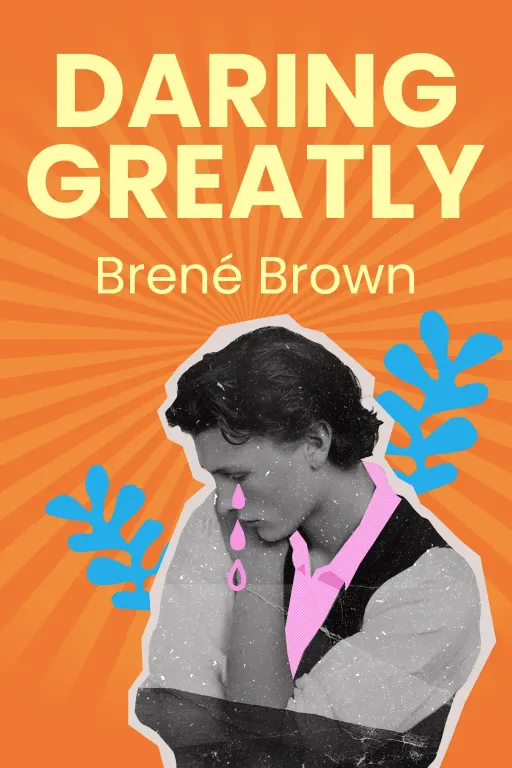
Nova: Yes, exactly! And that's the core paradox we're unraveling today, drawing insights from giants like Brené Brown – whose groundbreaking research on shame led her to uncover the profound power of vulnerability – and Simon Sinek. Brown, you know, started as a research professor, studying things like shame and courage, and then essentially a global voice for embracing these intensely human experiences. She didn't just theorize it; she lived it and then meticulously documented its power.
Atlas: Right, because for many of us, especially those striving for impact and connection, the immediate reflex is to project strength, not... well, openness. We're told to be resilient, to be the rock. So, how do we even begin to unpack that blind spot that you mentioned in the paradox?
Nova: Well, that blind spot is precisely where we start.
Vulnerability as a Foundation for Trust and Connection
SECTION
Nova: Many of us genuinely believe vulnerability is a weakness, something to be carefully hidden away. It's a deep-seated societal conditioning. But for those who truly lead and inspire, for those who create unshakeable impact, it's actually the source of all true connection. Hiding your story doesn't protect you; it prevents others from seeing themselves in you.
Atlas: Okay, but hold on. For someone who's spent years building a reputation as 'the expert,' 'the rock,' or 'the resilient guide' in their field, how do you shift from that perceived strength to 'showing up and being seen' without appearing… well, less competent or losing credibility? There's a difference between authenticity and just airing your dirty laundry, right?
Nova: Absolutely, that's a critical distinction. Brené Brown, in her seminal work, isn't advocating for oversharing or a lack of boundaries. What she champions is vulnerability as a radical act of courage – the willingness to show up and be seen, even when there are no guarantees. Think of it like this: imagine a CEO standing before her team after a major project failure. The conventional wisdom might say to present a polished, blame-free analysis.
Atlas: Project confidence, minimize the damage, keep the troops motivated. Standard playbook.
Nova: Exactly. But a truly vulnerable leader might say, "Look, this project failed. And honestly, I feel the weight of this. I made some decisions I now question, and I'm still processing what went wrong. But what I know for sure is that we're in this together, and we're going to figure it out."
Atlas: Oh, wow. That's a completely different energy. It’s not about being weak, it’s about being… human. And somehow, that admission of fallibility, that moment of genuine processing, makes her trustworthy, doesn't it?
Nova: Precisely! That's the paradox. It's not about being perfect; it's about being real. When someone reveals a moment of struggle, doubt, or even fear, and does so with courage, it creates an immediate pathway for others to connect. It taps into our shared humanity. We don't connect with people's polished facades; we connect with their struggles, their triumphs over adversity, their genuine selves. It’s a mechanism of empathy; when you dare to be vulnerable, you make it safe for others to do the same, fostering a deeper sense of belonging and mutual trust.
Atlas: So it's like acknowledging you don't have all the answers, which, ironically, makes you trustworthy because you're human? What's the mechanism there? Why does that connect people rather than push them away?
Nova: It's because it signals safety. When you see someone in a position of perceived power or influence open up, it disarms you. Our brains are wired for connection, and vulnerability is a direct route to that. It says, "I'm not trying to be perfect; I'm trying to be real with you." And when that happens, trust, the kind that forms an unshakeable foundation for any endeavor, starts to build. It's a fundamental aspect of how leaders build genuine connection and lasting influence.
Atlas: I can see how that builds a stronger foundation for connection, almost like a more robust structure for a relationship or an audience. It’s like an architect designing a building not just for aesthetics, but for foundational integrity.
Authentic 'Why' & Impact: The Vulnerable Roots of Purpose
SECTION
Nova: And that idea of a robust structure, Atlas, naturally leads us to the second crucial insight: how these vulnerable experiences aren't just about connection, but are actually the very bedrock of our authentic 'why' and lasting impact. This is where Simon Sinek's work in comes into sharp focus.
Atlas: Sinek argues that people don't buy what you do, they buy you do it. That's a concept I've always found incredibly powerful for anyone trying to build a thriving practice or transform lives.
Nova: Exactly. But what Sinek’s work, combined with Brown’s, illuminates, is that your most authentic 'why' often stems from your most vulnerable experiences. Consider a tech entrepreneur who poured everything into building an innovative platform. On the surface, his 'what' is a great product. His 'how' might be a brilliant algorithm. But his 'why' might be rooted in a deeply personal experience—say, struggling with a specific learning disability as a child, and realizing the profound impact accessible education could have.
Atlas: So his purpose, his core drive, isn't just about making money or a cool product; it's born from a place of personal struggle and the desire to prevent others from experiencing that same pain. That's a powerful resonance.
Nova: It resonates because it’s real. When he shares that deeply vulnerable origin story, people don't just understand his product; they understand. They connect with his mission on an emotional, human level. His 'why' isn't manufactured; it's forged in the crucible of his own journey, flaws and all. And that, as Nova’s Take suggests, creates the authentic foundation needed for genuine connection and lasting influence.
Atlas: That's powerful. But for someone driven by service, who wants to transform lives, how do they identify which parts of their 'journey, flaws and all,' are the ones that will truly inspire? It can't be vulnerable moment, can it? What's the filter for an empathetic strategist?
Nova: That's a brilliant question, and it's not about indiscriminately sharing every single detail of your life. The filter is resonance and purpose. It's about asking, "Does this vulnerable experience of mine illuminate a path or a truth that could help others?" It's not about being the hero of your own story; it's about being the guide who understands the struggle because you've lived it. For example, a coach who struggled with burnout might share that specific journey, not every single personal challenge, because it directly relates to the pain points of her audience. Her vulnerability serves their growth.
Atlas: So Nova's Take, 'embracing your story, flaws and all, creates the authentic foundation needed for genuine connection and lasting influence,' isn't just about personal growth, it's a strategic move for impact. It's about turning your lived experience into your unique selling proposition, in a way that serves others. It sounds like it makes your mission inherently more resilient.
Nova: Exactly. It makes your impact unshakeable because it's rooted in something profoundly human and authentic. It's not easily dismissed or replicated. When your 'why' is born from your vulnerable truth, it carries an inherent weight and authenticity that superficial motives simply cannot match. It’s the difference between a flimsy structure and one built on bedrock.
Atlas: And does this mean that the 'why' born from vulnerability is inherently more resilient, more 'unshakeable'?
Nova: Absolutely, Atlas. Because when your 'why' is rooted in your authentic story, in those vulnerable moments, it's not just a mission statement; it's a living, breathing testament to resilience and purpose. It's unshakeable because it's real, and it connects with the deep, often unspoken, experiences of others.
Synthesis & Takeaways
SECTION
Nova: So, what we've really explored today is how vulnerability, far from being a weakness, is actually the courageous act that builds unshakeable trust, profound connection, and reveals our most authentic 'why.' It’s the bedrock of lasting impact.
Atlas: It’s a complete reframing. The deep question from the book content, "What part of your journey, if shared, could truly inspire those you aim to serve?" isn't just rhetorical; it becomes a strategic question for building impact in a way that truly resonates.
Nova: Exactly. And for our listeners, especially those resilient guides and empathetic strategists out there, we want to challenge you: think about that one story, that one vulnerable moment, that truly shaped your 'why.' What would it look like to practice speaking that truth, even just to yourself or a trusted few, as a step towards unlocking that unshakeable impact?
Atlas: It’s about recognizing that your story isn’t just yours; it’s a blueprint for connection, a roadmap for others to see themselves in your journey. That's a powerful shift, transforming what we perceive as a liability into our greatest asset for influence.
Nova: It truly is. This is Aibrary. Congratulations on your growth!









