

The Power of Vulnerability: Why Connection Fuels Innovation and Growth.
Golden Hook & Introduction
SECTION
Nova: Okay, Atlas, five words. Just five. What's your gut reaction to the word "vulnerability" when you hear it in a professional context?
Atlas: Five words? Hmm. "Unprofessional. Risky. Definitely not for me."
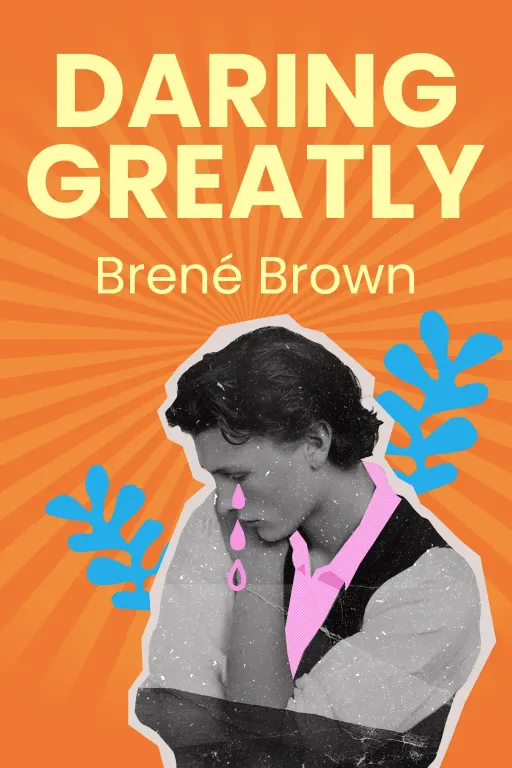
Nova: Oh, I like that. Short, punchy, and probably echoes what a lot of people are thinking. And it perfectly sets the stage for our deep dive today, because we're challenging that very notion. We’re actually diving deep into the groundbreaking work of Brené Brown, specifically her transformative insights from "Daring Greatly" and "Dare to Lead."
Atlas: Ah, Brené Brown. Her name comes up a lot, especially in leadership circles.
Nova: Absolutely. What's so fascinating about Brown is her background. She’s not just a motivational speaker; she's a research professor who's dedicated decades to meticulously studying courage, vulnerability, shame, and empathy. Her work isn't just popular, it's profoundly impacted how we understand human connection and effective leadership globally, fundamentally reshaping the idea of what makes a strong, impactful leader.
Atlas: That makes sense. I can see how that would be... quite revolutionary for a lot of people, especially those of us who grew up in environments where showing any crack in the armor was seen as a weakness.
Nova: Exactly. And that's precisely where we need to start today, by redefining what vulnerability truly means and why it's not a weakness to be hidden, but rather a powerful measure of courage.
Redefining Vulnerability: The Courage to Be Seen
SECTION
Nova: So, let's unpack that first core idea: Redefining Vulnerability as Courage. Brown's central argument, particularly in "Daring Greatly," is that vulnerability is not weakness. It is, in fact, our most accurate measure of courage.
Atlas: Hold on. That sounds a bit out there for someone trying to climb the corporate ladder or build a 0-1 growth strategy. I imagine a lot of our listeners in high-stakes, fast-paced roles, like leading an AI native edtech startup, would hear 'vulnerability' and think 'career suicide.' How does that compute?
Nova: That's a great question, and it's the exact paradigm Brown seeks to shift. Think of it this way: true courage isn't the absence of fear; it's feeling the fear and doing it anyway. Vulnerability is simply showing up and being seen when you have no control over the outcome. It's the emotional risk you take when you put yourself out there.
Atlas: So you're saying it's not about oversharing every personal detail, but about authenticity in the face of uncertainty?
Nova: Precisely. It’s about being brave enough to be imperfect. Brown talks about what she calls 'the arena.' She says, "It is not the critic who counts; not the man who points out how the strong man stumbles, or where the doer of deeds could have done them better. The credit belongs to the man who is actually in the arena." Vulnerability is stepping into that arena, knowing you might fail, knowing you might be criticized, but choosing to engage fully anyway.
Atlas: That gives me chills, because it flips everything we've been taught about professional polish and projecting an image of invincibility on its head. Can you give an example of what 'daring greatly' actually looks like day-to-day, beyond the abstract?
Nova: Absolutely. Consider a leader, let's call her Sarah, who was launching a new product initiative at her tech company. The stakes were incredibly high, and her team was feeling the pressure. Instead of pretending she had all the answers, which she didn't, Sarah walked into a team meeting and openly admitted, "Look, this is uncharted territory for all of us. I don't have a perfect roadmap, and honestly, I'm a little nervous about how we'll pull this off. But I believe in this product, and I believe in this team. We're going to have to figure a lot of this out together, and we'll probably make mistakes."
Atlas: Wow. That's a stark contrast to the 'fake it 'til you make it' mentality. What was the outcome?
Nova: The immediate reaction from her team was palpable. Instead of seeing her as weak, they saw her as human and relatable. It created an instant sense of psychological safety. Team members started openly sharing their own anxieties, offering creative solutions they might have held back before, and collaborating in entirely new ways. They saw her vulnerability not as a crack, but as an invitation to lean in and co-create. The product launch, while still challenging, was ultimately successful, and the team came out of it stronger and more cohesive.
Atlas: That's incredible. It sounds like her vulnerability actually disarmed their fears and unlocked their collective potential. It wasn't about being fragile; it was about being real.
Nova: Exactly. That's the power. It's not about being weak; it's about being honest with yourself and others about your fears, your imperfections, and your need for connection. That honesty is what builds trust, and trust is the bedrock of everything truly innovative and collaborative.
Vulnerability in Action: Fueling Innovation and Connection at Work
SECTION
Nova: And that naturally leads us to our second key idea: how this courage to be vulnerable translates directly into tangible benefits in the workplace, fueling innovation and connection. Brown extends this research in "Dare to Lead," providing a framework for brave leadership.
Atlas: Okay, but how does that apply to, say, someone who's responsible for 0-1 growth strategies in a competitive edtech market? Isn't innovation about being bold and decisive, not… soft? How does vulnerability actually drive growth?
Nova: That’s a common misconception, Atlas. "Dare to Lead" argues that true innovation and sustainable growth don't come from a culture of perfection and blame, but from a culture of psychological safety, where people feel safe to experiment, fail, and speak up. And psychological safety is built on vulnerability and empathy.
Atlas: So, you're saying a leader admitting they don't have all the answers creates a space where people feel safe enough to the answers?
Nova: Precisely. Imagine a team trying to develop a groundbreaking new AI feature for an educational platform. If the leader creates an environment where everyone has to pretend they know everything, ideas get stifled. People are afraid to suggest something that might sound "stupid" or fail. But if the leader models vulnerability—saying, "I'm really stumped on this part; what are your craziest ideas?"—it opens the floodgates.
Atlas: Ah, so it's not about being soft, it's about being smart enough to know you don't have all the answers and brave enough to admit it, so others can step up. It sounds like it cultivates a shared sense of ownership.
Nova: Exactly. It fosters connection. Brown's research shows that connection is why we're here; it gives purpose and meaning to our lives. And genuine connection is impossible without vulnerability. In a professional context, this translates to deeper team bonds, greater empathy between colleagues, and a collective resilience when facing setbacks.
Atlas: I can see that. For someone navigating both high-pressure professional demands and personal life changes, like new parenthood, it must be incredibly challenging to embody this. The pressure to appear 'on top of it all' is immense. How can a leader integrate this without feeling overwhelmed?
Nova: That’s a crucial point, and it speaks to the holistic impact of Brown's work. It's not just a professional strategy; it's a way of being. For leaders, it starts small. It could be admitting you're having an off day, asking for help on a task, or simply saying, "I don't know, but I'll find out." It's about letting your team see your humanity, not just your competence. This builds empathy, and empathy is the foundation of trust.
Atlas: So, if a leader is listening right now, perhaps feeling stretched thin, what's one concrete step they can take tomorrow to start fostering this 'vulnerable' connection with their team?
Nova: One powerful step is to practice what Brown calls "rumbling with vulnerability." It's about being clear on your intentions and owning your part. So, instead of reacting defensively when feedback comes, try saying, "Thank you for that feedback. It's tough to hear, but I want to understand it fully. Can you tell me more about what you observed?" It's a small act of vulnerability – admitting you need to learn, and being open to uncomfortable truths – that dramatically shifts the dynamic.
Atlas: That’s actually really inspiring, because it sounds less like a soft skill and more like a strategic advantage. It's about cultivating a culture where people feel safe to contribute their full selves, knowing they won't be judged for being human.
Nova: And that, Atlas, is where true innovation is born. When people feel safe to take risks, to share half-baked ideas, to admit mistakes, and to ask for help, that's when breakthroughs happen. It’s a powerful lever for growth that many organizations overlook because they mistake vulnerability for weakness.
Synthesis & Takeaways
SECTION
Nova: So, bringing it all together, what Brené Brown really illuminates for us is that vulnerability isn't just a personal trait; it's a powerful organizational lever for growth, innovation, and resilience. It’s about choosing courage over comfort, and that choice, while often terrifying, has exponential returns in terms of trust, connection, and ultimately, success.
Atlas: It makes me think about those moments where we pull back, thinking we're protecting ourselves, but we're actually just limiting our potential for connection and growth, both personally and professionally. It's a choice to either armor up or dare to be seen.
Nova: And the beauty of it is, it's an ongoing practice, not a destination. It’s about small, consistent acts of courage that build over time. It's about creating a culture where it's okay to be imperfect, to ask for help, and to learn from failure.
Atlas: Absolutely. It transforms the idea of strength from an impenetrable façade to an open, courageous presence. So, for our listeners today, where in your professional or personal life can you choose courage over comfort this week? Where can you dare to be vulnerable, even just a little?
Nova: A powerful question to sit with. And a profound way to truly foster deeper connections and unlock new possibilities.
Atlas: This has been a truly insightful conversation, Nova.
Nova: Absolutely, Atlas. A lot to chew on.
Nova: This is Aibrary. Congratulations on your growth!









