

Leadership for Collaborative Teams & Ethical Influence
Golden Hook & Introduction
SECTION
Nova: If you think the best leaders are always the ones with all the answers, always composed, and never showing a crack in their armor... well, you're probably working for a lot of people who are secretly terrified.
Atlas: Oh man, secretly terrified? That's quite an opening, Nova! I can already feel the tension in the room. Are we talking about the leaders themselves being terrified, or their teams?
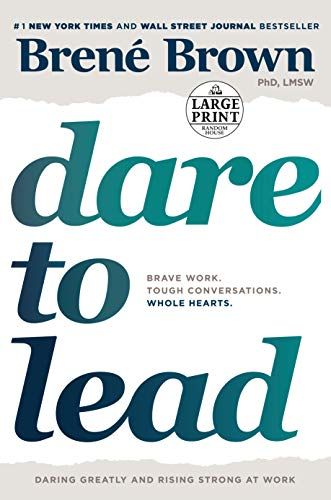
Nova: Both, Atlas, both! Today, we're tearing down that outdated façade of the stoic leader and exploring what truly makes for collaborative teams and ethical influence. We’re diving into some foundational texts: "The 7 Habits of Highly Effective People" by Stephen Covey, "Dare to Lead" by Brené Brown, and "Crucial Conversations" by Kerry Patterson, Joseph Grenny, Ron McMillan, and Al Switzler. What's fascinating about Brown's work, in particular, is that it's not just theory; it's built on decades of empirical research into vulnerability, courage, shame, and empathy, giving her insights a profound, evidence-based weight.
Atlas: I guess that makes sense. For leaders in high-stakes environments, that perceived need to be unflappable can feel like a heavy burden. But how does that "terrified" part, or even vulnerability, actually play into ethical influence? It feels counterintuitive to what many are taught about leadership.
Nova: It absolutely does, and that's precisely where our first deep dive begins. It's about the unseen power of vulnerable leadership.
The Unseen Power of Vulnerable Leadership
SECTION
Nova: So, think about Stephen Covey's "7 Habits." He gives us these timeless, principle-centered ideas like being proactive, beginning with the end in mind, seeking first to understand. These are the bedrock of integrity. But then you have Brené Brown coming along, saying, "Hey, all that great stuff? It only truly flourishes when you have the courage to be vulnerable."
Atlas: Hold on, how does being proactive and principle-centered mesh with being vulnerable? Don't they seem like opposites? One sounds like you've got it all figured out, the other sounds like you're admitting you don't.
Nova: Exactly! That's the paradox. Brown argues that vulnerability isn't weakness; it's courage. It’s showing up fully, leaning into discomfort, and letting yourself be seen, even when you're uncertain of the outcome. It's the willingness to be uncomfortable for the sake of something greater. Imagine a CEO, let's call her Sarah, who's just announced a major strategic shift that, after six months, is clearly failing. The traditional approach would be to double down, spin the narrative, or quietly shift blame.
Atlas: Right, project confidence, even if you’re internally panicking. "Fake it 'til you make it," right?
Nova: Precisely. But Sarah, drawing from Brown’s work, decided to do something radical. In a quarterly all-hands meeting, instead of presenting a new, revised strategy as if it were the original plan, she stood before her entire team, took a deep breath, and admitted, "This strategic direction? It was my call, and it's not working as we intended. I own that. We missed something critical, and we need to figure out why, together."
Atlas: Wow. I imagine a lot of our listeners feel that showing vulnerability like that could be seen as a massive liability, especially when they're trying to project confidence and steer a large organization. Wouldn't that lead to panic or a loss of faith in her leadership?
Nova: You would think so, wouldn't you? But what happened was the exact opposite. You could feel the tension in the room initially, a collective holding of breath. But as Sarah continued, not with fear, but with a clear intention to understand and involve everyone in finding a solution, something shifted. Her transparency created a profound sense of psychological safety. People started raising their hands, not to blame, but to share data points, alternative ideas they'd been too afraid to voice, and even solutions they’d been quietly developing.
Atlas: That’s actually really inspiring. So, it wasn't just an admission of failure; it was an invitation to collaborate. She turned a potential crisis of confidence into a moment of collective problem-solving and trust-building.
Nova: Absolutely. The team rallied. They felt seen, respected, and truly trusted. They understood that their leader valued honesty and collective wisdom over individual perfection. The project ultimately found a new, successful direction, and the team's commitment and innovation soared. The risk of being vulnerable, of maintaining that impenetrable facade, is far greater. It leads to disengagement, a lack of innovation because people are afraid to fail, and a culture of fear where crucial information never reaches the top. Brown calls it "rumbling with vulnerability"—it's a skill you develop, not just a feeling you have.
Navigating the Minefield of High-Stakes Conversations
SECTION
Nova: Speaking of rumbling, that courage to show up fully, to be honest even when it's uncomfortable, is absolutely essential when we think about what a "crucial conversation" really is. It’s where vulnerability meets directness. Now, if you've ever felt your stomach drop just thinking about a conversation you need to have, you know exactly what I'm talking about.
Atlas: Oh, I know that feeling! Like telling your boss their brilliant new idea has a major flaw, or confronting a team member about consistently missing deadlines. What makes these conversations so "crucial," beyond just being uncomfortable?
Nova: They're "crucial" because they involve high stakes, differing opinions, and strong emotions. And the outcome can dramatically impact relationships, projects, and even careers. The authors of "Crucial Conversations" found that the biggest predictor of success in organizations isn't strategy or resources; it's how effectively people hold these difficult conversations. For those of us trying to foster ethical innovation and build sustainable solutions, avoiding these conversations is a huge blocker. How do we actually start them without everyone immediately shutting down?
Nova: Let's consider a practical example. Imagine a project team, code-named "Phoenix," facing a critical deadline. One key team member, Michael, an incredibly talented engineer, has been consistently delivering his work late, impacting downstream dependencies. The team leader, David, could ignore it, hoping it resolves itself, or he could send a harsh email. Both would likely undermine trust and morale.
Atlas: Yeah, I've seen both of those play out. The passive-aggressive silence, or the aggressive confrontation. Neither usually ends well.
Nova: Exactly. Instead, David decided to have a crucial conversation. He didn't start by accusing Michael. He started with "Mutual Purpose"—reminding Michael of their shared goal for Project Phoenix's success. He said, "Michael, I know we're both deeply committed to the success of Phoenix, and your skills are vital. I've noticed, over the past three weeks, that your deliverables have been consistently coming in a day or two late. This has impacted Sarah's ability to integrate her modules. My concern is that if this continues, we won't hit our launch date, which would be a huge blow to the whole team and our clients."
Atlas: That sounds incredibly difficult to do in the moment. It’s so easy to just jump to "Why are you late again?" But he focused on the facts and the impact, not the blame. How did Michael react?
Nova: Initially, Michael was defensive, but because David maintained a tone of mutual respect and shared concern, Michael eventually opened up. He revealed he was struggling with a new, complex part of the system he hadn't admitted to, feeling overwhelmed and trying to fix it himself rather than ask for help. The conversation shifted from accusation to collaboration. They brainstormed solutions: bringing in another engineer to pair-program on the complex module, and adjusting some of Michael's tasks temporarily.
Atlas: So, by creating that psychological safety—that space where Michael felt safe to be vulnerable about his struggle—David transformed a potential conflict into an opportunity for growth and a stronger team dynamic. It wasn't just about problem-solving; it was about reinforcing the ethical framework of mutual support.
Nova: Precisely. The project was delivered on time, and Michael felt more connected and supported than ever. The key here is focusing on "what you really want" for the relationship and the outcome, and then making it safe for others to speak by establishing mutual purpose and respect. It's about learning to speak persuasively, not abrasively, and listening actively to understand, not just to respond. It’s about ensuring that even when stakes are highest, communication remains constructive and ethical.
Synthesis & Takeaways
SECTION
Nova: So, when we combine Covey's principle-centered approach to personal effectiveness and integrity with Brown's brave vulnerability, and then equip ourselves with the practical, structured skills from "Crucial Conversations," we're not just leading teams; we're building resilient, ethical, and highly collaborative ecosystems.
Atlas: It sounds like the real work of leadership isn't about having all the answers, but about being courageous enough to ask the right questions, even the uncomfortable ones, and then having the tools to navigate the responses. It's about building trust through transparency, not perfection. It’s about making sure that integrity isn’t just a word, but a lived experience in every interaction.
Nova: Exactly. It’s about understanding that ethical influence isn't about manipulation; it's about genuine connection forged in honesty and mutual respect. It's about creating an environment where everyone feels safe to contribute their best, even their struggles. So, consider this: How can you integrate principles of vulnerability and empathy into your leadership style this week to foster psychological safety, encouraging your team to engage in 'crucial conversations' and embrace ethical innovation?
Atlas: That's a powerful challenge. Because that kind of leadership doesn't just change your team; it changes you. And it changes the whole culture. This is Aibrary. Congratulations on your growth!