The Hidden Architect: Unlocking Creativity Through Deliberate Practice
Golden Hook & Introduction
SECTION
Nova: Most of us believe creativity is a lightning bolt, a sudden flash of genius that descends upon the chosen few. We wait for inspiration to strike, for the muse to whisper, for that perfect idea to materialize out of thin air. But what if that belief, that passive waiting, is precisely what's holding you back from your most impactful work?
Atlas: Oh man, that hits home for so many of us. That feeling of staring at a blank page or an empty canvas, just waiting for the magic. It can be paralyzing. Are you saying that whole romanticized vision of the struggling artist, powered by sporadic genius, is actually detrimental?
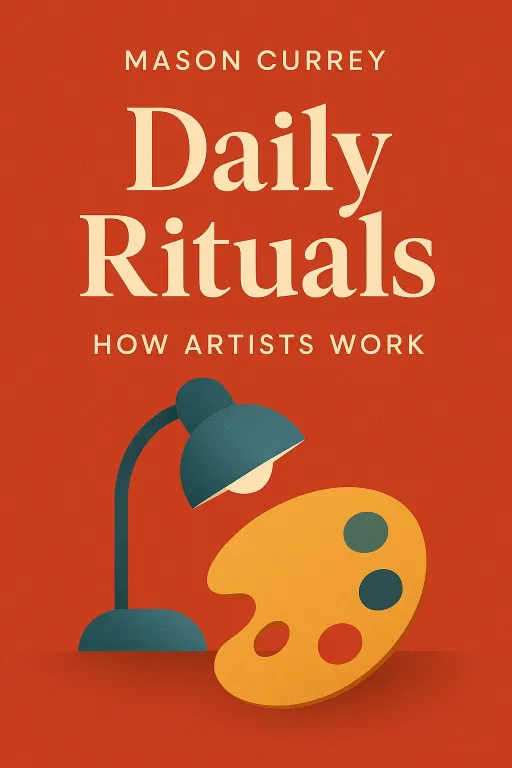
Nova: Absolutely, Atlas. It's not just detrimental; it's a myth that actively sabotages consistent, meaningful creation. Today, we're pulling back the curtain on "The Hidden Architect," exploring how to unlock creativity not through fleeting inspiration, but through deliberate, consistent practice. We're diving deep into two books that fundamentally validate this idea: Seth Godin's "The Practice: Shipping Creative Work" and Mason Currey's fascinating collection, "Daily Rituals: How Artists Work."
Atlas: Interesting. Seth Godin, he's known for his radical takes, right? Wasn't he one of the first to really evangelize self-publishing and direct-to-consumer models for authors? That sounds like someone who walks the talk of 'practice' and 'shipping it.'
Nova: Precisely. Godin's entire career is a testament to the power of showing up and shipping, often defying traditional gatekeepers. He challenges the very notion of waiting for permission or inspiration, arguing that the act of doing the work the inspiration. And Currey's book, well, it's a treasure trove of evidence, showing us how the world's most brilliant minds didn't wait for a muse; they built elaborate, often quirky, systems around their creative output.
Atlas: So, it's less about divine intervention and more about daily devotion? I like that framing. But for someone trying to lead a team, build a movement, or navigate complex problems, "creativity" often feels like something you for during a brainstorming session, not something you every day. How do we make that shift?
The Myth of Inspiration vs. The Power of Practice
SECTION
Nova: That's the core question, and it's where Godin's "The Practice" really shines. He argues that creativity isn't a talent you either have or don't; it's a muscle you develop. It's about the consistent habit of showing up, doing the work, and, crucially,. It's a commitment to the process, regardless of whether you feel "inspired" that day. Think of it like a professional athlete. They don't just show up on game day and expect to perform. They train, they drill, they practice, day in and day out.
Atlas: Okay, but for our listeners who are visionaries, who are trying to define core value and build something enduring, doesn't this sound a bit… un-magical? We're often told to chase that 'aha!' moment, that groundbreaking idea. Can you really 'practice' innovation on demand? Where's the magic in just… doing the work?
Nova: That's a great point, and it's exactly the myth Mason Currey's "Daily Rituals" helps to deconstruct. Currey compiles the routines of hundreds of great thinkers, artists, and scientists throughout history. And what you find isn't a parade of tortured geniuses waiting for a lightning bolt. Instead, you see highly disciplined individuals with incredibly specific, often idiosyncratic, routines.
Atlas: Give me an example. Who are we talking about here? Not just the famous names, but the nitty-gritty of what they actually did.
Nova: Take the choreographer Twyla Tharp. Every morning at 5:30 AM, she'd hail a cab to her gym. Not for the workout itself, but for the ritual of getting there. It was her first creative act of the day, a small, deliberate decision that set the tone. She wasn't waiting for a dance idea to hit her; she was preparing her body and mind to those ideas through a consistent, physical practice. Or think about Benjamin Franklin, a true polymath. He had a meticulous daily schedule, from waking at 5 AM to asking himself, "What good shall I do this day?" to reviewing his day before bed. His creativity wasn't a random occurrence; it was woven into the fabric of his highly structured existence.
Atlas: Wow. So, it's not about you do specifically – whether it's hailing a cab or asking a daily question – but you do it consistently? Even if it feels small or mundane? That's actually really inspiring, because it takes the pressure off waiting for a grand revelation and puts the power back into our hands. But how do these historical examples, some from centuries ago, translate to our modern, fast-paced world, where we're constantly bombarded with information and demands?
Nova: That's the beauty of it. The principle is timeless. Nova's Take on these insights fundamentally validates the power of routine and deliberate action. It transforms those erratic bursts of inspiration into a sustainable, consistent flow of meaningful work. It’s about building a system that allows creativity to flourish, rather than hoping it randomly appears. It's about designing your environment and your habits to and creative output.
Atlas: So, it's like planting a garden versus waiting for a wild flower to just appear in your living room. You prepare the soil, you water it, you tend to it, and then the flowers bloom. It makes so much sense when you put it that way. This isn't about rigid adherence to a schedule, but building small, deliberate creative acts into your day.
From Theory to Application: Building Your Creative Architecture
SECTION
Atlas: Okay, I get the consistency part. It’s about being the architect of your own creative output. But for someone leading a team, navigating complex problems, always looking for clarity and impact, how do you even building this 'creative architecture'? It feels like another thing to add to an already overflowing plate, especially when you're trying to build a movement, not just a product.
Nova: That’s a crucial question, Atlas, and it’s where we move from understanding the principle to applying it. The key is in starting small, recognizing that the cumulative effect of tiny, deliberate creative acts is far more powerful than waiting for a single, monumental breakthrough. It’s not about adding another overwhelming task; it's about re-framing existing moments or carving out micro-moments. For instance, instead of waiting for a dedicated "innovation day," what if you committed to fifteen minutes of focused, creative problem-solving on a specific challenge your team faces, every morning before emails hit?
Atlas: So, it's about re-framing creativity not as a grand event, but as a daily commute? And observing the change, rather than expecting a sudden, dramatic transformation? I imagine a lot of our listeners, especially those who value impact and enduring meaning, might feel like these small acts aren't "enough" to move the needle on big, complex initiatives.
Nova: That’s the "messy middle" we often talk about, precisely where true innovation thrives! It’s easy to feel like small steps are insignificant when the goal is monumental. But Godin would argue that the "practice" the innovation. It’s the showing up, the iterating, the slightly improving each day, even when the results aren't immediately visible. It's the consistent effort that carves out the canyon, not one massive flood. That radical empathy you strive for, for example, could be a daily creative practice: fifteen minutes dedicated to truly understanding a customer's pain point, beyond the surface. That’s a creative act.
Atlas: That’s a great way to put it. It shifts the focus from the outcome to the process itself, which is liberating. It means that even when the "inspiration" feels absent, the "practice" still moves you forward. It's about trusting the system you build.
Synthesis & Takeaways
SECTION
Nova: Exactly. The core insight here is profound: creativity isn't some ethereal gift bestowed upon a lucky few. It's a muscle that strengthens with consistent exercise. It's built through the deliberate, often small, actions we take every single day. It's about understanding that the act of doing, of shipping, of showing up, is the most powerful catalyst for innovation and impact.
Atlas: It sounds like this isn't just about 'being creative'; it's about building a reliable foundation for consistent, meaningful output. It's about becoming the architect of your own impact, ensuring that the legacy you're building is resilient and enduring, not dependent on unpredictable sparks. That clarity, that grounded approach... it makes so much sense.
Nova: And that brings us to our healing moment, our concrete challenge for you this week. Choose one small creative act – just one – that you can commit to doing for fifteen minutes each day this week. It could be journaling, sketching, writing a short piece of code, brainstorming solutions for a specific problem, or even just sitting quietly and letting your mind wander for a set time.
Atlas: Just fifteen minutes. Observe how that consistency changes your creative flow. Don't judge it, just do it. I'm going to try it myself, focusing on brainstorming new angles for our next big project.
Nova: See how that small, deliberate action transforms your relationship with creativity. It’s about building a movement, starting with one consistent step. This is Aibrary. Congratulations on your growth!