

The Daily Rituals of Productive Minds
Golden Hook & Introduction
SECTION
Nova: Okay, Atlas, quick game. I'll name a historical figure known for their brilliance, and you tell me what their imaginary self-help book would be called. Ready?
Atlas: Oh, I like this. Hit me.
Nova: Alright, first up: Leonardo da Vinci.
Atlas: Hmm, "How to Doodle a Masterpiece."
Nova: Excellent! Next, Jane Austen.
Atlas: "Proper English, Punctual Prose: Finishing Your Novel Before Tea."
Nova: Perfect! Last one: Charles Darwin.
Atlas: "The Origin of My Species of Productivity: Surviving and Thriving on Your Own Schedule."
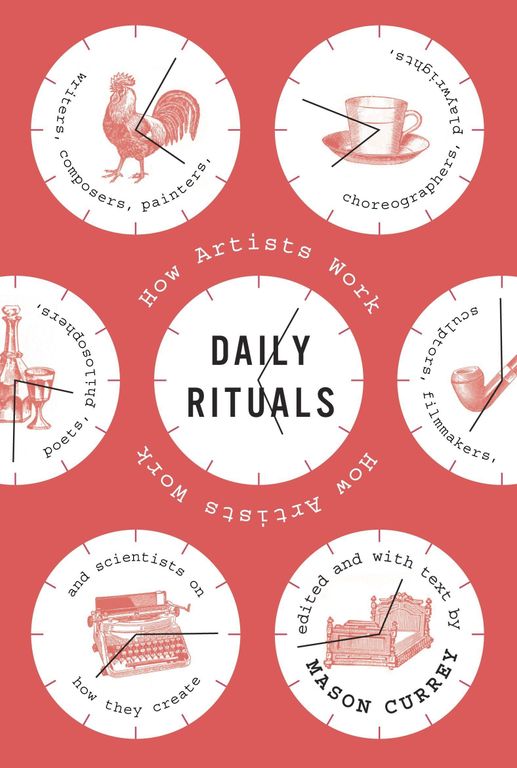
Nova: Oh, that's brilliant! And it actually brings us perfectly to our topic today, which is all about the often-unseen structures that support truly prolific minds. We're diving into the fascinating world of daily rituals, specifically through the lens of Mason Currey's widely acclaimed book, "Daily Rituals: How Artists Work."
Atlas: That's a great way to put it. I remember hearing about Currey's book when it first came out, and it really resonated because it felt like a backstage pass into the minds of giants. It's not just a collection of historical anecdotes; it's a deep dive into the very personal and often peculiar systems these individuals built around their work.
Nova: Exactly. What's so compelling about Currey's approach is that he meticulously compiled the daily habits of 161 highly creative individuals—writers, artists, scientists, philosophers. He didn't just list their achievements; he delved into they achieved them, often despite or because of their unique routines. And the book itself has been quite a phenomenon, inspiring countless readers to re-evaluate their own approaches to work. It’s been praised for its insight, though some have noted that it predominantly features male, Western figures. Still, the sheer wealth of detail is remarkable.
Atlas: That’s a fair point on the demographic, but the insights, I think, transcend that. What really caught my eye in the book is how it highlights that there's no magic formula, you know? It’s not one-size-fits-all. What worked for Beethoven probably wouldn't work for Kafka, and definitely not for Maya Angelou.
Nova: Absolutely. And that’s the first core idea we really want to unpack today: The Diverse Architectures of Creative Output. We often have this idealized image of the creative genius—either the tortured artist burning the midnight oil in a fit of inspiration, or the hyper-disciplined automaton following a rigid schedule. But Currey's book reveals a much richer, more nuanced reality.
The Diverse Architectures of Creative Output
SECTION
Atlas: So you're saying it's not about finding ritual, but ritual? Because honestly, I think a lot of our listeners, especially those trying to juggle demanding careers with personal growth, are constantly searching for that perfect template. Like, "Tell me what Einstein did, and I'll do that."
Nova: That's a great observation, Atlas, and it's precisely the myth we need to challenge. Currey's research shows that while there was immense discipline, the of that discipline varied wildly. Take, for instance, the poet W. H. Auden. He was famously rigid. He would wake at 6:00 AM, have breakfast, work from 7:00 AM to 1:00 PM, have a light lunch, do administrative tasks, and then enjoy an evening of socializing. He believed in habit as a way to liberate the mind for creative work, saying, "A strict schedule, I found, did not interfere with inspiration but was, on the contrary, a help."
Atlas: Wow, that sounds incredibly structured. For some of our listeners, that might feel like a straitjacket rather than liberation. I can imagine someone in a high-pressure role thinking, "I barely get five minutes to myself, let alone a six-hour block for creative deep work."
Nova: And that's where the contrast comes in. Consider Franz Kafka, a contemporary of Auden in some ways, but whose life and rituals were worlds apart. Kafka worked a demanding, soul-crushing job at the Workers' Accident Insurance Institute for the Kingdom of Bohemia. His creative work, his writing, was squeezed into the late hours of the night. He’d often start writing at 10:30 or 11:00 PM and continue until 2:00 or 3:00 AM. His diaries are filled with his struggles, his exhaustion, his desire for more time, but that was his architecture. It was born of necessity, not choice, but it was architecture.
Atlas: So Auden was the meticulous clockwork, and Kafka was the nocturnal guerrilla. That makes me wonder, was there a common thread, even among such wildly different approaches? Because for someone who's looking for practical wisdom, knowing that there's no single path is freeing, but also a little daunting.
Nova: That’s a fantastic question. The common thread, if there is one, seems to be and. Auden intentionally built his fortress of habit. Kafka intentionally carved out those brutal late-night hours. Neither was accidental. They both understood their own energy levels, their creative peaks, and the demands of their lives. And they designed their days, even if imperfectly, to serve their primary creative output.
Atlas: That makes a lot of sense. It’s like they all knew their own operating manual. I'm curious, were there any figures in Currey's book who were completely chaotic, just waiting for the muse to strike? Or was some form of routine always present?
Nova: Even those who appeared chaotic often had a hidden structure. Take the painter Francis Bacon. His studio was legendary for its disarray—paint, brushes, debris everywhere—but he had a ritual of sorts. He would work intensely for a few hours, then spend significant time socializing, drinking, and observing, gathering material for his work, then return to paint in a furious burst. The "chaos" was part of his process, a way of engaging with the raw material of life before channeling it onto the canvas. It wasn't a schedule by the clock, but it was a.
Atlas: That’s fascinating. It sounds like the environment might be chaotic, but the internal rhythm, the engagement with the work itself, was still very structured. So for our listeners who might feel overwhelmed by the idea of strict schedules, it’s not about becoming a robot, it’s about understanding your own "flow" and protecting it.
Nova: Exactly. And this isn't just about famous artists. It applies to anyone seeking cognitive vitality and purposeful living. It's about designing a personal system that respects your individual biology, your life circumstances, and your creative needs. It's about finding that sweet spot where habit supports, rather than stifles, your unique genius. The book really highlights how these routines weren't just about getting tasks done; they were about creating the mental and physical space for profound work to emerge.
Atlas: That really shifts the perspective. It’s not about copying someone else’s ritual, but about becoming an anthropologist of your daily life.
Crafting Your Optimal Day: Personalized Rituals for Cognitive Vitality
SECTION
Nova: And that naturally leads us to our second core idea: Crafting Your Optimal Day. How do we take these insights from Auden's rigidity or Kafka's nocturnal struggles, or Bacon's creative chaos, and apply them to our own lives without simply mimicking them? The key, as Currey subtly suggests, is self-awareness and experimentation.
Atlas: Okay, so this is where the rubber meets the road. Because it's one thing to admire someone's discipline, it’s another to actually implement it when you've got emails piling up and a million other demands. For our practical-minded listeners who value application, this is crucial. Where do we even start?
Nova: A great starting point, and something Currey's observations implicitly highlight, is to reflect on your most productive times of day. Are you a morning person, like Auden, who hits their stride at dawn? Or are you a night owl, like Kafka, whose best work emerges in the quiet of the late hours?
Atlas: That's interesting. I've always thought of myself as a morning person, but then I find myself doing my deepest thinking after everyone else has gone to bed. It’s almost like the pressure of the day has to dissipate first.
Nova: And that's exactly the kind of self-reflection we're talking about! The "tiny step" here is to experiment with scheduling your most cognitively demanding tasks during these peak periods for just one week. If you're an early bird, block out that first hour for your most important project. If you're a night owl, protect those evening hours. The goal is not to force yourself into a mold, but to align your tasks with your natural energy cycles.
Atlas: I can see how that would be a game-changer. Instead of fighting against your own biology, you're flowing with it. But what about those small, consistent rituals? You mentioned how important consistency was, even in varied routines. What kind of "tiny" ritual could make a significant difference?
Nova: Think about what primes your mind for focus and preparation. For some, it might be a specific type of coffee or tea ritual, a few minutes of meditation, a short walk, or even just clearing your workspace. The author Haruki Murakami, for example, has a very simple but consistent morning routine: he wakes early, writes for several hours, then runs or swims. It’s the consistency of these small acts, not their grandiosity, that builds momentum.
Atlas: So it's not about an elaborate morning routine worthy of an influencer, but more about a specific trigger that tells your brain, "Okay, it's work time now."
Nova: Exactly. It's about creating a psychological cue. For many of the figures in Currey's book, these rituals were almost like a form of self-hypnosis, signaling to the brain that it was time to enter a state of deep work. Beethoven, for instance, had a ritual of washing his face with cold water and then grinding his own coffee beans before composing. It wasn't just about hygiene or caffeine; it was the sequence of actions that prepared his mind.
Atlas: That gives me chills, thinking about how those small, almost mundane acts were the gateway to some of the greatest music ever composed. It makes me wonder, how does this connect to our desire for cognitive vitality and purposeful living?
Nova: It connects profoundly. When you consciously design these rituals, you're not just organizing your time; you're organizing your attention and your energy. You're making a deliberate choice about what truly matters to you. By protecting your peak hours and establishing these consistent cues, you're essentially telling your brain, "This is where my purpose lives. This is where my intellectual vitality will thrive." It's an act of self-respect and intentionality.
Atlas: That’s actually really inspiring. It’s about taking ownership of your mental landscape. So, the deep question for our listeners isn't "What's the perfect routine?" but "What small, consistent ritual could I introduce into my morning or evening that would significantly enhance my focus and preparation for the day ahead?"
Nova: Precisely. And the beauty of it is, it might be something incredibly simple. A five-minute journaling session, ten minutes of reading, a quiet cup of tea before the house wakes up. The power lies in its consistency and its alignment with your personal energy.
Synthesis & Takeaways
SECTION
Nova: What Currey's "Daily Rituals" ultimately shows us, Atlas, is that greatness isn't born from random bursts of inspiration in a vacuum. It's often built brick by brick, habit by habit, through a deliberate and often eccentric architecture of the day. The book isn't a prescription, but a powerful invitation to become an architect of your own intentional life.
Atlas: That’s such a hopeful way to look at it. It demystifies the creative process, making it feel accessible. It says, "You don't need to be a genius to have a ritual; having a ritual can help you unlock your own genius." It’s about understanding your own rhythms, respecting your own energy, and then consistently showing up for the work that matters to you.
Nova: Exactly. It’s a profound shift from passively letting our days happen to actively designing them. And in that design, we find not just productivity, but a deeper sense of purpose and cognitive vitality. It’s about building a life where our best work, and our best selves, can consistently emerge.
Atlas: That’s a powerful insight. For anyone feeling overwhelmed by the demands of modern life, just observing your own energy patterns and then adding one small, consistent ritual could be the spark that ignites a whole new level of focus and fulfillment. It really is about embracing the journey, one intentional step at a time.
Nova: This is Aibrary. Congratulations on your growth!