

Cyropaedia
Introduction
Nova: Imagine you are Thomas Jefferson, one of the primary authors of the Declaration of Independence. You are building a library that will eventually become the foundation for the Library of Congress. Out of all the books in the world, which one do you buy two copies of? Which one do you insist your grandson read if he wants to understand the soul of leadership?
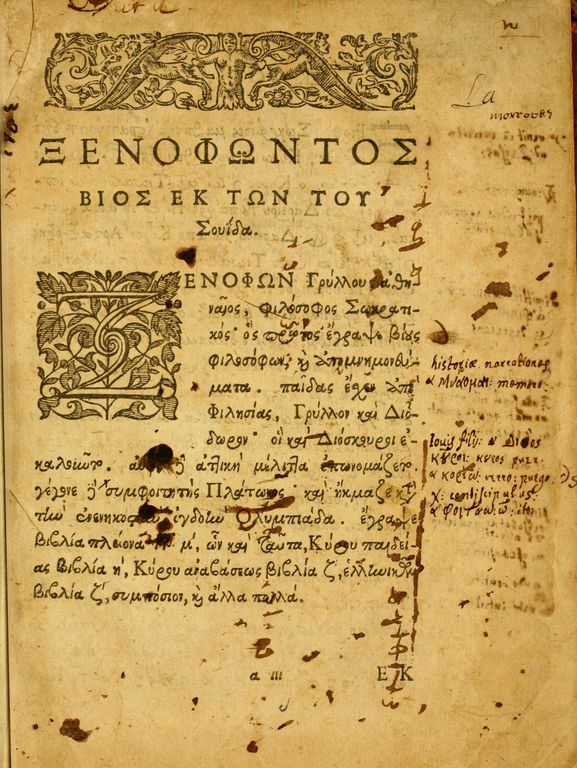
Nova: You would think so, but the book Jefferson obsessed over was actually the Cyropaedia. It was written by Xenophon, a student of Socrates, around 370 BC. It is a massive, semi-fictionalized biography of Cyrus the Great, the founder of the Persian Empire. But it is so much more than a biography. It is essentially the world's first leadership manual.
Nova: Exactly. That is what makes it so fascinating. Xenophon was a soldier and a philosopher who saw in Cyrus the ultimate model of a ruler. He wanted to figure out how one man could govern millions of people across dozens of different cultures without the whole thing collapsing into chaos immediately. Today, we are diving into the Cyropaedia to see why this ancient text still sits on the desks of modern CEOs and world leaders.
Key Insight 1
The Persian School of Justice
Nova: The title Cyropaedia literally translates to the education of Cyrus. Xenophon starts at the very beginning, looking at how the Persians raised their children. Unlike the Greeks, who focused heavily on grammar and music, the Persian education system was built entirely around the concept of justice.
Nova: Not at all. Xenophon describes it more like a clinical trial for morality. The boys would watch their elders judge real cases, and then they would be given hypothetical cases to solve themselves. There is a famous story in the book where a young Cyrus is asked to judge a dispute between two boys.
Nova: There was a tall boy with a short tunic and a short boy with a long, oversized tunic. The tall boy basically forced the short boy to swap tunics so that they both had clothes that actually fit their bodies. Cyrus was asked to rule on whether this was right.
Nova: Cyrus ruled exactly like you just did. He said the swap was just because it resulted in a better fit for both parties. But his teacher immediately punished him for it.
Nova: The teacher told him that he was asked to judge based on justice, not utility. Justice, in this case, was about ownership. The short boy owned the long tunic, and the tall boy had no right to take it by force, even if the result seemed more practical. It was a lesson that a ruler's first job is to uphold the law and the rights of the individual, not just to do what seems most efficient in the moment.
Key Insight 2
The Art of Leading by Example
Nova: As Cyrus grows up and begins his military career, the book shifts from the classroom to the battlefield. But Xenophon focuses less on the tactics of spears and shields and more on the psychology of the soldier. There is a pivotal scene where Cyrus is talking to his father, Cambyses, before his first major campaign.
Nova: Actually, it is the opposite. Cambyses tells him that if he wants his men to follow him into fire, he cannot just order them to be brave. He has to be the most hardworking person in the camp. He says that a leader should never eat a better meal than his soldiers, sleep in a softer bed, or stay dry while they are wet.
Nova: He lives it. Xenophon describes Cyrus as the first person awake and the last person to sleep. He knew the names of all his officers and many of his common soldiers. He understood that people do not work for a paycheck or out of fear as effectively as they work for someone they respect and who they feel respects them.
Nova: It really is. Cyrus also pioneered the idea of meritocracy. In the Persian army of the Cyropaedia, he insisted that rewards and promotions be given based on performance, not on social status or noble birth. This was revolutionary at the time. He told his noblemen that if they wanted to stay on top, they had to outwork the commoners. It created an incredibly motivated and loyal force.
Key Insight 3
The Psychology of Conquest
Nova: This is where Xenophon’s Cyrus becomes a master of soft power. He realized that fear is a very expensive way to rule because you have to keep spending resources on guards and spies. Instead, he focused on making his subjects feel like they were part of something better.
Nova: One of the most famous stories in the book is about a woman named Panthea. She was the wife of one of Cyrus's enemies and was captured during a battle. She was incredibly beautiful, and Cyrus's advisors suggested he take her for himself.
Nova: It was. But Cyrus refused to even look at her. He said that if he started letting his desires control him, he would lose the discipline required to lead. He treated her with total respect and eventually reunited her with her husband, Abradatas.
Nova: He was so moved by Cyrus's integrity that he defected to Cyrus's side and became one of his most loyal generals. This was Cyrus's secret weapon. He turned enemies into friends by being more virtuous than they expected. He used generosity as a strategic tool.
Key Insight 4
The Shadow of the Mirror
Nova: We have to talk about the legacy of this book because it is complicated. In the Renaissance, the Cyropaedia was the primary textbook for princes. Machiavelli, the author of The Prince, studied it intensely. But he had a very different takeaway than Thomas Jefferson did.
Nova: Machiavelli actually praised Cyrus's methods, but he saw them as a form of calculated manipulation. He argued that Cyrus wasn't being nice because he was a nice guy; he was being nice because it was the most effective way to maintain power. It is the beginning of the debate over whether a leader's virtue is a genuine character trait or just a political mask.
Nova: Xenophon, being a student of Socrates, would argue that you cannot fake it forever. To Xenophon, true leadership is an extension of self-mastery. If you cannot rule your own appetites and your own ego, you will eventually fail to rule others. But there is a tragic twist at the end of the book.
Nova: The very last chapter of the Cyropaedia is a stark contrast to the rest of the book. Xenophon describes how, immediately after Cyrus died, the empire began to decay. His sons fought each other, the satraps rebelled, and the virtue that Cyrus had instilled in the nation vanished almost overnight.
Nova: Exactly. Xenophon is warning us that a system built entirely on the charisma and virtue of a single leader is incredibly fragile. Without institutions and a continued commitment to that education, or paideia, the whole structure collapses. It is a reminder that leadership isn't just about the person at the top; it is about the culture they leave behind.
Conclusion
Nova: The Cyropaedia is a mirror. When Thomas Jefferson looked into it, he saw a model for a self-governing citizen-leader who values justice and merit. When Machiavelli looked into it, he saw a masterclass in the strategic use of reputation. And when we look into it today, we see the foundational questions of power that we are still trying to answer.
Nova: It really shows that while technology and politics change, human nature stays pretty much the same. We still want leaders who are disciplined, who respect us, and who lead from the front. But as Xenophon warns us at the end, the real test of a leader isn't what happens while they are in charge, but what happens after they are gone.
Nova: Well said. This is Aibrary. Congratulations on your growth!