

Crafting Unbreakable Cyber Defenses: The Art of Risk & Resilience
Golden Hook & Introduction
SECTION
Nova: Atlas, quick. Cybersecurity. Five words. Go!
Atlas: Invisible, relentless, personal, strategic, terrifying.
Nova: Terrifying? I'm hoping we can make it a little less so today, or at least help our listeners wrestle that terror into a strategic advantage. It's fascinating how those words capture both the threat and the potential for mastery.
Atlas: Oh, absolutely. It feels like this vast, amorphous monster lurking in the digital shadows, but then you realize it's often poking holes in the most human parts of our systems.
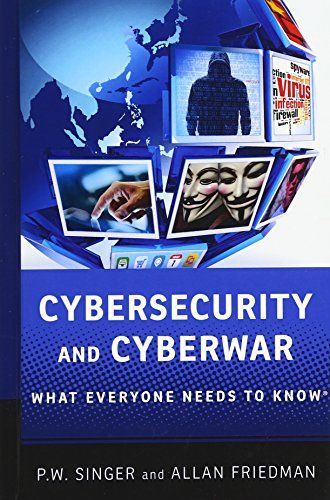
Nova: Exactly! And that tension, between the massive, geopolitical cyber battleground and the very human element of defense, is precisely what we’re dissecting today. We’re pulling insights from two incredibly powerful books: P. W. Singer and Allan Friedman's "Cybersecurity and Cyberwar: What Everyone Needs to Know," and then we're going granular with Kevin Mitnick's "The Art of Invisibility."
Atlas: Singer and Friedman, they're the strategists, right? The big picture thinkers. And Mitnick… well, he was the picture. The guy who literally wrote the book on how to disappear online, after being the world's most wanted hacker. It's a brilliant pairing.
Nova: It truly is. Singer, a renowned futurist and strategist in 21st-century warfare, gives us the macro lens, showing us the global chessboard. Then Mitnick, a legend in his own right, offers the micro, the street-level tactics of protection, informed by his past as perhaps the most famous — and once most wanted — hacker in history. It’s like getting the playbook from both the general and the special ops agent.
Atlas: That duality is compelling. It sounds like they’re not just talking about firewalls and antivirus, but something much deeper, much more systemic. How do these two seemingly different perspectives converge into something cohesive for someone trying to build truly robust systems?
Nova: That’s the magic! They show us that true mastery in cybersecurity isn't just about protection; it's about understanding that evolving threat landscape at every level and then building resilient systems that can not only withstand attacks but also recover from them. It's about anticipation, not just reaction.
The Global Cyber Battleground
SECTION
Nova: So, let’s start with Singer and Friedman’s "Cybersecurity and Cyberwar." This book isn't just a technical manual; it's a deep dive into the political, economic, and technological dimensions of cybersecurity. They argue that we are already in a state of constant, unseen cyberwarfare.
Atlas: A constant war? That sounds a bit dramatic. Are we talking about nation-states launching missiles, but digitally? Or something more insidious?
Nova: More insidious, yes! Think of it less like a traditional war with clear battle lines, and more like a pervasive, global cold war fought in the shadows. It’s about espionage, sabotage, and influence operations that can cripple infrastructure, steal intellectual property, and even sway public opinion. They lay out how cyber capabilities are now a fundamental part of national power, alongside military and economic might.
Atlas: So, it’s not just about some rogue hacker in a basement trying to steal credit card numbers, it’s about sophisticated state-sponsored groups targeting critical infrastructure or even democratic processes. That shifts the scale entirely.
Nova: Exactly. And the prime example they often point to, which truly changed the game, is Stuxnet. Have you heard of it?
Atlas: I've heard the name, but mostly in whispers, like a legend. What was so groundbreaking about it?
Nova: Stuxnet was a highly sophisticated piece of malware, discovered in 2010. It was designed to specifically target industrial control systems, particularly those used in Iran’s nuclear program. Imagine this: a digital weapon that physically destroys infrastructure. It wasn't about stealing data; it was about causing centrifuges to spin out of control, damaging them, and setting back a nuclear program for years.
Atlas: Wow. So, a piece of code jumped out of the digital realm and caused actual, physical destruction. That’s a game-changer. It makes the threat feel incredibly real, not just abstract data breaches.
Nova: Precisely. Singer and Friedman detail how Stuxnet demonstrated that cyberattacks could have kinetic effects, blurring the lines between digital and physical warfare. It was a wake-up call for governments and critical infrastructure operators worldwide. It showed that the "unseen battleground" wasn't just hypothetical; it was actively shaping global power dynamics.
Atlas: For leaders, for architects of systems, that must be a terrifying revelation. It means you're not just defending against data theft, but against potential physical and operational sabotage. How can you even begin to prepare for something like that when the threat is so sophisticated and often state-sponsored?
Nova: That's the deep question, isn't it? It forces us to move beyond simple perimeter defenses. It demands a holistic, strategic approach to cybersecurity that anticipates not just known vulnerabilities, but completely novel attack vectors and their cascading effects. It’s about understanding the geopolitical context of your organization and its supply chain.
The Art of Individual & Organizational Resilience
SECTION
Nova: And that naturally leads us to the second key idea we need to talk about, which often acts as a critical counterpoint to the macro discussion: individual and organizational resilience, especially through the lens of Kevin Mitnick's "The Art of Invisibility."
Atlas: So, we go from nation-states attacking centrifuges to... how to protect my Wi-Fi password? That seems like a massive leap.
Nova: It’s not as disparate as it sounds, Atlas. Mitnick, as a former black-hat hacker turned white-hat security consultant, brings an unparalleled perspective. He understood that while the technical defenses are crucial, the weakest link is almost always human. His book is a masterclass in protecting privacy and security by thinking like the attackers themselves.
Atlas: I can see that. I imagine a lot of our listeners, especially those managing teams and complex systems, often focus on the technical solutions, the firewalls, the encryption. But Mitnick would argue the human element is the ultimate vulnerability.
Nova: Absolutely. Mitnick famously leveraged what’s called "social engineering." It's not about complex code exploits; it's about manipulating people into revealing confidential information or performing actions that compromise security. He would call up employees, pretend to be a frustrated IT guy or a new hire, and with a bit of charm and urgency, get them to hand over passwords or access codes.
Atlas: You mean, he just… asked for it? That’s almost comically simple. It makes you feel a bit foolish to think that sophisticated systems could be bypassed by a simple phone call.
Nova: It’s not foolish, it’s human nature. Mitnick understood psychology. He understood that people want to be helpful, they want to avoid conflict, and they often operate under pressure. He would create scenarios where it felt easier for the person to just give him what he wanted than to question his authority or legitimacy. It’s a compelling case study in the power of persuasion over brute force.
Atlas: That’s actually really insightful. It means our defenses aren't just about technology; they're about training, awareness, and building a culture of healthy skepticism and verification. So, how does an organization, especially one driven by impact and building secure futures, integrate "privacy-by-design" principles, as our content suggests, when the biggest vulnerability could be a well-meaning employee?
Nova: That's the crux of it. Mitnick’s work shows us that "privacy-by-design" isn't just about coding secure features into software; it's about designing and where security is intuitive, where default settings are secure, and where employees are empowered to question anything that feels off. It’s about building resilience into the human layer, not just the technical one.
Atlas: So, it's about creating a system where the default is secure, and people are enabled to be the first line of defense, rather than the weakest link. It’s about proactive human-centric security.
Synthesis & Takeaways
SECTION
Nova: Precisely. When you bring Singer and Friedman's macro view together with Mitnick's granular, human-centric approach, you arrive at a profound truth: true cyber defense isn't just about building higher walls. It's about understanding the entire ecosystem of threats, from nation-states to social engineering, and then designing systems and cultures that are inherently resilient, not just resistant. It’s about anticipating the unforeseen by looking at the problem from every angle, including the hacker's.
Atlas: That makes so much sense. It's about proactive strategy, not just reactive patching. For any leader, any architect striving for mastery and robust systems, that means shifting mindset. It's not just "how do I fix this problem?" but "how do I build this so the problem can't even take root?"
Nova: Exactly. And a powerful "tiny step" our listeners, especially those leading teams, can take from this is to conduct a "pre-mortem" for their next major cybersecurity project.
Atlas: A "pre-mortem"? What’s that?
Nova: Imagine your next project, your next system, failed spectacularly from a security perspective. What went wrong? Detail every hypothetical flaw, every vulnerability, every point of compromise. Then, work backward to see what you could have done to prevent it. It's about proactively identifying weaknesses before they become catastrophic failures. It forces you to think like the attacker.
Atlas: That's brilliant. It's not just a thought exercise; it's a strategic blueprint for anticipating the unforeseen, embedding resilience from the very start. It’s about building a secure future, not just fixing a broken past. That’s a powerful takeaway for anyone looking to truly master cyber defenses.
Nova: And it’s this blend of strategic foresight and practical, human-focused resilience that truly creates unbreakable cyber defenses. It's about leading with vision and empowering your team to be part of the solution.