Crafting Impact: Design Thinking & Content Curation
Golden Hook & Introduction
SECTION
Nova: Atlas, quick, first thing that pops into your head when I say "information overload."
Atlas: Oh man, it’s like trying to drink from a firehose while someone’s yelling a to-do list at you. Headaches. Scrolling. The deep, dark abyss of my unread inbox.
Nova: Exactly! And for so many of us, that's just the daily reality. We're bombarded. But what if the real problem isn't the sheer of information, but our ability to actually make sense of it, to turn that chaos into clarity and impact?
Atlas: That’s going to resonate with anyone trying to lead a team or make a strategic decision in today’s world. We’re all looking for that signal in the noise.
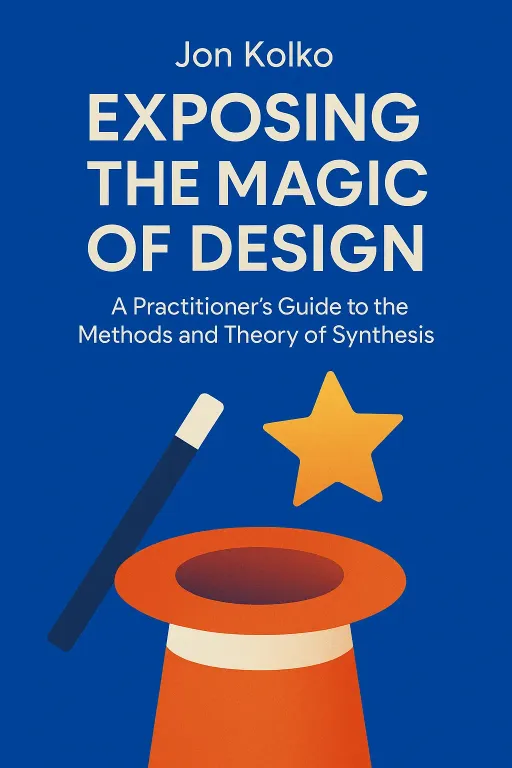
Nova: Absolutely. And that's precisely what we're diving into today, with two brilliant minds who offer us a roadmap. We’re exploring insights from Jon Kolko’s "Exposing the Magic of Design" and Steven Rosenbaum’s "Curate This! The Hands-On, How-To Guide to Content Curation."
Atlas: Kolko, a renowned figure in design education, really pulls back the curtain on what design, making it accessible. And Rosenbaum, with his deep background in digital media, wrote "Curate This!" at a time when the internet was truly becoming an overwhelming ocean of content, making his work incredibly timely and foundational for anyone trying to communicate effectively.
Nova: Precisely. They both offer powerful frameworks for how we transform raw data into something meaningful, something actionable, something that truly resonates. And that, I think, is a superpower for any visionary leader or influential communicator today.
The "Magic" of Design Thinking: Synthesis from Kolko
SECTION
Nova: So, let’s start with Kolko. His book, "Exposing the Magic of Design," does just that – it demystifies design. He argues that the core of design isn’t just aesthetics or creativity; it’s a rigorous process he calls "synthesis."
Atlas: Synthesis. That sounds a bit academic. What exactly do you mean by that, and how does it differ from just, you know, analyzing a problem?
Nova: That’s a great question, and it’s a crucial distinction. Analysis breaks things down into their component parts. You dissect, you categorize, you understand the individual pieces. Synthesis, on the other hand, is about putting those disparate pieces back together in a to form a coherent whole. It’s about finding the underlying patterns, the connections, the unspoken needs, and then generating a solution that addresses them.
Atlas: So it's not just understanding the problem, but actively constructing a solution out of the understanding?
Nova: Exactly! Imagine a visionary leader facing a massive internal challenge: employee burnout and plummeting productivity due to an overly complex internal software system. They've got tons of data: survey results, system logs, exit interviews, anecdotal complaints.
Atlas: Sounds familiar to a lot of our listeners in high-pressure environments.
Nova: Right? Now, an analyst might break down the data: "20% of users report X bug," "average login time is Y," "HR reports Z turnover in this department." That’s analysis. Kolko's synthesis, however, would involve more. The design thinker would immerse themselves: interview frustrated employees, observe their daily workflows, map out their emotional journeys with the software. They'd look for in the frustration, common pain points that aren't just technical bugs but deep-seated human needs.
Atlas: So they're not just looking at the numbers, but the human story behind the numbers.
Nova: Precisely. They might find that employees aren't just slow because of a bug, but because the system forces them through seven unnecessary steps for a common task, leading to a feeling of powerlessness and wasted time. The synthesis is realizing that the problem isn't just "slow software," but a "disempowering workflow" that impacts morale and efficiency. From this synthesized understanding, they can then design a solution that simplifies the workflow, gives users more control, and directly addresses that feeling of disempowerment.
Atlas: That’s a powerful shift. It’s like moving from fixing symptoms to addressing the core systemic issue. For someone trying to build a meaningful legacy, understanding this process for strategic decision-making must be invaluable. It’s not just about crunching numbers, but about seeing the whole picture and then a better one.
Nova: That's the magic. It's the ability to see beyond the surface, connect seemingly unrelated dots, and then craft a solution that truly resonates and makes an impact. It's transforming a pile of messy, raw data into a clear, actionable vision.
Curation as a Superpower: Rosenbaum's Principles
SECTION
Nova: Now, if Kolko teaches us how to make sense of information internally, Rosenbaum, in "Curate This!", shows us how to make sense of it —how to share that sense with the world. He argues that in an era of overwhelming information, curation isn't just about collecting; it's a vital skill for anyone who wants to be heard.
Atlas: I mean, isn’t curation just sharing links on social media? Or making a playlist? What makes it a "hands-on, how-to guide" superpower for, say, an influential communicator?
Nova: That's a common misconception, and Rosenbaum directly addresses it. He argues that true curation is far more than aggregation. It's about identifying valuable information, adding context and perspective, and then packaging and distributing it in a way that transforms raw data into meaningful and engaging narratives.
Atlas: So it's not just what you share, but you share it and.
Nova: Exactly. Let's take our "Wealth Architect" from the user profile. They're trying to educate their clients on complex financial market trends. They could just send out a dozen links to different economic reports and articles. That’s aggregation.
Atlas: Which would probably just overwhelm their clients and lead to more "unopened inbox abyss" syndrome.
Nova: Precisely! A true curator, following Rosenbaum's principles, would do something different. They would sift through those dozen reports, identify the 2-3 most critical insights relevant to, synthesize those insights, and then frame them. They'd add a clear introduction explaining these insights matter, offer their unique interpretation, perhaps provide a relatable analogy, and then present it in a concise, digestible format—maybe a short email newsletter or a video brief.
Atlas: That’s a huge difference. It’s not just passing along information; it’s creating value information. It's about filtering the noise and giving people only the signal, but also explaining what that signal for them.
Nova: And that's where the narrative quality comes in. The curator doesn't just present facts; they tell a story. They explain the implications, they connect the dots for their audience. This builds trust, establishes authority, and ultimately amplifies their impact as an influential communicator. Rosenbaum’s work essentially provides the playbook for how to be that indispensable filter and storyteller in a noisy world.
Atlas: I can see how that’s vital for building a legacy. If you can consistently provide clarity and meaning to your audience, you become an invaluable resource, someone who truly helps them navigate complexity. It’s about earning attention, not just demanding it.
Synthesis & Takeaways
SECTION
Nova: So, when you put Kolko and Rosenbaum side-by-side, it’s clear they're talking about two sides of the same incredibly valuable coin. Kolko’s "synthesis" is the internal process: how make sense of disparate information. Rosenbaum’s "curation" is the external process: how you then share that hard-won sense-making with the world, turning it into impactful narrative.
Atlas: So it’s about being a master sense-maker, both for yourself and for your audience. For someone aiming for a meaningful legacy, this sounds like foundational work—the ability to not just consume information, but to genuinely understand it and then communicate that understanding with clarity and purpose.
Nova: Absolutely. It's about moving from being overwhelmed consumers of information to becoming powerful producers of insight and clarity. And the beautiful thing is, you can start practicing these skills right now, today.
Atlas: How? Give us the "tiny step."
Nova: Our tiny step takeaway for today, straight from the books, is to begin a weekly practice of curating valuable insights related to your field. Identify a theme – maybe it's a new trend in leadership, a financial market shift, or a communication strategy. Gather key pieces of information from various sources, then synthesize them. Don't just summarize; find the core meaning, add your unique perspective, and distill it into a concise, shareable summary.
Atlas: That’s a powerful and practical challenge. It forces you to engage with both disciplines at once: the internal sense-making and the external, impactful communication. It's not about consuming more; it’s about making more.
Nova: Exactly. It's a habit that will sharpen your critical thinking, elevate your communication, and solidify your position as a true visionary.
Atlas: I love that. It’s about deliberate engagement, not just passive consumption.
Nova: This is Aibrary. Congratulations on your growth!