How to Speak Your Truth Without Sounding Aggressive: The Art of Assertive Communication.
10 minGolden Hook & Introduction
SECTION
Nova: You know, Atlas, it’s wild how often we think we need to turn up the volume to be heard, to truly speak our truth. But what if I told you that most of the time, cranking up the aggression dial actually makes us influential, not more? That our attempts to be clear often just create static?
Atlas: Oh, I know that feeling. It’s like trying to navigate a dense fog by honking your horn louder. You just end up making more noise and startling everyone, but you’re still lost. I imagine a lot of our listeners have been in that exact spot, trying to get a point across, only to find themselves in a full-blown debate or, worse, completely shut down.
Nova: Exactly! It’s a common blind spot, this idea that force equals understanding. But the real art of assertive communication—speaking your mind, advocating for your needs, expressing your feelings—it’s not about winning a verbal wrestling match. It's about fostering genuine connection.
Atlas: So, how do we shift from verbal wrestling to, I don’t know, verbal ballet? Because it feels like a lot of the advice out there just says, “Be confident!” which isn't exactly a how-to guide.
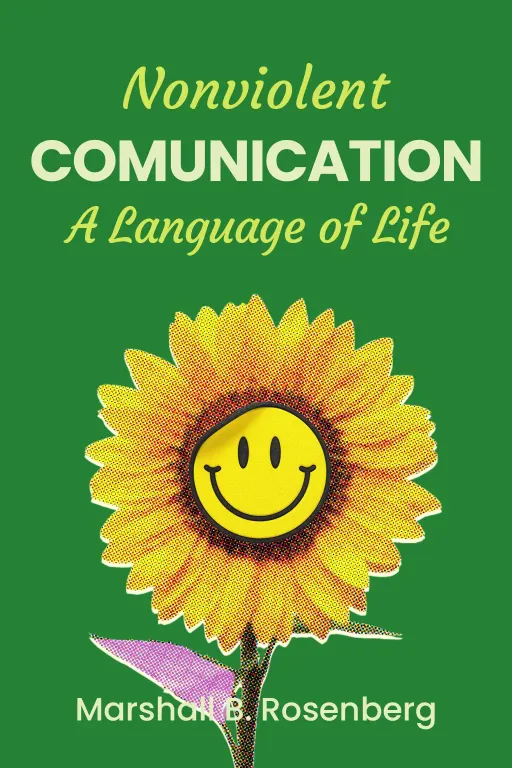
Nova: Well, today, we’re diving into two absolute powerhouses that provide concrete frameworks for that very shift. We’re talking about Marshall B. Rosenberg’s seminal work, "Nonviolent Communication," and the incredibly practical "Crucial Conversations" by Kerry Patterson, Joseph Grenny, Ron McMillan, and Al Switzler. These aren't just books; they're entire new languages for navigating human interaction.
The Blind Spot & The Shift: Why We Misinterpret Influence
SECTION
Nova: Let's start with this core blind spot. We often equate passion or conviction with volume or intensity. We believe that if our message is important, it needs to be delivered with a certain level of force to break through. But Rosenberg, a clinical psychologist who spent decades mediating conflicts globally, found that this approach often backfires spectacularly. He observed that when we communicate from a place of blame or judgment, even if our intentions are good, the other person hears an attack.
Atlas: Hold on, so you're saying if I’m really passionate about something, and I express that strongly, I might actually be pushing people away? But isn't conviction a good thing? It sounds a bit like we're being told to be less authentic.
Nova: It’s a brilliant distinction, Atlas. It's not about stifling your passion; it's about it effectively. Rosenberg's research and the extensive use of Nonviolent Communication in everything from war zones to corporate boardrooms show that authenticity thrives not in aggression, but in clarity and empathy. He found that traditional language often blurs four crucial elements: observation, feeling, need, and request.
Atlas: Okay, so what does blurring look like in real life? Give me an example of how I might be accidentally blurring these things.
Nova: Alright, imagine this: you walk into your kitchen, and there are dirty dishes piled up in the sink. Your instinct might be to say, "You always leave your dishes everywhere! You're so inconsiderate!" Now, what did that communicate?
Atlas: Uh, probably that I’m annoyed, and that the other person is a terrible human being.
Nova: Precisely. You’ve blended observation with evaluation. You’ve implied a feeling but veiled it in blame. And the underlying need is completely lost, replaced by a veiled demand.
Atlas: That makes sense. So basically, I've gone from "I see dishes" to "You are bad," and the other person hears "attack" and gets defensive.
Nova: Exactly. Rosenberg teaches us to separate these. First,: "I see three dirty plates and two cups in the sink." No judgment, just facts. Second,: "I feel frustrated or overwhelmed when I see them." This is about internal state, not an accusation. Third,: "Because I have a need for order and cleanliness in our shared space." This clarifies the deeper motivation. And fourth,: "Would you be willing to wash them now, or let me know when you plan to?" This is a clear, actionable request, not a demand.
Atlas: That sounds incredibly structured. I can see the logic, but how does that feel natural in the moment? I mean, who talks like that? It feels a bit like speaking in code, especially when emotions are running high. For our listeners who are aspiring linguists, they might appreciate the structure, but how do we make it sound human?
Nova: That’s the beautiful challenge, isn't it? It's a new language, and like any new language, it feels clunky at first. But the goal isn't to sound robotic; it's to develop a deeper of what’s truly happening in the interaction. Once you understand the components, you can express them more fluidly. The authenticity comes from connecting your true feelings and needs, which is far more authentic than a frustrated accusation. Rosenberg himself, despite facing initial skepticism about the method's "clinical" feel, consistently showed how it could de-escalate intense conflict precisely because it disarms the listener. It's hard to argue with someone expressing their feelings and needs.
Mastering the Principles: Frameworks for Assertive, Empathetic Dialogue
SECTION
Nova: And that naturally leads us to the second key idea: once you understand the grammar of empathy with Nonviolent Communication, "Crucial Conversations" gives you the for those high-stakes moments. While Rosenberg gives you the tools for everyday empathetic connection, the team behind "Crucial Conversations"—Patterson, Grenny, McMillan, and Switzler—spent decades researching what makes people succeed or fail in discussions where stakes are high, opinions differ, and emotions run strong.
Atlas: Oh, I've definitely had my share of those. The kind of conversations where you know what you say, but your mouth just can't form the words, or it forms the absolute words.
Nova: Exactly! Their research, which involved observing thousands of real-life crucial conversations, showed that most people retreat into silence or violence. They either shut down, avoid the topic, or they lash out, blame, or try to dominate. Neither approach leads to good outcomes.
Atlas: That’s going to resonate with anyone who struggles with giving difficult feedback or negotiating a raise. It's like you're caught between a rock and a hard place.
Nova: Their first principle is "Start with Heart." It means clarifying what you really want for yourself, for the other person, and for the relationship, you even open your mouth. If your goal is to win, to punish, or to be right, you’re already off track. Your goal should be to achieve a positive outcome and strengthen the relationship.
Nova: Let's use a case study: Imagine you're a manager, and you have an employee, let's call her Sarah. Sarah is brilliant, incredibly productive, but she’s also notoriously abrupt and dismissive with team members, often making them feel unheard. You need to address this, but you know Sarah gets defensive easily. If you go in guns blazing, you'll lose her talent and alienate her further.
Atlas: So, "Start with Heart" means I first decide I want Sarah to continue being brilliant, but also to be a better team player, and I want to maintain our working relationship. Not just "I want her to stop being rude."
Nova: Precisely. Then, building on that, "Crucial Conversations" emphasizes "Make It Safe." This is about creating psychological safety so both parties can share information freely, even sensitive information, without fear of reprisal. With Sarah, you might start by affirming her value and your positive intent. "Sarah, you're an incredibly valuable asset to this team, and your contributions are outstanding. I’m bringing this up because I care about your success and the team's cohesion."
Atlas: But what if Sarah immediately gets defensive and says, "Are you saying I'm not a good team player?" How do you "make it safe" when the other person is already feeling attacked, even if you’ve started with heart?
Nova: That’s a crucial question, and it’s where the real skill comes in. The authors introduce the concept of the "dialogue pool." In a crucial conversation, when stakes are high, opinions differ, and emotions run strong, people often stop contributing to the pool of shared meaning. Instead, they hoard information or throw verbal grenades. Your job is to keep that pool full. If Sarah gets defensive, you might say, "That's not what I'm saying at all, Sarah. My intention is to discuss how we can leverage your strengths even more effectively by ensuring everyone on the team feels heard and valued." You're re-establishing safety, clarifying intent, and inviting her back to the pool of shared meaning.
Atlas: So the "pool of shared meaning" is like where all the good ideas, assumptions, and feelings can safely float, and if it gets toxic or empty, the conversation drowns.
Nova: Exactly! And the goal is to keep adding to that pool, even when it feels uncomfortable. It's about consciously inviting dialogue, not shutting it down. The book has received widespread acclaim for its practical, actionable strategies, particularly in leadership development and conflict resolution, because it really empowers people to navigate these tricky waters.
Synthesis & Takeaways
SECTION
Nova: When you combine the deep empathetic framework of Nonviolent Communication with the strategic navigation of Crucial Conversations, you have an incredibly powerful toolkit. It’s not about being soft or avoiding conflict; it’s about being incredibly effective and genuinely assertive. You speak your truth, but you do it in a way that invites understanding and collaboration, rather than defensiveness and division.
Atlas: That's actually really inspiring. It reframes "speaking my truth" from an act of potential confrontation to an act of powerful connection. For our practical learners and cultural explorers out there, it really highlights that understanding we communicate is just as important as we communicate. It's about bridging ideas, not just broadcasting them.
Nova: Absolutely. It’s about recognizing that true influence isn't about overpowering; it's about connecting. It's about building that shared pool of meaning where everyone feels safe enough to contribute their best.
Atlas: So, for our listeners, think about that last conversation where you felt misunderstood, or perhaps you misunderstood someone else. How might applying just one of these principles—separating observation from evaluation, or starting with heart and making it safe—have changed the outcome? It's not about perfection; it's about progress, right?
Nova: Precisely. Start small, be patient with yourself, and embrace the journey of transforming your dialogue. It's a skill that pays dividends in every area of life.
Nova: This is Aibrary. Congratulations on your growth!