

The Cognitive Toolkit for High Stakes Influence
Golden Hook & Introduction
SECTION
Nova: What if everything you thought you knew about winning an argument, about influencing a high-stakes decision, was actually sabotaging your chances? We’re not talking about just yelling louder or having the most data. We’re talking about something far more potent, and often, completely overlooked.
Atlas: Oh, I like that. Because honestly, Nova, most of us walk into those big, make-or-break moments feeling like we either need to be the fiercest debater or just… hope for the best. Is there a secret handshake we’re missing?
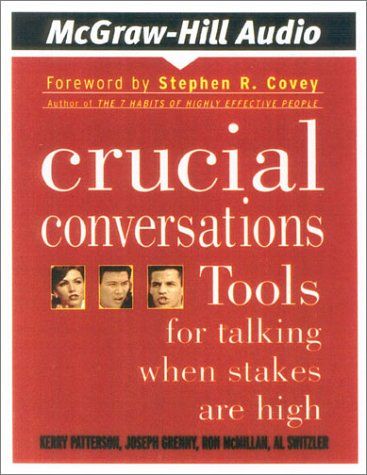
Nova: There absolutely is, Atlas. And it’s less about a secret handshake and more about a cognitive toolkit. Today, we’re unpacking how two titans of personal and professional development—Joseph Grenny, co-author of the groundbreaking book "Crucial Conversations," and Brian Tracy, the prolific author of "Get Smart!"—can fundamentally transform your ability to navigate and influence any high-stakes scenario.
Atlas: Those are two powerhouses! Grenny’s work, from what I understand, really emerged from extensive research into high-performing teams and their communication patterns. It’s highly empirical, right? Not just theory.
Nova: Exactly. Grenny and his co-authors spent decades studying what made certain teams and individuals incredibly effective at discussing difficult topics, while others crumbled under pressure. Their insights are rooted in real-world observation. And then you have Brian Tracy, who, on the other hand, is known for his ability to synthesize complex psychological and business principles into immediately actionable strategies, having trained millions worldwide. He’s all about practical application.
Atlas: That’s a fascinating pairing. So, we're looking at the ultimate blend of emotional intelligence and intellectual firepower for those moments when the stakes are highest. I imagine a lot of our listeners, who are focused achievers themselves, often find themselves in situations where they need to make their time and insights count. This sounds like it’s going to speak directly to that need for impact.
Nova: It absolutely will. Because the core of our podcast today is really an exploration of how to wield both emotional intelligence and sharp cognitive tools to master high-stakes influence, transforming difficult interactions into powerful opportunities. We'll dive deep into this from three perspectives. First, we’ll explore how to create psychological safety even in the most tense discussions. Then, we’ll shift gears to understand how different thinking styles can elevate our problem-solving and authority. And finally, we’ll discover how to strategically blend these two powerful approaches to truly influence high-stakes decisions.
The Art of Psychological Safety in Dialogue (Grenny)
SECTION
Nova: So, let’s start with Joseph Grenny and the concept of "crucial conversations." What he and his co-authors found is that our lives, careers, and relationships often hinge on these pivotal dialogues—moments when opinions vary, stakes are high, and emotions run strong. Think about telling your boss they're making a terrible decision, or confronting a colleague about their consistently missed deadlines. Most people avoid these conversations, or they handle them poorly.
Atlas: Yeah, I know that feeling. That’s probably the most common reaction, isn't it? Just avoid, avoid, avoid. Or worse, go in guns blazing, which usually just makes things worse. But wait, isn't it just about being nice? Like, if you’re polite, people will listen?
Nova: That’s a common misconception, but no. It’s far more strategic than just being nice. Grenny’s core insight is that you can discuss when you make it psychologically safe. And "making it safe" isn't about being soft; it’s about creating two specific conditions: Mutual Purpose and Mutual Respect. If either of those is broken, dialogue stops, and people either go silent or resort to unproductive aggression.
Atlas: Okay, so "Mutual Purpose" and "Mutual Respect." What do you mean by that, especially when you’re in a high-stakes situation where you feel like your purposes are actually? Like, if I want X and my colleague wants Y, how is that mutual?
Nova: Excellent question. Mutual Purpose means that both parties believe they are working toward a shared goal, even if their immediate strategies differ. It’s finding the "higher" purpose. For example, if you and a colleague disagree on a project’s direction, the mutual purpose isn't idea versus. It's "delivering a successful project for the company" or "serving our clients effectively." You find that common ground, that overarching objective you both care about.
Atlas: I see. So it’s about framing the discussion around a bigger win that benefits everyone, rather than a zero-sum game. But how do you do that when emotions are high and people are already feeling defensive? Can you give an example of how this plays out in a real-world scenario?
Nova: Absolutely. Let’s imagine a project manager, we’ll call her Sarah, who needs to give difficult feedback to a brilliant but perpetually late senior engineer, Mark. Mark's tardiness is jeopardizing the entire project, risking a major client loss. Sarah knows Mark is proud and defensive. If she just says, "Mark, you're always late, fix it," he'll shut down.
Atlas: Which is what most of us would probably do, or at least feel like doing, in that moment of frustration.
Nova: Exactly. Instead, Sarah starts by establishing safety. She pulls Mark aside, not in front of the team. She begins by affirming his value and talent: "Mark, your contributions to the code are exceptional, and your problem-solving skills are unmatched. The team genuinely relies on your expertise." This establishes mutual respect. Then, she introduces the mutual purpose: "My concern, and I think it's a concern we both share, is the success of this project and delivering to our client on time. We both want this launch to be a triumph, right?"
Atlas: Right, so she’s not attacking him personally, she’s aligning with him on a shared objective. She’s disarming him before she even gets to the core issue.
Nova: Precisely. Only then does she introduce the problem as a shared challenge, not a personal failing: "What I'm seeing is that your late arrivals are creating a bottleneck for the team, and it's making it difficult to hit our sprint goals, which directly impacts our ability to deliver the quality we both want on schedule." She asks for his perspective, genuinely. This is the essence of Grenny’s approach: "Start with Heart," "Master My Stories", and "STATE My Path".
Atlas: Wow. That’s a complete roadmap for navigating what feels like a minefield. So it's about disarming before you even try to discuss, creating a shared reality, and then collaboratively solving the problem, rather than just imposing a solution. That’s incredibly powerful for those difficult research discussions you mentioned earlier. It opens the door.
Mastering Cognitive Agility for Influence (Tracy)
SECTION
Nova: And once that door is open, once you've made it safe, you then need to be about what you say and how you think. This is where Brian Tracy’s "Get Smart!" comes into play. Tracy argues that our ability to solve problems, make decisions, and project authority hinges on our cognitive agility – our capacity to consciously employ different thinking styles for different situations.
Atlas: What do you mean "thinking styles"? Like, are we talking about left brain/right brain stuff, or more like personality types? Because I feel like I just have way of thinking, and it’s usually 'panic-then-react'.
Nova: Not at all like left brain/right brain, and not personality types. Tracy's talking about deliberate mental frameworks. He identifies several, but for high-stakes influence, one of the most critical is "Long-Term Thinking." This means consciously stepping back from immediate pressures and considering the consequences of your decisions or proposals not just in the next hour or day, but weeks, months, or even years down the line.
Atlas: Long-term thinking. That sounds great on paper, but how do you yourself to think long-term when the pressure is on right now? When you have deadlines looming, or a crisis demanding immediate attention, it feels almost impossible to zoom out. A lot of our listeners are focused achievers with scarce time; they need efficiency, and sometimes long-term feels like a luxury.
Nova: It feels that way, but it's actually the ultimate efficiency hack. Tracy would say it's about creating a mental habit. One technique is "thinking on paper" – literally writing down the potential outcomes of a decision over different time horizons: one month, six months, one year, five years. Another is "future pacing," where you vividly imagine yourself in the future, looking back at the decision you're about to make. Would Future You be proud? Regretful?
Atlas: So, it's about forcing a perspective shift, almost like a mental time machine. Can you give an example of how this kind of thinking projects authority, particularly in a high-stakes scenario?
Nova: Certainly. Imagine a startup founder, let's call her Elena, who has poured a year of her life into a particular product. New market data emerges, strongly suggesting they need to pivot their entire business model. Short-term thinking would be to ignore the data, double down on the failing model to save face, avoid disappointing early investors, or simply avoid the painful admission of being wrong. This often leads to a slow, inevitable death for the company.
Atlas: And that's exactly the kind of trap I imagine many pragmatic learners, focused on immediate results, could fall into. It’s hard to let go of sunk costs.
Nova: Exactly. But Elena, employing long-term thinking, recognizes that the short-term pain of a pivot – disappointing investors, writing off a year of work – is far less severe than the long-term pain of irrelevance or bankruptcy. She uses this cognitive framework to analyze the market trends, project future growth or decline scenarios for both paths, and then clearly articulates this long-term vision to her team and investors.
Atlas: So she’s not just presenting a problem; she’s presenting a well-thought-out, future-oriented solution, even if it’s a difficult one. That definitely projects authority and conviction. It’s like having a mental toolkit for different kinds of problems, not just a hammer for everything.
Nova: Precisely. She's demonstrating foresight, strategic depth, and a commitment to the ultimate success of the venture, not just protecting her ego or avoiding an uncomfortable conversation. This kind of thinking allows you to articulate a vision that others might not immediately see, and that’s a powerful form of influence.
Synthesis & Takeaways
SECTION
Nova: Now, here’s where the magic really happens – bringing Grenny and Tracy together to create "The Cognitive Toolkit for High Stakes Influence." The takeaway is this: you use Grenny’s 'Safety First' principle to open the door for difficult discussions, then apply Tracy’s 'Long-Term Thinking' to influence the final decision.
Atlas: So, you create the safe space first, then you bring out the big guns of smart, strategic thinking? That’s brilliant. It’s not just about what you say, but you set the stage and you frame your thoughts.
Nova: Exactly. Let’s revisit Sarah, the project manager, and Mark, the engineer. Sarah uses Grenny’s techniques to create a safe space to discuss Mark's tardiness. She establishes mutual respect and a mutual purpose: project success. Once that psychological safety net is in place, and Mark feels heard and respected, Sarah can then transition into presenting the long-term implications of their current trajectory using Tracy’s principles.
Atlas: So she doesn’t just say "be on time." She connects it to the bigger picture.
Nova: Right. She might say, "Mark, if we don't resolve this bottleneck, not only do we risk missing this client deadline, but in the long term, it could damage our reputation in the industry, making it harder to secure future projects, and potentially impacting our team's growth opportunities. What kind of future do we want to build with this project, and how can we both ensure your incredible talent is leveraged without these long-term risks?" She's not just talking about the immediate problem; she's painting a picture of the future, good or bad, and inviting Mark to co-create the positive one.
Atlas: That’s such a hopeful way to look at it. It takes the sting out of the immediate conflict and elevates it to a shared strategic challenge. That gives me chills, honestly. It’s about respecting the human element while leveraging the power of clear, future-oriented thought. This is exactly the kind of strategic learning that maximizes knowledge gain and truly makes an impact.
Nova: And that's the profound insight, isn't it? True influence isn't about manipulation or brute force. It's a sophisticated dance between emotional intelligence and cognitive rigor. It's about having the courage to make it safe for difficult truths to emerge, and then having the clarity of mind to articulate a path forward that considers the broadest, most impactful future.
Atlas: It’s about building bridges with empathy, then guiding people across them with logic. For anyone out there facing a crucial conversation or a high-stakes decision, that’s an incredible toolkit to have.
Nova: Absolutely. So, we encourage you to reflect on your last crucial conversation. Where could you have applied Grenny's principles to create more safety? And where could you have leveraged Tracy's long-term thinking to articulate a more compelling, future-oriented path? The answers might just unlock your next level of influence.
Nova: This is Aibrary. Congratulations on your growth!