

Mastering the High Stakes Dialogue
Opening
SECTION
Nova: Content` format, section headers.
Golden Hook & Introduction
SECTION
Nova: Atlas, quick, five words to describe your typical high-stakes conversation?
Atlas: Uh… awkward silences, passive aggression, dread. And then regret. Oh wait, that’s six.
Nova: You’re already breaking the rules, aren't you? See, that’s exactly what we’re diving into today. My five words would be: "Unspoken truths, missed connections, opportunity."
Atlas: Opportunity? Nova, come on. When I’m sitting across from someone whose body language is screaming 'I want to be anywhere but here,' opportunity isn't the first word that springs to mind. More like 'escape route.'
Nova: Precisely! Because those awkward silences and that passive aggression? They're not just uncomfortable; they're symptoms. Symptoms that we're missing the true nature of the conversation. And today, we’re going to unpack exactly why those crucial dialogues often go sideways, and how to steer them back on course.
Atlas: That makes me wonder… for those of us who are driven by impact and constantly find ourselves in high-pressure environments, where every word feels like it carries immense weight, what’s the secret to not just surviving these talks, but truly mastering them?
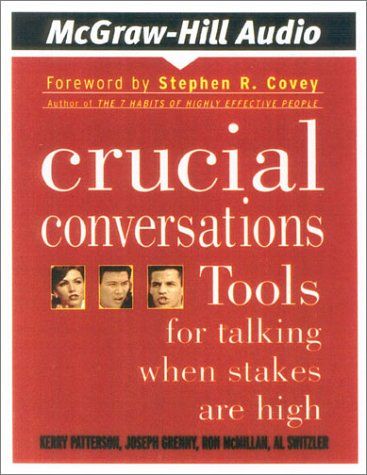
Nova: Well, we’re drawing wisdom from two absolute titans in the field of communication: Douglas Stone, with his seminal work "Difficult Conversations," and Joseph Grenny, co-author of the equally impactful "Crucial Conversations." These aren't just self-help books; they’re foundational texts for anyone serious about effective human interaction, built on decades of research into human psychology and organizational dynamics. They’ve fundamentally reshaped how leaders, negotiators, and even everyday individuals approach the most challenging exchanges of their lives.
Atlas: Okay, so we're talking about more than just 'saying the right thing.' We're talking about a fundamental shift in approach. That sounds like something our listeners, who are always seeking to cut through the noise and maximize knowledge gain, absolutely need.
The Hidden Iceberg: Unpacking the Three Layers of Difficult Conversations
SECTION
Nova: Absolutely. And Douglas Stone helps us kick things off by revealing something profound: every single difficult conversation, every single one, is actually three conversations rolled into one. And most of us only ever focus on the surface layer.
Atlas: Three conversations? You’re saying it’s like a communication turducken? What are these layers, and why do they complicate things so much?
Nova: Exactly! It’s a communication turducken, I love that! Stone deconstructs it into the 'What Happened' conversation, the 'Feelings' conversation, and the 'Identity' conversation. Let's start with 'What Happened.' This is the obvious one. It’s where we argue about facts, who said what, who did what, who's right, who's wrong.
Atlas: Right, like when a project misses a deadline, and everyone's pointing fingers at the data, the timeline, the resources. That's the 'what happened.' Seems pretty straightforward.
Nova: It seems straightforward, but here's where it gets tricky. In the 'What Happened' conversation, we often assume we know the other person's intentions, or that facts are the only facts. We bring our own interpretations, our own stories to the table, and we clash. But that's just the tip of the iceberg.
Atlas: So, what’s underneath the water line, then? What's the next layer that we're missing when we're just focused on the data points?
Nova: That would be the 'Feelings' conversation. This is where emotions reside – anger, frustration, disappointment, fear, even joy or relief. And here's the crucial part: in many professional settings, we're taught to suppress emotions, to be "rational." But those feelings don't just disappear. They fester. They leak out in passive aggression, in tone, in body language.
Atlas: Oh, I know that feeling. You're in a meeting, someone makes a decision you strongly disagree with, and you swallow your frustration because it's "unprofessional" to express it. But then you walk out feeling resentful, and it affects your engagement later. That’s why those "awkward silences" I mentioned earlier are so potent.
Nova: Exactly! Imagine a scenario: a manager, Sarah, is giving feedback to her direct report, Mark, about his recent performance. Sarah believes Mark isn't pulling his weight, and the team's output is suffering. Mark, on the other hand, feels overwhelmed, undervalued, and like his contributions are being ignored.
Atlas: Okay, so the 'What Happened' conversation is about the missed deadlines, the team metrics. Sarah has her facts, Mark has his perspective on the workload.
Nova: Precisely. But the 'Feelings' conversation is Sarah's frustration and disappointment, perhaps even a bit of anger that she has to have this conversation at all. And Mark's feelings are a mix of defensiveness, anxiety about his job security, and perhaps even resentment that Sarah isn't seeing his effort. If they only talk about the "what happened" – the metrics – those feelings remain unaddressed, simmering beneath the surface, making genuine resolution impossible.
Atlas: So, they're talking past each other, not each other. But there's a third layer? This is getting deep.
Nova: It does. The deepest, and often most overlooked, layer is the 'Identity' conversation. This is about how the situation impacts our self-perception, our sense of competence, our worth. Am I a good person? Am I competent? Am I worthy of respect? When we feel our identity is threatened, our default response is often to protect ourselves, to defend our self-image at all costs.
Atlas: So, when Mark hears Sarah's feedback, it's not just about the missed deadlines. It's about him questioning, "Am I a failure? Am I not good enough for this job?" And that's why he gets defensive, shuts down, or even lashes out. This is why those focused achievers out there often struggle with feedback, because it can feel like a direct hit on their personal brand of competence.
Nova: You've got it. The cause of the breakdown isn't just the facts; it's the unacknowledged feelings and the threatened identity. The process is that they talk about the 'what happened,' but the underlying emotional and identity threats remain unaddressed. The outcome? A conversation that goes nowhere, resentment builds, and the problem persists, perhaps even getting worse. This is why just "presenting data" or "being logical" often fails spectacularly in high-stakes situations. Because we're not just rational beings; we're emotional and identity-driven ones.
Atlas: Wow. That's actually really insightful. It makes me think of all the times I've walked away from a conversation feeling like I lost a piece of myself, or that my fundamental value was questioned, even if no one explicitly said it. So, recognizing these layers is the first step, but how do we then actually them, especially when stakes are high and emotions are running wild?
Engineering Trust: The STATE Framework for Psychological Safety in High-Stakes Dialogue
SECTION
Nova: That’s a perfect segue, Atlas. Because if Stone tells us under the surface, Joseph Grenny and his co-authors give us the. They developed the 'STATE' framework in "Crucial Conversations" specifically for those high-stakes moments where opinions vary, emotions run strong, and the outcome matters. The goal is to create what we call 'Psychological Safety,' a term that's become a cornerstone of effective teamwork and innovation.
Atlas: Psychological safety… that means feeling safe enough to contribute your honest perspectives, right? For our listeners managing high-pressure teams, or those in environments where dissenting opinions are often met with resistance, this concept might feel like a utopian dream. How does the STATE framework help us build that safety, not just talk about it?
Nova: It’s not a dream; it’s a deliberate process. STATE is an acronym for Share your facts, Tell your story, Ask for others' paths, Talk tentatively, and Encourage testing. Let's break it down.
Atlas: Okay, so 'S' for Share your facts. That sounds like the 'What Happened' conversation we just talked about. How is this different? What’s the nuance that makes it effective here?
Nova: It’s different because of the and the. You start with facts because they are the least controversial, the most persuasive. You present them objectively, without judgment or interpretation. For example, instead of saying, "You're always late with your reports," you'd say, "Your last three reports were submitted after the deadline." This is about establishing a shared baseline of reality, something everyone can agree on.
Atlas: Right, like, "The Q3 sales figures show a 15% drop," not "Your team clearly isn't performing." It's about data, not blame.
Nova: Exactly. Then comes 'T' for Tell your story. This is where you explain of the facts. This is crucial because it acknowledges that facts don't speak for themselves; we add meaning to them. You use "I" statements here. "When I see these late reports, I start to worry about our team's ability to meet overall project timelines." You're owning your interpretation, not presenting it as universal truth. This is where you bring your 'Feelings' conversation into the open, but in a constructive, non-accusatory way.
Atlas: So, "When I see the Q3 sales figures down 15%, I start to wonder if our current marketing strategy is reaching the right audience, and I feel concerned about our market position." That makes sense. It’s about being transparent about your own thinking and emotional stake.
Nova: Next is 'A' for Ask for others' paths. This is where you genuinely invite the other person to share facts and story. "What are your thoughts on these reports, Mark? What's been happening from your perspective?" Or, "What do you make of the sales figures? What's your take on why they're down?" This is about curiosity, not accusation. It’s about creating space for their 'What Happened' and 'Feelings' conversations to emerge, making them feel heard and valued.
Atlas: That’s where the psychological safety starts to really kick in, isn't it? You're actively demonstrating that their input is valued, that you're not just presenting a verdict. But what about 'T' for Talk tentatively? Doesn't that sound… weak? For someone who wants to project confidence and decisive leadership, that could feel counter-intuitive.
Nova: That's a common misconception, Atlas, and it directly speaks to the "Focused Achiever's" desire for impact. Talking tentatively isn't about being wishy-washy; it's about being open-minded and flexible. You present your facts and story as, not immutable truths. You use phrases like, "I'm starting to wonder if...", "Perhaps we could consider...", "It seems to me that..." rather than "The only solution is..." or "You must..." It signals that you're seeking mutual learning, not just compliance.
Atlas: So, it's about signaling that you're open to being wrong, or that there might be other valid perspectives. It reduces defensiveness in the other person because they don't feel like they're walking into a trap. It's not weakness; it's strategic humility that disarms.
Nova: Precisely. It invites collaboration rather than confrontation. And finally, 'E' for Encourage testing. This is about making it safe for others to challenge your views and to offer alternative solutions. "Do you see it differently?" "What am I missing here?" "If you have concerns about my proposal, I genuinely want to hear them, even if it means we have to rethink our approach." This is crucial for genuinely fostering honest perspectives and ensuring all stakeholders feel secure enough to contribute, especially when their 'Identity' might feel threatened by the conversation.
Atlas: Okay, so going back to our example: Sarah, the manager, would start by sharing the facts about Mark's late reports. Then she'd tell her story about her concerns for team timelines and her feelings about the impact. She'd ask for Mark's perspective, actively listening for his 'What Happened' and 'Feelings' conversations. She'd talk tentatively about her suggestions for improvement, perhaps offering them as ideas to explore together. And then she'd actively encourage Mark to challenge her or offer his own solutions, making it safe for him to express his feelings and any identity concerns he might have, like feeling overwhelmed or undervalued.
Nova: Exactly. The cause of the friction was miscommunication driven by unaddressed layers. The process, using STATE, is to systematically address those layers by creating safety. The outcome is not just a solution to the report problem, but a stronger, more trusting relationship and a truly collaborative environment. This isn't just about problem-solving; it's about building resilience and trust within teams, fostering an environment where growth and contribution are prioritized over fear and defensiveness.
Synthesis & Takeaways
SECTION
Nova: So, when we combine Stone's profound understanding of the hidden layers with Grenny's actionable STATE framework, we get a powerful toolkit. Stone helps us diagnose conversations are difficult, exposing the 'What Happened,' 'Feelings,' and 'Identity' conversations often simmering beneath the surface. Grenny then provides the 'how,' a structured way to navigate those very real human elements, ensuring those deeper conversations can actually surface safely.
Atlas: It’s about recognizing that every high-stakes conversation is less about winning an argument and more about building a shared understanding, a shared path forward. For our listeners who are constantly seeking to maximize knowledge gain and turn insights into impact, this is gold. It’s not just about being smart; it’s about being and strategically empathetic.
Nova: And that’s the ultimate takeaway. In your next high-pressure meeting, before you launch into the data, before you try to "fix" the problem, pause. Focus on creating psychological safety first. Acknowledge the shared goal, be genuinely curious about other perspectives, and make it safe for everyone to contribute their honest thoughts, even if they challenge yours. This isn't just a soft skill; it's a strategic imperative for any focused achiever.
Atlas: That’s a challenge to embrace imperfection, really. To be vulnerable enough to say, "My perspective is just one piece of the puzzle, and I need yours to complete it." It's a fundamental shift from a debate mindset to a dialogue mindset, which ultimately leads to better decisions and stronger relationships.
Nova: It is. And the impact? It's not just better outcomes for the meeting; it's stronger relationships, more innovative solutions, and a truly engaged team. It’s about transforming dread into genuine opportunity, one crucial conversation at a time.
Atlas: That’s actually really inspiring. So, for anyone listening, the next time you feel that familiar tension rising in a difficult conversation, remember the hidden layers, and remember the STATE framework. It might just change everything.
Nova: This is Aibrary. Congratulations on your growth!